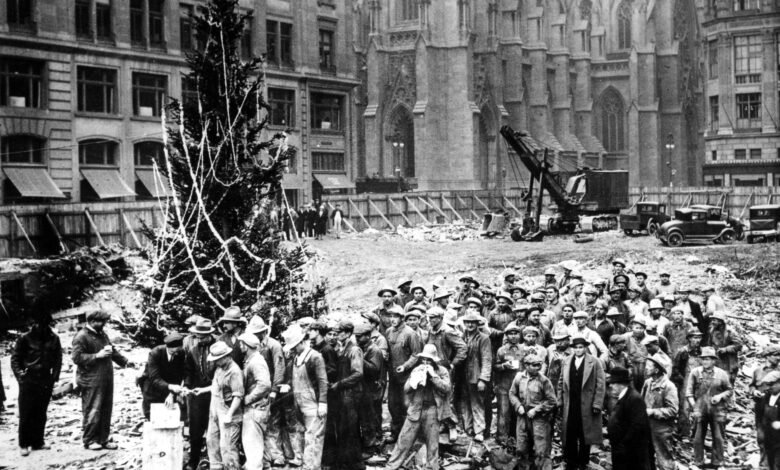
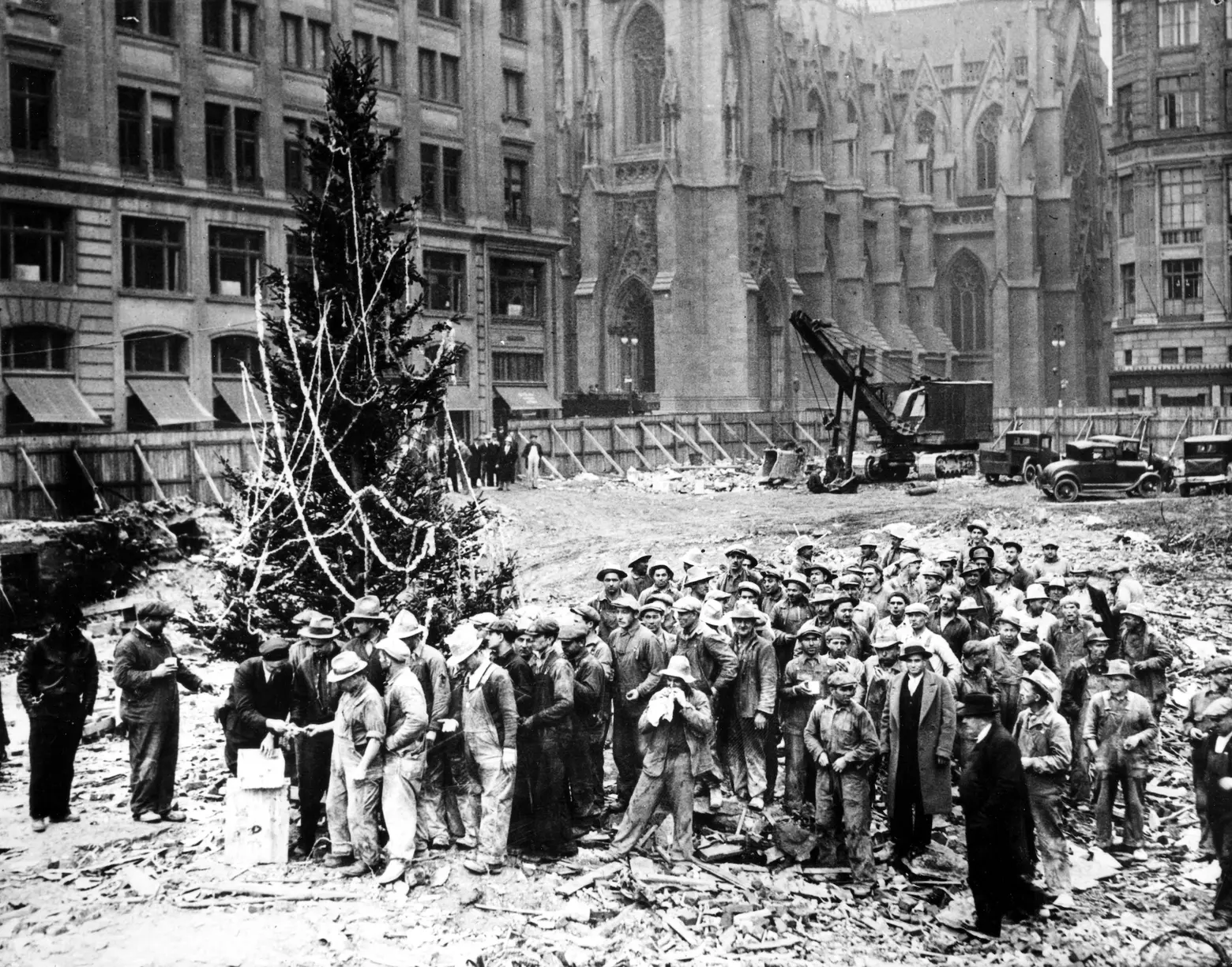
The 1931 tree, courtesy of Tishman Speyer
The Rockefeller Center Christmas Tree, considered the “worldwide symbol of Christmas,” will be lit on Wednesday, marking the 93rd tree lighting ceremony. Ahead, learn about the history of the iconic spruce, from its start as a modest Depression-era pick-me-up for Rockefeller Center construction workers to World War regulations to its current 900-pound Swarovski star.
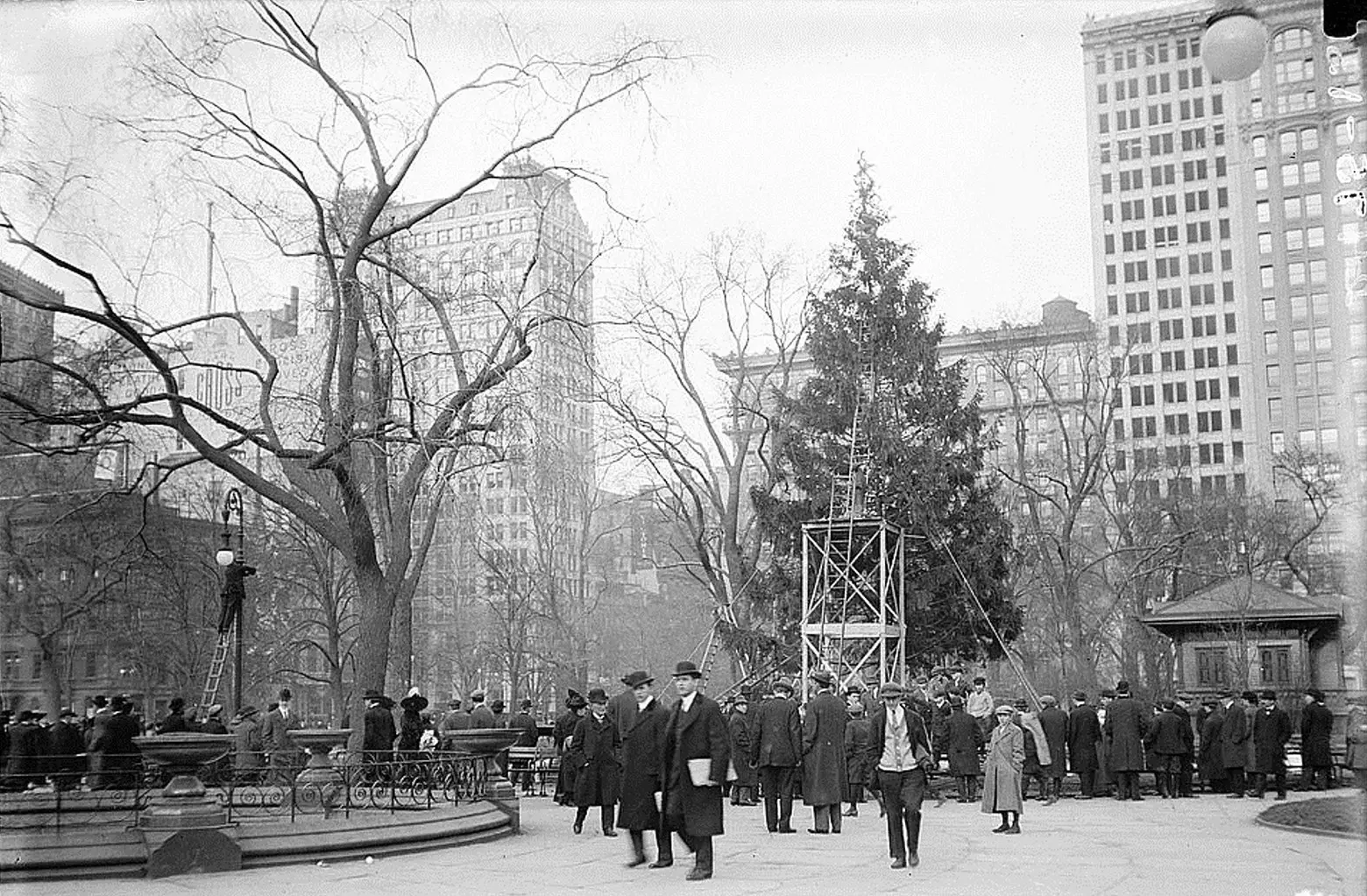
An interesting point to note is that the Rockefeller Center Christmas Tree was, in fact, not the first public Christmas tree in New York City. That distinction goes to the Madison Square Park tree that was erected in 1912 as a social affair that brought the joy of a holiday tree to those without the means to have one in their home (this was an expensive endeavor at the time).
Nineteen years later, though, the first iteration of what is perhaps the world’s most famous Christmas tree was erected. At the time, John D. Rockefeller Jr.’s 14-building Rockefeller Center complex (it was the largest private building project ever undertaken at the time) was one year into construction. On Christmas Eve, 1931, at the height of the Great Depression, workers at the Rockefeller Center construction site decided to pool their money together to buy a Christmas tree to lift their spirits. It was a 20-foot balsam fir that they decorated with handmade garland and strings of cranberries from their families. The men lined up at the tree to receive their paychecks.
Two years later, in 1933, a Rockefeller Center publicist decided to make the tree an annual tradition, and they held the first official lighting ceremony with a 50-foot tree. In 1936, they put up two trees to mark the opening of the skating rink and also held an ice skating competition.
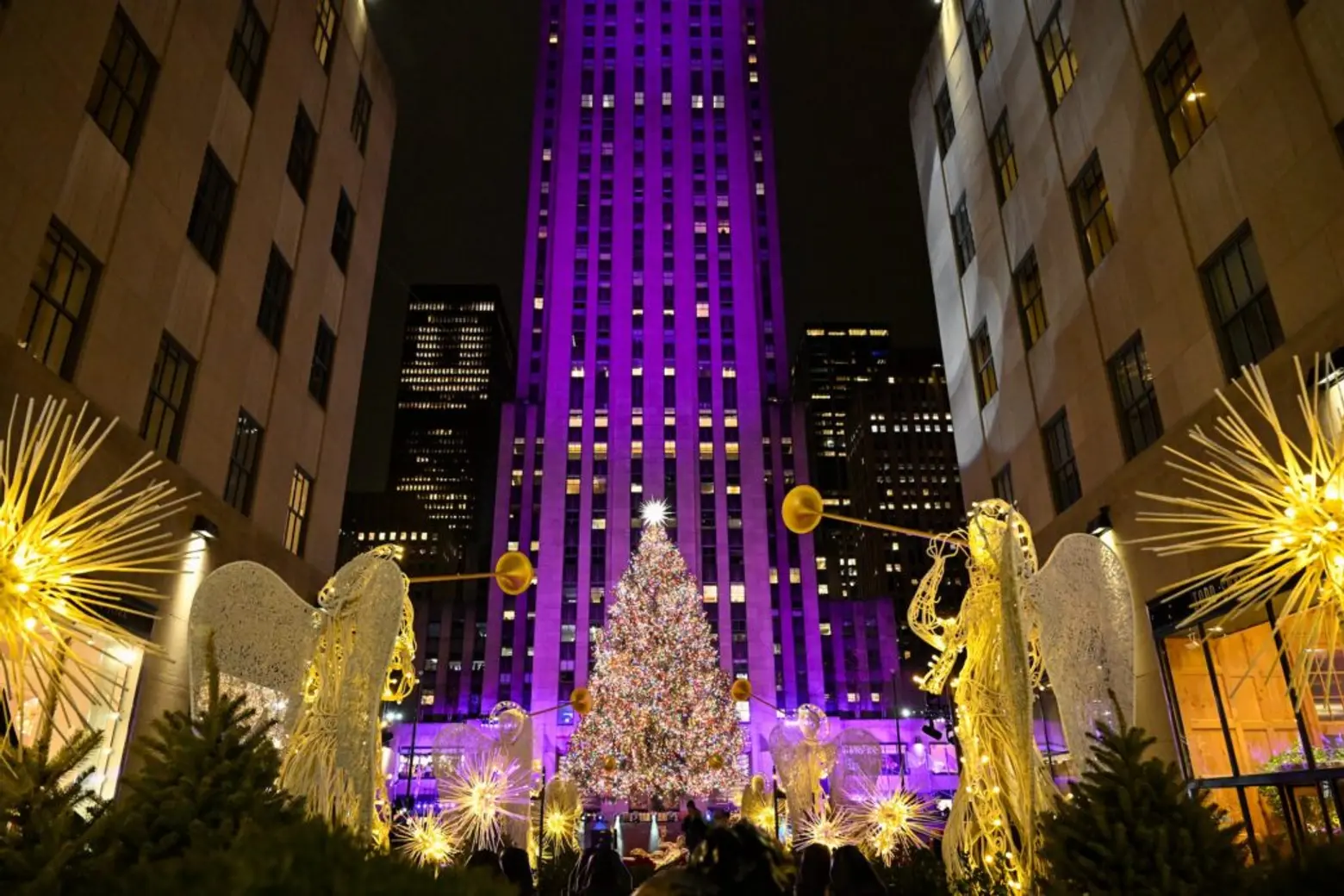
During World War II, the tree’s décor switched to a more patriotic theme, with red, white, and blue globes and painted wooden stars. In 1942, no materials needed for the war could be used on the tree, and instead of one giant tree, there were three smaller ones, each decorated in one of the flag’s three colors. It was also the first year that the tree was replanted after the holidays. In 1944, the tree remained unlit due to wartime blackout regulations. When the war ended in 1945, six ultraviolet light projectors were used to make it appear as though the tree’s 700 fluorescent globes were glowing in the dark.
In 1951, NBC televised the tree lighting for the first time with a special on The Kate Smith Show. Now that the entire nation was seeing the tree, the decorations became more elaborate, and it took 20 workers on scaffolding nine days to fully decorate it.
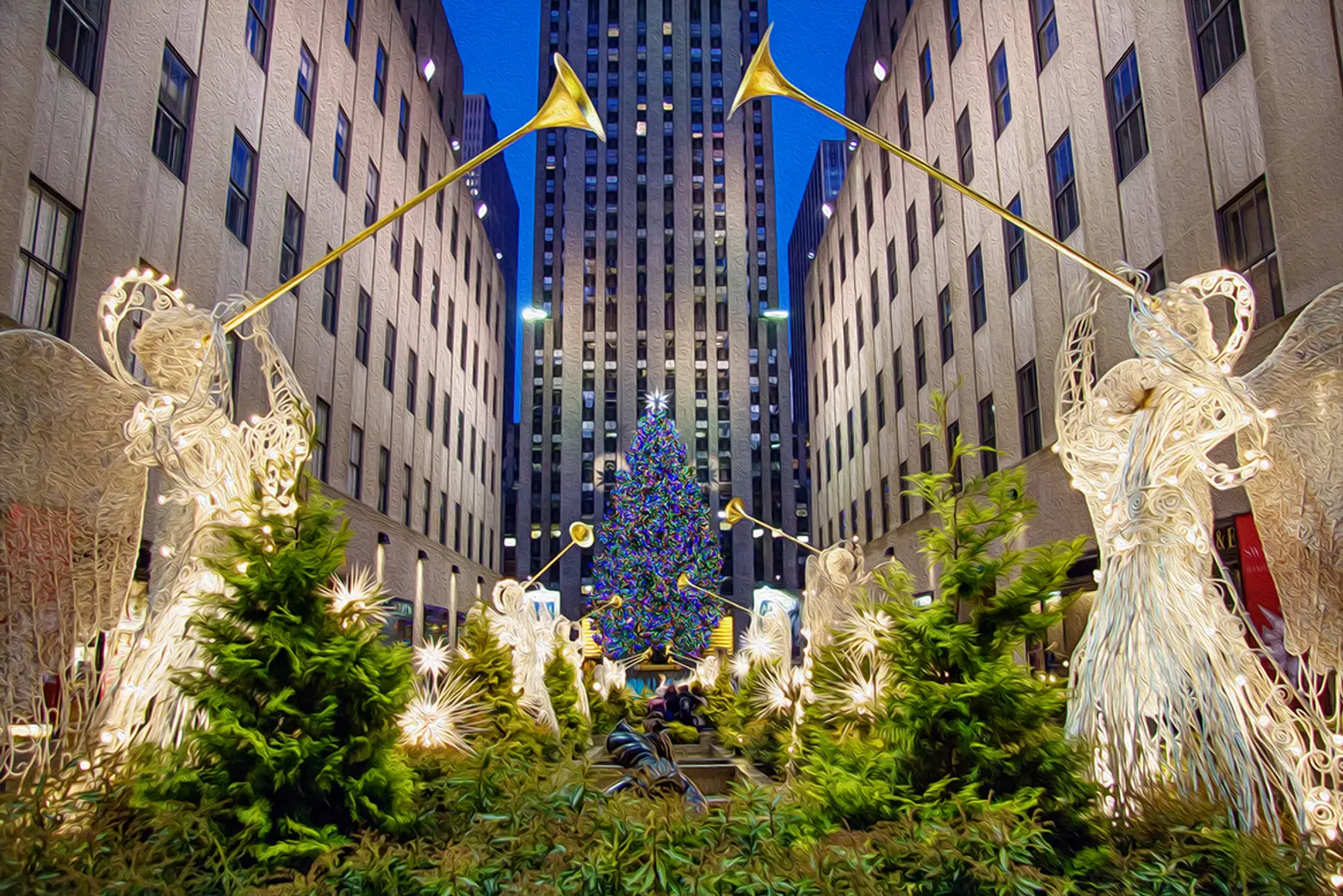 The famous wire angels, by June Marie via Flickr cc
Another holiday staple at Rockefeller Center is the triumphant collection of metal wire herald angels in the Channel Gardens. Sculptor Valerie Clarebout debuted the twelve figures in 1969.
Influenced by the environmental movement of the time, the tree was first recycled in 1971; it was turned into 30 three-bushel bags of mulch for the nature trails of upper Manhattan.
Following September 11, the Rockefeller Center Christmas Tree was once again adorned in patriotic red, white, and blue. In 2004, a 550-pound Swarovski star graced the top of the tree for the first time. Designed by German artist Michael Hammers, it featured 25,000 crystals and one million facets and is 9.5 feet wide.
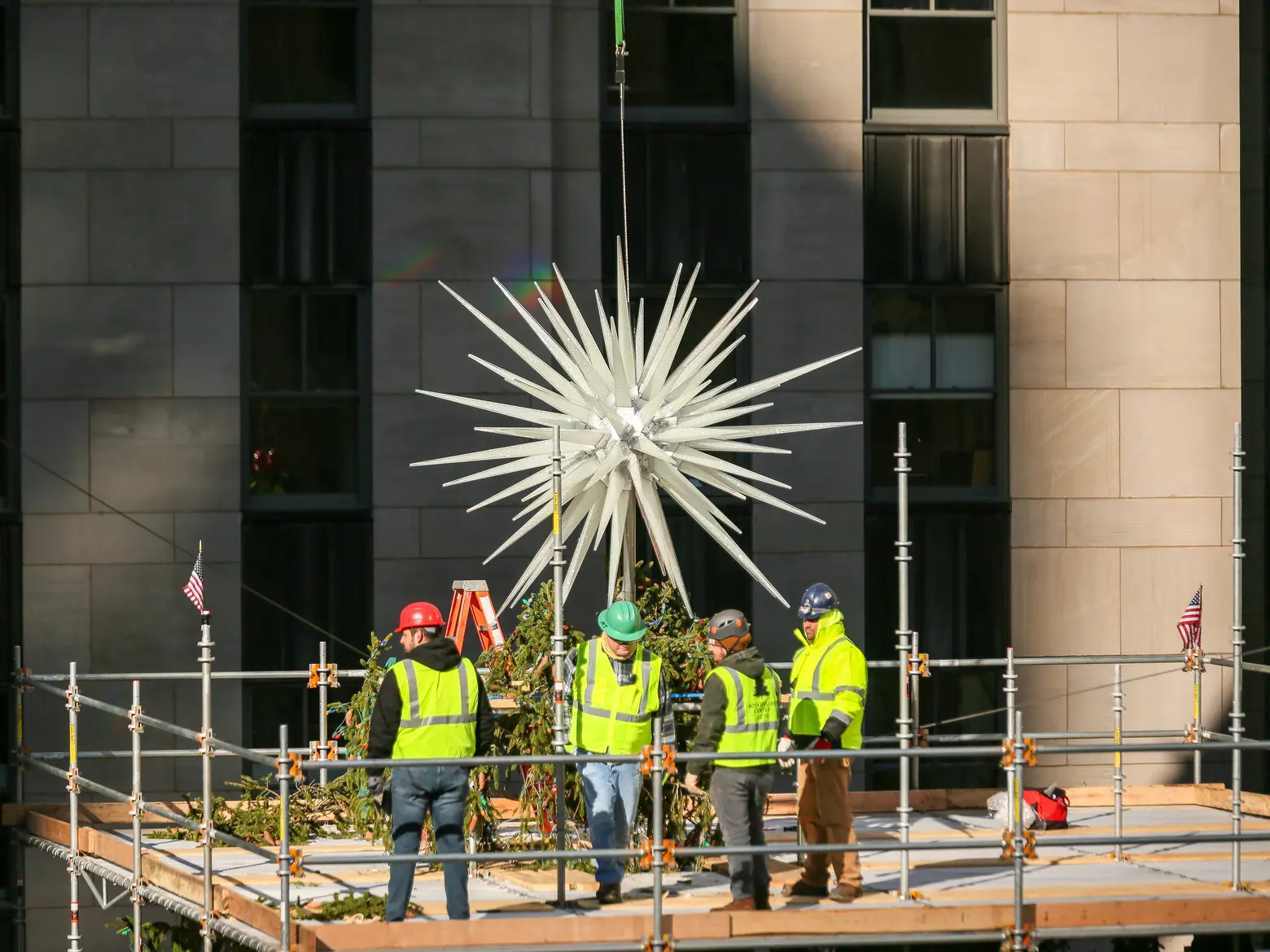 The Swarovski star being set atop the tree in 2018. Photo by Angela Pham/BFA.com; courtesy of Swarovski
In 2018, the star was replaced by another Swarovski model, this one designed by architect Daniel Libeskind. It’s made of three million Swarovski crystals radiating from 70 spikes, is nine feet four inches wide, and weighs in at 900 pounds.
In a continued effort to go green, LED lights were introduced on the tree in 2007. They use 1,200 fewer kilowatts of electricity per day, enough to power a 2,000-square-foot home for a month. Solar panels atop the Rockefeller Center buildings also help power them. A fun fact: engineers spent three months creating a computer program to get the twinkling effect of the lights just right.
In the past, many trees were donated to Rockefeller Center. Otherwise, David Murbach, Gardens Division Manager of Rockefeller Center at the time (he passed away in 2009), would take a helicopter to scout for a tree in Pennsylvania, Connecticut, Vermont, Ohio, or even Canada.
Today, the tree is typically a Norway spruce and is scouted by Erik Pauzé, Head Gardener at Rockefeller Center. While the tree is being cut down, a crane supports it and moves it to a custom telescoping trailer for its journey to Rockefeller Center. It’s then supported by four guy wires at its midpoint and a steel spike at its base. Workers install scaffolding around the tree to allow them to put up the 50,000 rainbow LED lights.
There have been a couple of years, however, when the tree arrived via a different mode of transportation. In 1977, it came down the Hudson River from Stony Point on a barge. And in 1998, it received royal treatment and was flown in from Richfield, Ohio on the world’s largest transport plane.
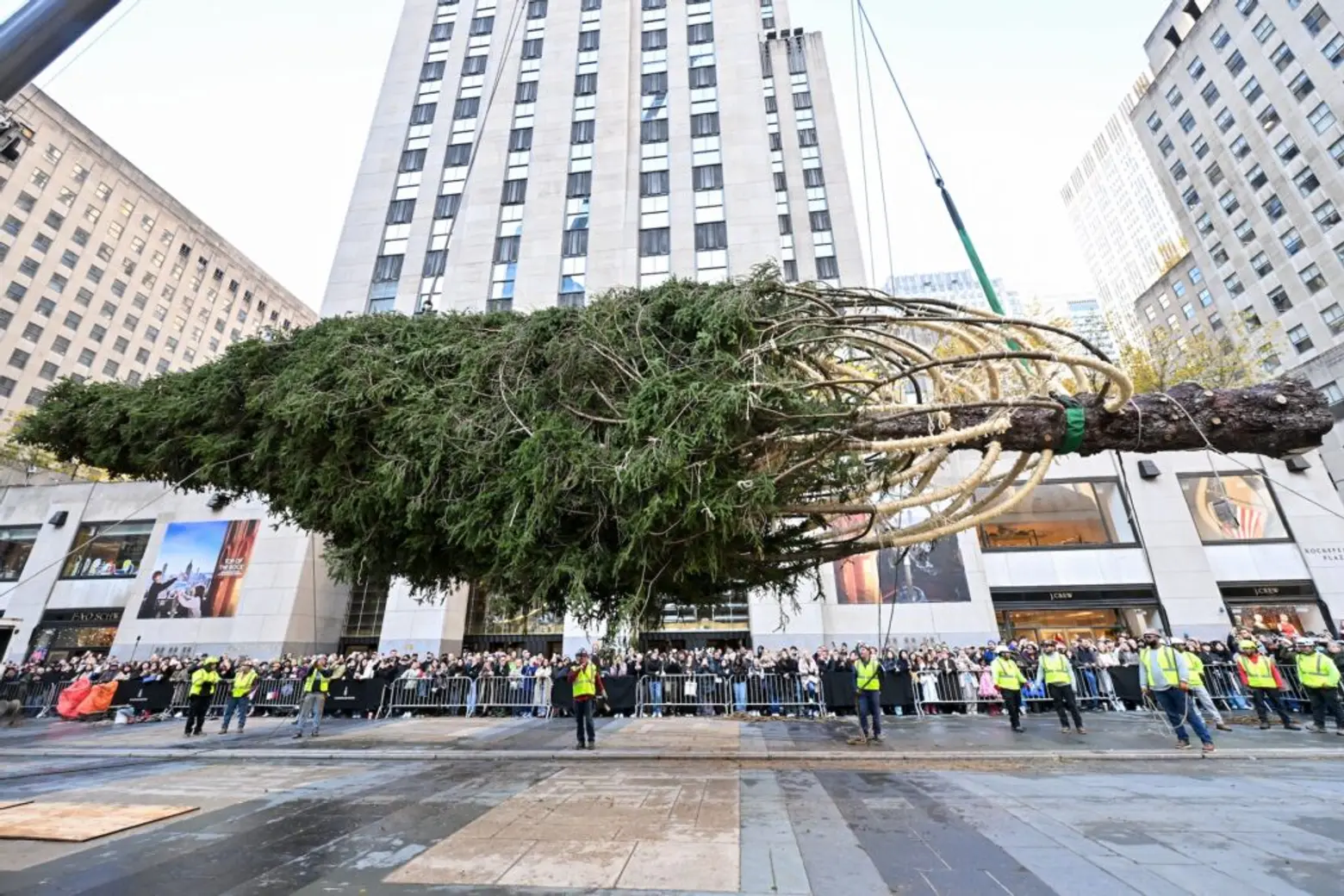
The 2025 tree hails from East Greenbush, New York. Donated by the Russ family, the 75-foot-tall Norway Spruce weighs about 11 tons and is approximately 75 years.
The tree lighting ceremony takes place on Wednesday, December 3, from 7 p.m. to 10 p.m. NBC and Peacock will broadcast “Christmas in Rockefeller Center” hosted by Reba McEntire, beginning at 7 p.m.
The tree is lit daily from 6 a.m. to 12 a.m. and will be lit for 24 hours on Christmas Day.
For the best up-close views of the tree, head to Rockefeller Plaza between 49th and 50th Street and Fifth and Sixth Avenues. This year, the Top of the Rock experience is offering exclusive access directly under the tree from December 4 through January 10. Tickets start at $42 for adults.
RELATED:
Editor’s Note: This story was originally published in 2015 and has been updated.