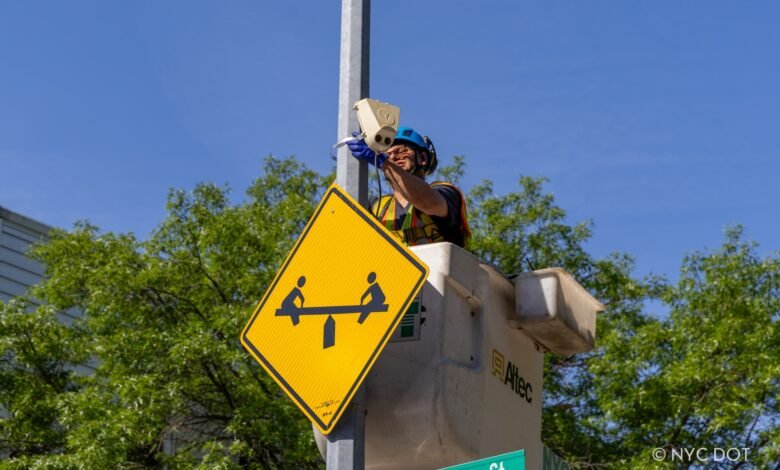
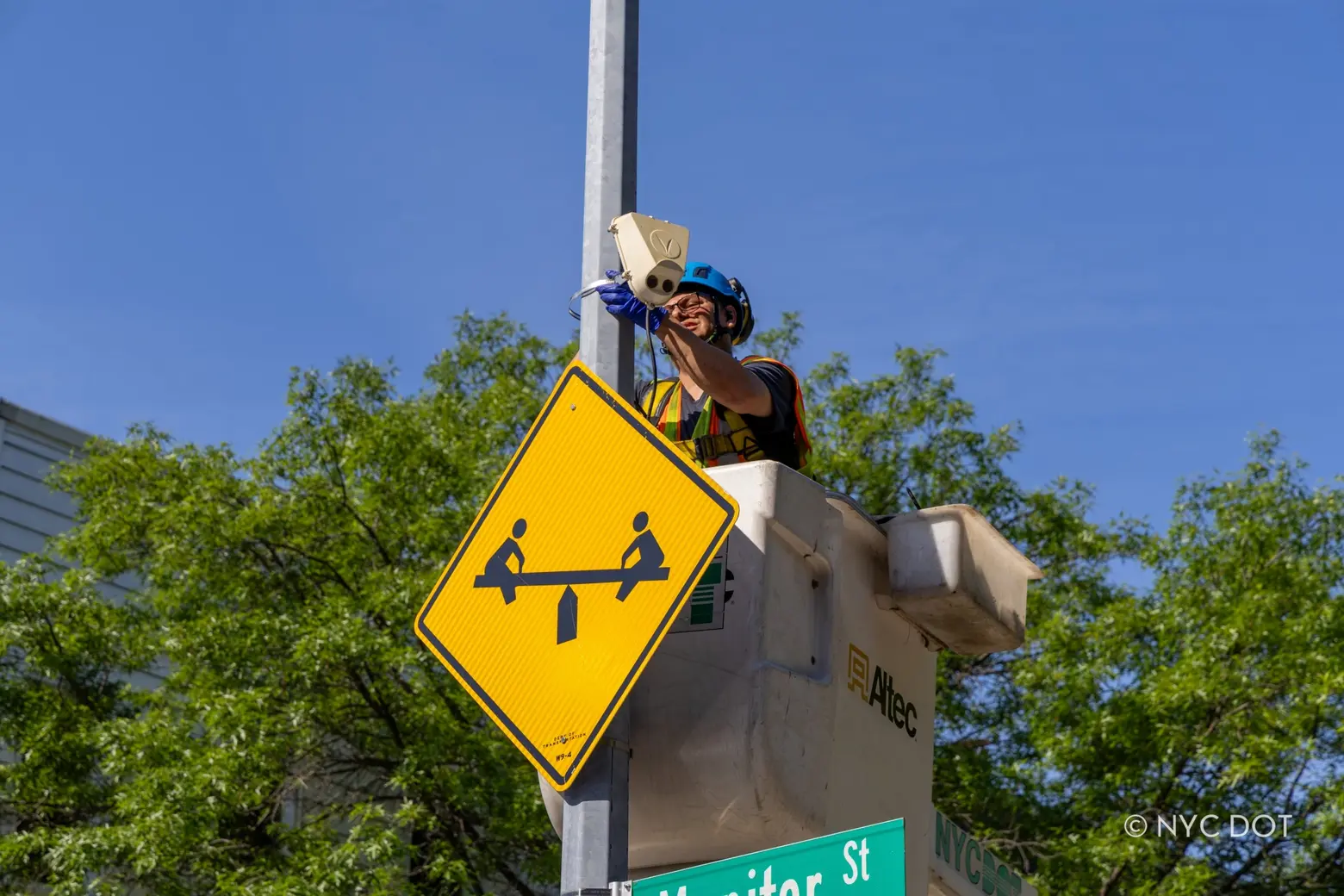
New York City will expand its use of cutting-edge sensor technology to track road usage and inform safer, more data-driven street design. Department of Transportation Commissioner Mike Flynn on Tuesday announced that the agency will install privacy-protected sensors, first piloted in 2023, at about 80 additional locations across the five boroughs, bringing the total to 100. The devices count pedestrians, cyclists, buses, and vehicles to analyze how New Yorkers use city streets, offering insight into pedestrian crossings, where bike access may need improvement, and how cars move through specific areas.
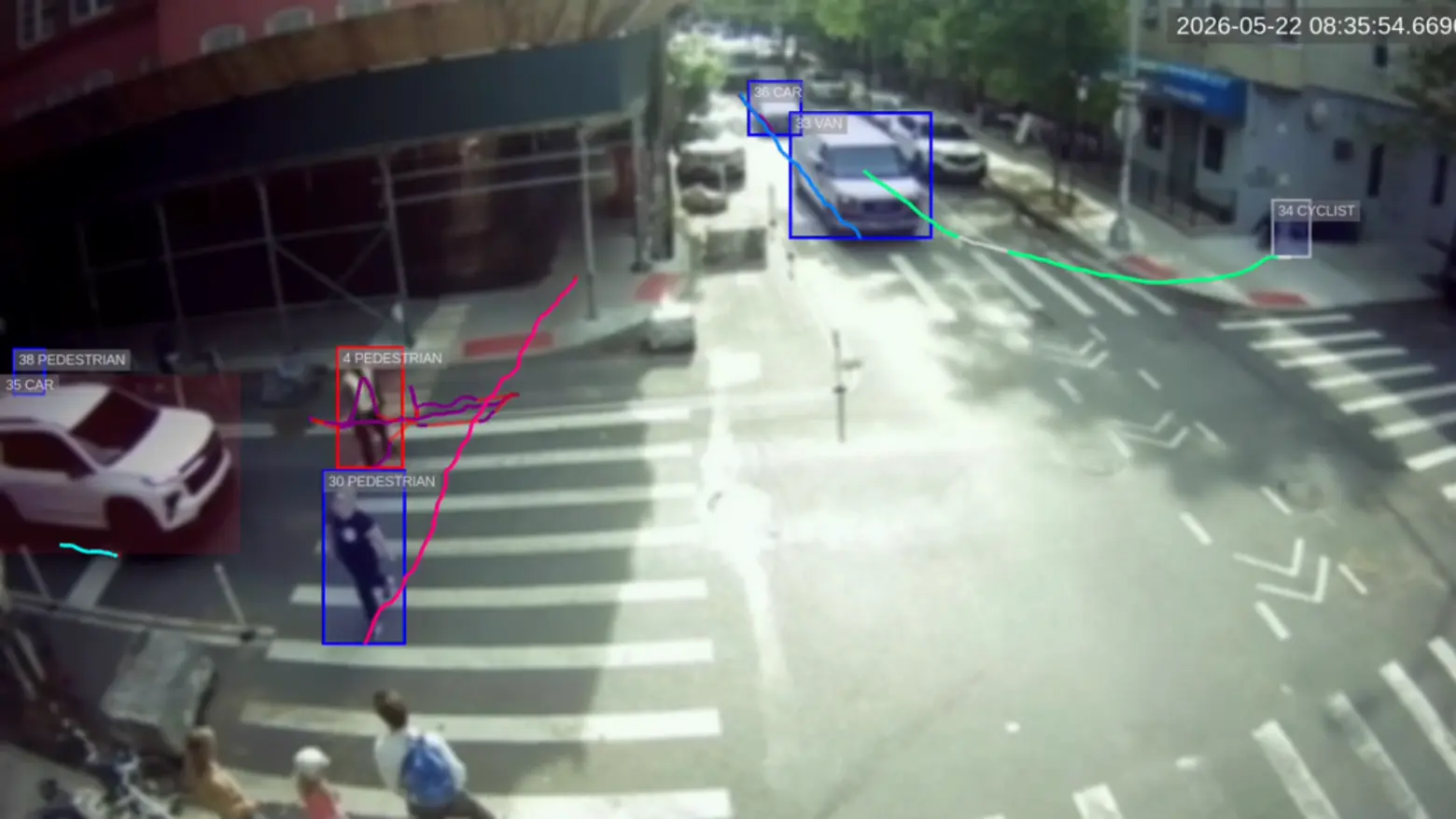
The expansion builds upon a pilot program. The first batch of sensors replaced traditional manual traffic counts with continuous, real-time data collection, offering a much clearer picture of how pedestrians, cyclists, and vehicles traverse the city.
Using the data, the agency can evaluate the effectiveness of street safety projects, identify hazardous locations before crashes occur using “near-miss” data, improve access to transit, loading zones, and local businesses, and better allocate space for pedestrians, cyclists, and vehicles alike.
Mounted on DOT infrastructure, the devices anonymously track street activity and are also capable of measuring speeds, capturing turning movements, and mapping how different users move through intersections and corridors.
For example, the sensors could identify areas where pedestrians cross mid-block instead of at crosswalks, providing the agency insight into where a mid-block crosswalk might be beneficial, according to a press release.
Where traditional planning methods have relied on short-term, labor-intensive counts, the sensors operate continuously, capturing changes in travel patterns by time of day, season, and street design. The footage is processed in real time and immediately discarded, with faces and license plates blurred and only anonymized data retained.
“Safer street design starts with understanding what is actually happening on the street,” Flynn said. “These high-tech sensors will help us evaluate how people are walking, biking, and driving so we can design safer streets and encourage safer behavior.”
The new sensors will cost roughly $200,000 in city funding, in addition to the $100,000 paid for the 2023 pilot. The rest of the cost is covered by grant funding, according to Gothamist.
RELATED: