
Kalshi posted a record month for trading volume in June as the 2026 FIFA World Cup fueled activity across prediction markets.
DefiLlama data shows Kalshi recorded nearly $9.4 billion in trading volume in June, up from about $5.3 billion in May. Polymarket International also climbed to roughly $4.3 billion from about $3.5 billion a month earlier.
The tournament kicked off on June 11 and is the first FIFA World Cup to feature 48 teams, up from 32 in previous editions. CNBC reported the competition became the biggest driver of prediction market trading in June, with Dune Analytics showing record notional trading volumes on Kalshi and Polymarket.
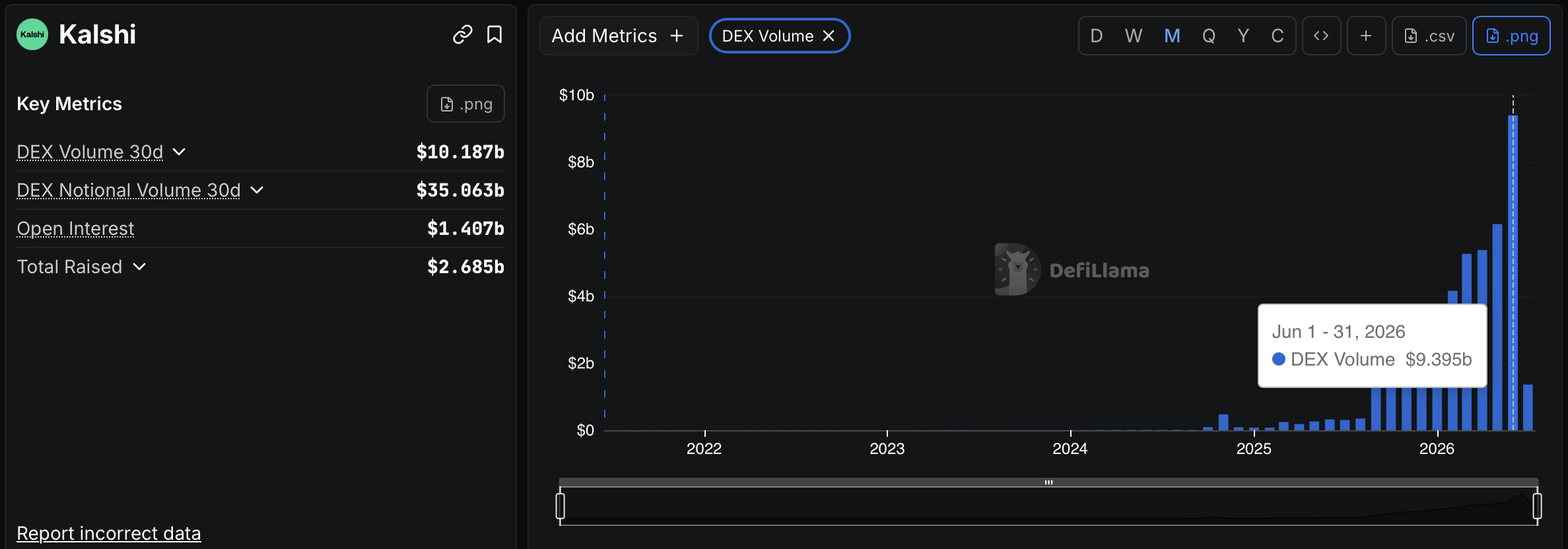
Kalshi trading volume hits June record. Source: DefiLlama
The tournament’s knockout matches are attracting some of the highest trading activity. Canada’s Round of 16 match against Morocco, scheduled for Saturday, had generated over $48 million in trading volume on Kalshi and over $26.8 million on Polymarket at the time of writing.
The United States’ Round of 16 match has also drawn significant attention from traders. Kalshi’s market on which team will advance had generated more than $2.1 million in volume, while a comparable market on Polymarket had attracted around $1.6 million as of Saturday.
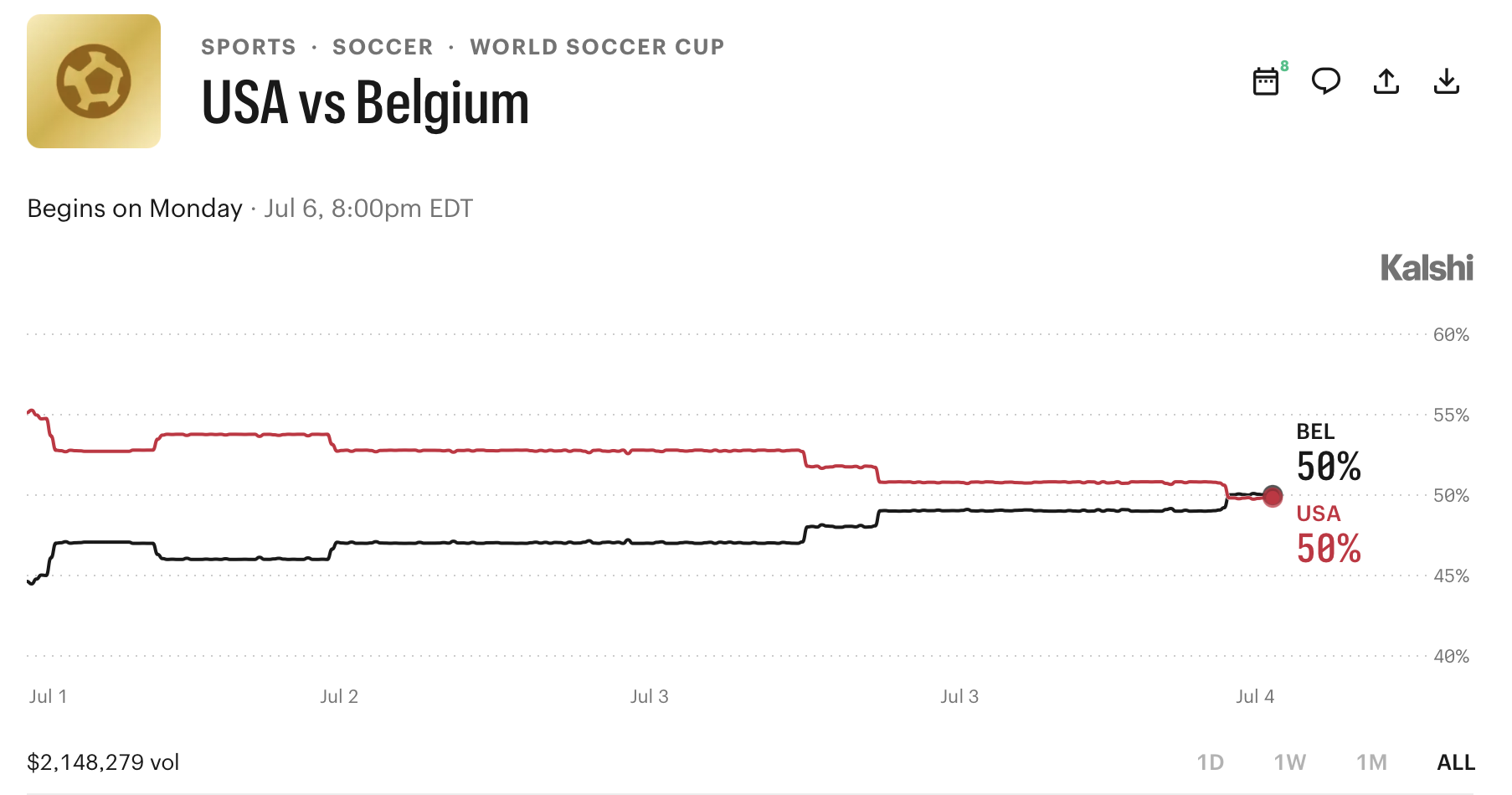
Source: Kalshi
Related: US dominates Polymarket political bets despite geoblock: Report
Legal battles intensify as prediction markets grow
The high trading volumes come as prediction markets remain at the center of a growing legal and regulatory debate in the United States.
By March, nearly a dozen US states had already moved against companies including Kalshi and Polymarket, with some seeking to halt the markets while others pushed to bring them under existing gambling laws and state tax frameworks.
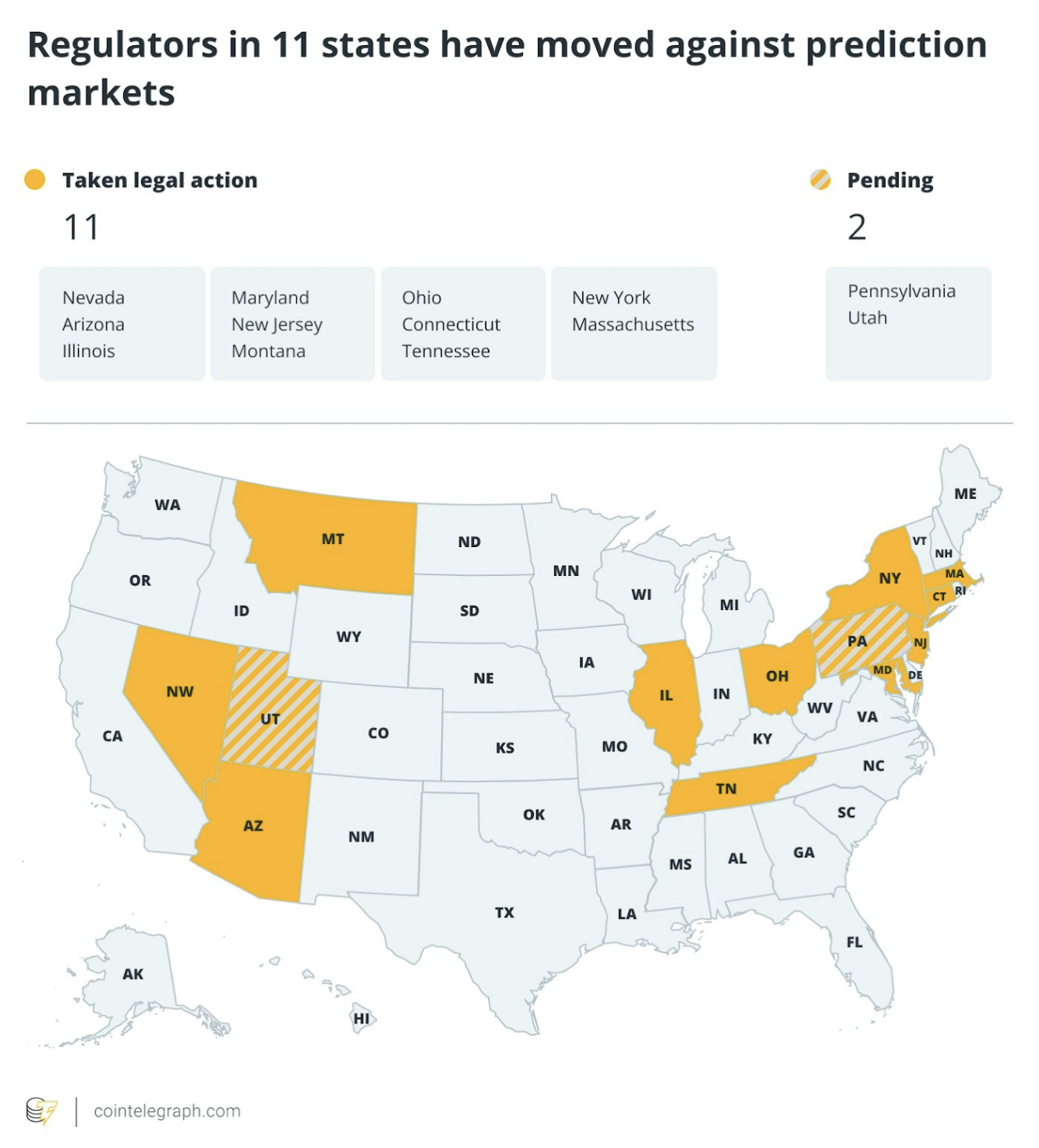
Source: Cointelegraph
Federal regulators have rejected states’ attempts to police prediction markets. The following month, CFTC Chair Michael Selig accused states of pursuing “illegal enforcement actions” against federally regulated exchanges, arguing Congress had given the agency sole authority over commodity derivatives markets, including prediction markets. “To any state that seeks to nullify federal law and seize authority over these markets,” Selig said, “we will see you in court.”
The debate has broadened beyond regulators. In June, casino operators, tribal organizations and labor groups urged Congress to remove sports-event contracts from the CFTC’s authority with an amendment to the Digital Asset Market Clarity (CLARITY) Act, arguing the contracts should instead remain under state gambling laws and existing gaming oversight.
Europe has taken a different approach. On Friday, the European Securities and Markets Authority (ESMA) reminded firms that many event contracts may already fall under existing restrictions on binary options, saying whether a product is regulated depends on its characteristics rather than the “event contract” label attached to it.
Magazine: AI is banking the unbanked in Africa… faster than crypto