Just Adam.
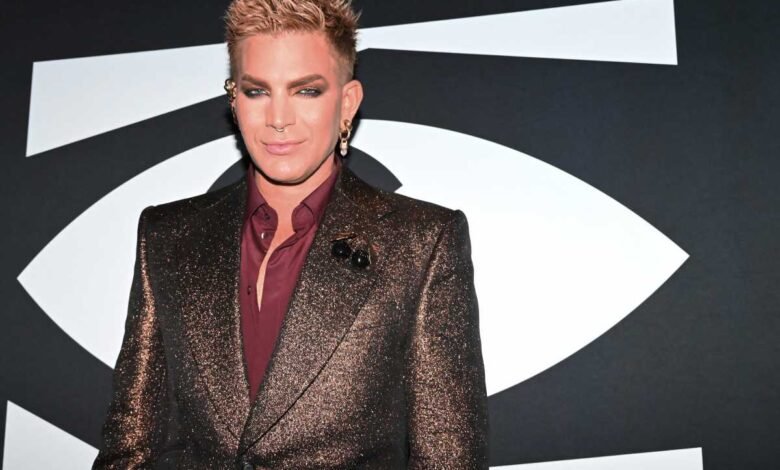
It’s simple enough, but after decades in the limelight, it’s perhaps the most honest and revealing title Adam Lambert could have chosen for his newest album.
The album isn’t another reinvention or larger-than-life persona. Instead, it’s something far truer to the man behind the spotlight.
Released today, ADAM is the GRAMMY-nominated singer’s sixth studio album and his first independent release through his own label, distributed by The Orchard. More than a self-titled record, the album is a declaration of creative freedom, embracing both the confidence Lambert has become known for and the anxieties he’s often kept hidden.
“It also kind of felt like the most direct and simple way to do it,” Lambert told amNewYork. “I was looking at all the songs laid out and thinking, ‘How do I sum this up?’ Well, it’s just me. It’s me right now.”
“So much of it has to do with the fact that it’s very honest. I was able to write not only the positive, self-affirming confidence songs, but also songs that illustrate anxieties, struggles and the darker side of things. For that reason, it felt like a really wide view of who I am.”
That honesty became the foundation of ADAM, a record shaped by one of the biggest changes in Lambert’s life: leaving Los Angeles after decades behind for a fresh start in New York City.
The move transformed not only his perspective but also the album’s landscape. The opening track, “Rat City,” serves as a love letter to the Lower East Side. Executive produced by Pete Nappi and paired with artwork by legendary fashion photographer Nick Knight, ADAM draws heavily from ‘90s alternative rock and electronica, embracing gritty industrial textures that mirror the city’s steel, concrete and constant motion.
“I think New York gives a different style of permission,” Lambert said. “The people I’ve been encountering here have so much individuality, especially in the way they express themselves, and I’m really inspired by that. It celebrates the weirdos, and I am a weirdo.”
“The city also impacted the sound of the album. Moving from LA to New York, you’re surrounded by people, noise, cement, concrete and stone. I wanted the songs to sound a little more industrial and heavy.”
Ironically, New York was always where Lambert imagined his life would begin. Although it took years to get there, the move ultimately felt like a return to where he was always meant to be.
“When I was a teenager, my goal was to move to New York,” he recalled. “Right before I auditioned for American Idol, I was actually at a crossroads. I was about to move here, and then Idol took me in a completely different direction.”
Nearly two decades later, finally making the move has felt like coming home.

“It feels like a long time coming,” he said. “A lot of people tell me, ‘I’m surprised you’re not a New Yorker—you feel like a New Yorker.’ That’s a great compliment.”
That newfound sense of belonging echoes throughout ADAM, but Lambert hopes listeners discover pieces of themselves within it.
“Music is medicine, in my opinion,” he said. “I have music I listen to when I want to relax, when I want energy, when I’m sad, when I’m feeling sexy. It can amplify or redirect your energy. It’s magic—it changes you.”
After 17 years in the music industry, Lambert says he’s finally stopped chasing everyone’s approval.
“As an entertainer, there’s always an element of people-pleasing,” he admitted. “But as I’ve gotten older and more experienced, a lot of that has fallen away. I’m making music for myself first and foremost.”
“You learn you can’t please everybody. Your own instincts are always going to feel the most right because there’s no right or wrong in art. I’m following my gut, taking everything I’ve learned, and I feel prepared to make bigger decisions for myself now.”
That confidence extends beyond his music. Since emerging on the national stage in 2009, Lambert has become one of pop music’s most visible LGBTQ+ artists, witnessing firsthand how dramatically the industry has evolved.
“When I first entered pop music, there were very few openly gay men doing this,” he said. “There were a lot of points to prove. It felt like the Wild West.”
Seventeen years later, he sees a landscape transformed by visibility.
“I’m so happy to see how much progress has been made. The LGBTQ community doesn’t look like one thing anymore. We have so much diversity on display, and that’s beautiful.”
Still, Lambert acknowledges that progress has never been linear. While the industry and society have taken meaningful steps forward, he believes there is still work to be done.
“You’re always going to deal with a certain amount of ignorance as a queer artist in mainstream culture,” he said. “But there’s so much more acceptance now. Coming out isn’t the shock value admission it once was.”
In fact, he finds hope in younger generations questioning whether labels matter at all.
“That was always the goal,” he said. “To get to a place where people could simply exist.”
Even so, Lambert recognizes that today’s political climate is a reminder of why visibility still matters.

“It took a lot to get to this point,” he said. “Sometimes younger people don’t realize there was a time when it was vital for us to wave the flag loudly and proudly. That’s why we are where we are today.”
While ADAM looks inward, Lambert credits his years fronting Queen and his recent theatrical work, including Cabaret and his portrayal of Judas in Jesus Christ Superstar, with helping him embrace every side of himself.
“Queen weren’t afraid of being flamboyant or camp,” he said. “Touring with them gave me permission to express that joy and that ridiculousness because it was built into their music.”
His stage work, however, unlocked something deeper, something more visceral.
“Cabaret and Jesus Christ Superstar allowed me to access more of my own darkness,” Lambert said. “They made me more comfortable with uncomfortable emotions. When it came time to write this album, I wasn’t afraid to express those parts of my own experience.”
That emotional duality ultimately defines ADAM and, Lambert hopes, resonates with anyone navigating the contradictions of being human.
“I hope people see that you can be confident, be a trailblazer and have joy, while also struggling and feeling scared or stressed,” Lambert said. “Two things can be true at the same time. That’s real life.”
To celebrate the album’s release, Lambert will bring those songs to the stage with a series of intimate performances and signings. New York fans can meet him at Barnes & Noble on July 14 before he headlines Brooklyn Paramount the following day.
“The very first song on the album is literally a love letter to the Lower East Side,” he said. “I just want to connect with the people in the city and celebrate this album.”
It’s been a while since Lambert has done a solo performance, so he offered one final request for concertgoers.
“Wear something fierce,” Lambert laughed. “The key color on this album is black. Let’s rock out.”