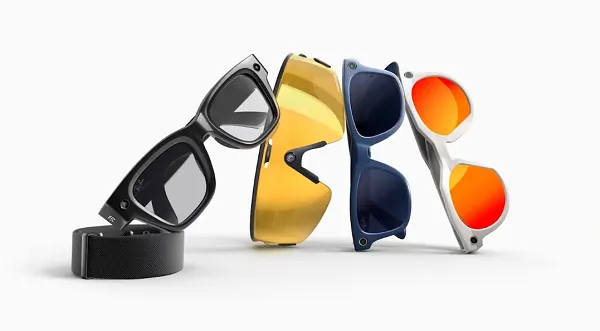
Meta CTO Andrew Bosworth has confirmed that the company is considering rolling out facial identification capability within its Meta AI glasses.
This week, in an interview with journalist Nicholas Thompson, Bosworth confirmed that Meta is exploring the use of facial identification to help visually impaired users regain their independence.
As per Bosworth: “If you ask the blind community what the number one request that we get from them is, it’s ‘who’s in the room with me? Tell me who’s here.’ They’re not asking for a global central database of faces. They’re like, ‘People I know. What people that I know are here?’”
Bosworth noted that visually impaired and older people could benefit from having a facial identification element within the device, as it could help them better navigate the world around them.
“[In] a veterans group that deals with people who had traumatic brain injuries…they often struggle with memory,” Bosworth said. “They struggle with cognition. And this came up, and this is again, a top ask for them. ‘Hey, I just want to know who I’m talking to and how do I know them and what’s my history with this person?’”
Bosworth reiterated that the idea of this functionality is not to build a central database of faces through Face ID, but to help users identify people they know via digital name tags.
Thompson clarified with Bosworth that this function is not about identifying an unknown person.
Instead, said Bosworth, the device would introduce people who have been“encrypted locally to your device, somebody that you met in person with your glasses on who introduced themselves or you said, ‘okay, this is David, remember this person.’”
Bosworth said that this functionality would only be available to users when they are wearing the glasses, and it could prove valuable in a wide range of applications.
“You’d use it,” Bosworth said. “I’d use it. I go to parties where I definitely have met somebody before. You’re a journalist, you must meet people constantly, but constantly in your head be like, ‘I know this person’s name, face. When was the last time we talked? What’s the context here?’”
Bosworth said the company calls this “the cocktail party problem,” and that it could be solved through this feature.
The fact that Meta is exploring this is no surprise, as various reports have hinted at such throughout the year.
However, in recent weeks, Meta has also strongly denied that it’s doing this, and has criticized media outlets for reporting that Face ID capacity is coming.
So why the mixed messaging?
In February, reports suggested that Meta wanted to sneak through an update to its Meta AI glasses that would enable facial recognition within the device. Meta reportedly hoped that broader political turmoil would enable it to launch the feature with less scrutiny and criticism about the privacy concerns.
This is a topic Meta is very familiar with. In 2021, Meta was forced to shut down its facial recognition processes on Facebook after user backlash around the automated detection of faces in images, particularly via photo tagging.
That sparked a range of concerns about how the company was tracking and storing facial ID information. This, among various other PR issues, led Meta to re-brand itself and distance itself from past concerns.
The reintroduction of facial recognition, then, is something that the company is proceeding with very cautiously, in order to avoid another privacy fiasco.
Last month, Meta removed facial ID elements from the back-end code of the Meta AI device driver, after a report from Wired raised questions about the addition. Meta spokesman Andy Stone also attacked Wired’s reporting, calling it “shoddy” and “intellectually dishonest.” Bosworth joined in the chorus, calling Wired’s report “incredibly misleading.”
Yet, Bosworth has now confirmed that Meta is looking to add facial identification into the device, which is exactly what Wired reported.
So why the aggressive and blatantly untrue denial?
Meta is extremely sensitive about the bad press associated with surveillance technology, and as such, the company clearly decided to attack the reports in an effort to dilute their impact.
Maybe, by coming out so strongly against the suggestion, the company hoped to quell any early backlash and then quietly launch the feature with reduced media focus.
However, using Meta’s own criticism, it seems dishonest and misleading for the company to loudly push back on such reports, while it’s developing the exact tech those reports suggest.
Either way, the bottom line is that facial recognition is likely coming to Meta AI glasses in some form, whether Meta dresses this up as a benefit or not.