NYPD policy statement on radio access is ‘vague’ and ‘a violation of the law,’ say press advocates

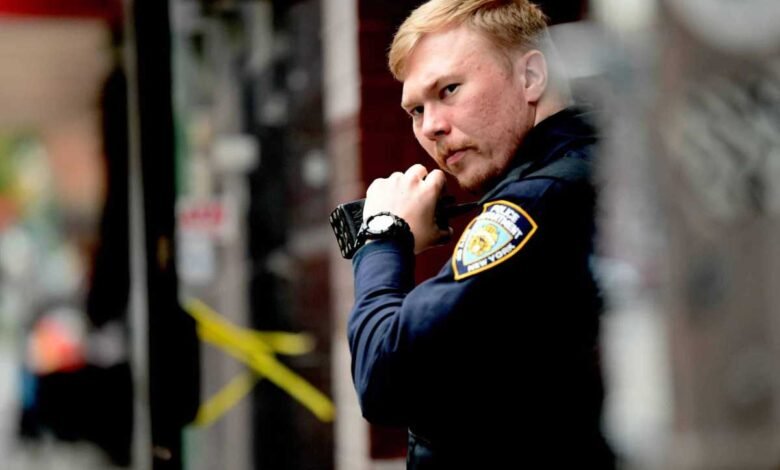

Press advocates blasted a required policy statement by the NYPD on providing media access to police encrypted radio calling it ‘vague and in violation of the local law passed this past year.’
The city’s Local Law 46 calls for credentialed press to have “real-time” access to encrypted police radios that do not involve private or sensitive information. The proposal that the NYPD provided says, “The NYPD will establish a platform to provide credentialed professional journalists with access to encrypted channels that do not regularly broadcast sensitive information. The feeds will be broadcast at a delay.”
The NYPD did not provide a specific time delay for those broadcasts, but three years ago, a DCPI commander said he expected to provide encrypted radio to the press at between 15-30 minute delays. Currently, email notifications of crimes and incidents can run between 4-6 hours and sometimes not at all.
Because the NYPD failed to provide any access beyond the one-channel city-wide radio and transit radio (which cannot be encrypted because of the limited ability to use it in underground stations), Manhattan City Council Member Gale Brewer sponsored Local Law 46 to force the NYPD to provide press access to local precincts, highway and special operations divisions.
Other sensitive radio frequencies that include command channels, point-to-point, and detective frequencies would remain confidential to not impede investigations.
Local Law 46 went into effect in January after Mayor Zohran Mamdani declined to sign or veto the law, making it go into effect automatically.
The one open channel was mandated under the law, but was already activated under then-Mayor Eric Adams after an outcry by the press over a lack of NYPD transparency.
Brewer said she is “upset by the way they rolled this out,” and “I’m guaranteeing you that we will deal with this and contact them on Monday and tell them that this is not an appropriate response.”
Brewer said the NYPD is apparently “nervous about the people who will get access and who is just a blogger.” She recognized that there is no “user agreement” for anyone to evaluate.
“So how are we supposed to comment if they don’t tell us about the user and no user agreement? There is simply no application,” Brewer said. “We worked hard on this so people like you (the press) can apply, and get access with no encryption, and no delay. When they made one channel, we got a lot of complaints that it wasn’t fast enough or had enough detail. This is not an appropriate response, and they are not following the law.”
Media lawyer and journalist Robert Roth expressed dismay with the policy statement saying, “The NYPD has intentionally used vague terms like ‘application packet’ and ‘acceptable use policy’ that will mean whatever they want.”
“I’m very disappointed in the NYPD response,” said Roth, who was a lead witness for Local Law 46 in support of the press. “I would have hoped they would have made a good faith effort to do what the City Council wanted them to do to provide access to encrypted radio. I expected more details – there are too many unclear examples, and a lot of unanswered questions.”
Members of the New York Media Consortium, an umbrella group of 14 press organizations formed to fight for encrypted police radio access that has been in existence for more than 70 years, blasted the policy statement.
Bruce Cotler, president of the New York Press Photographers Association, had many questions.
“The policy statement is in violation of the spirit of the law as it says the credentialed media should have ‘real-time’ access to encrypted channels,” Cotler said. “And where is this application for us to evaluate? And what is this platform they are proposing? Is it an app? What are the conditions to which the press should adhere? There are just too many questions here and it seems intentional to stall for time.”
Diane Kennedy, president of the New York News Publishers Association, said it is essential for the press “to monitor law enforcement activities, gathering information as events unfold in order to provide the public with a complete picture of events affecting public safety.”
“Credentialed journalists should continue to have the ability to monitor all non-sensitive radio communications in real time, because a loss of minutes in documenting an event may inhibit the ability of the press to tell a complete story. In this proposal, the NYPD has proposed to limit the ability of the press to monitor and fully report on law enforcement activities throughout the city.”
Mickey H. Osterreicher, general counsel of the National Press Photographers Association, said the NYPD proposal “appears to sidestep both the spirit and intent of the law.”
“Both the City law and the legislation advancing at the state level reflect an important recognition that police radio encryption has consequences far beyond the technology itself. When routine police communications disappear from public view, an important source of independent information about government activity disappears with them,” Osterreicher said.
“Providing information only after journalists can no longer respond to events as they unfold does little to advance the transparency and accountability these laws were intended to preserve,” he added. “We have worked cooperatively with the Department for years and remain committed to protecting genuinely sensitive information and officer safety, but the ultimate goal must be a system that allows the press to provide the public with timely, independent reporting while events are actually unfolding.”
The NYPD has spent more than a billion dollars on new radio equipment, repeaters, batteries, and thousands of man-hours programming and maintaining the encryption system since 2019 when amNewYork first revealed the rollout of the communications system.
The NYPD has justified encryption saying that “bad guys” are using information against them, most clearly during the George Floyd protests of 2020 when agitators with Chinese-made radios interfered with police communications and taunted commanders during upheavals and attacks on police. Some criminals are said to have used radios to commit burglaries and make drug deals.
By encrypting their radios, they denied the press access that had been available for more than 70 years. Numerous council hearings subsequently occurred, putting pressure on the mayor and NYPD to provide some access.
The recalcitrance of the NYPD and other law enforcement throughout the state spurred state legislation that was just passed in the state legislature.
The bill, “The Police Radio Transparency Act,” (A11199A), sponsored by Bronx Assembly Member Karines Reyes and an identical Senate bill sponsored by state Sen. Michael Gianaris of Queens, (S10079), passed and is awaiting the signature of Governor Kathy Hochul.
The state bills are modified and tightened versions of legislation that was vetoed by Gov. Kathy Hochul in 2025 that would give members of the media access to encrypted police radio transmissions and give the public access to time-delayed transmissions. Media members would be defined by a tightened State Shield Law, which currently defines journalists. The new bill says that news organizations that are eligible to receive radio access must have liability insurance and that freelancers must use those organizations to sell their content. Bloggers and influencers would not be included in this bill.
The state bill, however, does not apply to the NYPD, which is under the broader city law.
That plan may have been complicated, media organization leaders say, by the recent issuance of press cards by the Mayor’s Office of Media and Entertainment to influencers who attended a recent court hearing for alleged United Health CEO killer Luigi Mangione while wearing t-shirts and holding signs in support of Mangione.
NYPD officials had privately said in the past that they didn’t trust some of those receiving press cards from MOME because they didn’t believe individuals were adequately vetted.
Three emails and two phone calls were made to the NYPD for comment and clarification. An officer who answered the phone at the NYPD said all questions are answered by email. AMNewYork is still waiting on a reply.
The policy statement is now open for public response for the next 45 days as per the law. Comments on this proposal may be submitted via email to: radioaccess@nypd.org. All comments must be received by August 30th, 2026.
Here is the policy statement:
LAW ENFORCEMENT SENSITIVE — DRAFT
New York City Police Department
Policy Proposal Pursuant to Local Law 46-2026
- Introduction
The New York City Police Department (NYPD) uses conventional land mobile radio (LMR) for departmental communications. These broadcasts are encrypted to protect sensitive personal information related to victims and witnesses; to prevent disruptions to or interference with ongoing law enforcement operations; and to protect sensitive information about investigative techniques and operational procedures.
Local Law 46-2026 requires that the NYPD adopt a written radio encryption policy that provides for (1) reports of critical incidents to be broadcast over an unencrypted, citywide channel accessible in real-time to the general public, and (2) professional journalists to access encrypted radio broadcasts for department channels that do not routinely transmit sensitive information.
Comments on this proposal may be submitted via email to: radioaccess@nypd.org. All comments must be received by August 30th, 2026.
- Citywide Channel for Critical Incidents
Reports of critical incidents are currently broadcasted over NYPD Citywide 1. NYPD Citywide 1 is an unencrypted, citywide channel that is currently accessible in real-time by members of the public. Access to NYPD’s Citywide 1 radio channel is available at no cost to individuals via online streaming services dedicated to radio communications or with the use of a compatible radio scanner.
III. Access to Encrypted Channels That Do Not Regularly Broadcast Sensitive Information
The NYPD will establish a platform to provide credentialed professional journalists with access to encrypted channels that do not regularly broadcast sensitive information. The feeds will be broadcast at a delay.
Members of the press holding either standard press cards or reserve press cards issued by the Mayor’s Office of Media and Entertainment (MOME) requesting access to encrypted radio transmissions must take the following steps:
- Standard Press Card Applicants: Apply for access via the NYPD by submitting a complete application packet, including a signed Acceptable Use Agreement.
- Media organizations holding reserve press cards are required to designate a single official representative to serve as the primary contact person, and individual applications must be submitted for all journalists applying via an organization with a reserve press card. The Acceptable Use Agreement must be signed both by the organization’s official representative and by the journalist.
- Once the application has been approved, the NYPD will inform the journalist via email and provide instructions for setting up their account for access.
- If a member of the media’s application is denied, the journalist has the right to file an appeal with the NYPD.