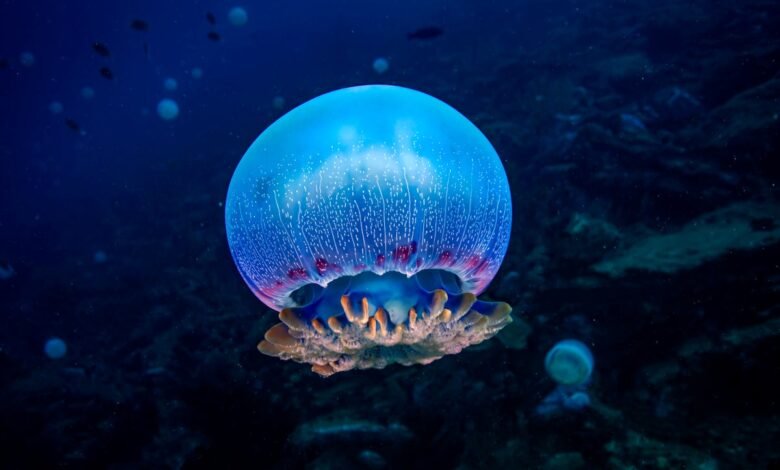

Jellyfish and Sea Anemones Sleep Just Like Us
Sea anemones and jellyfish don’t have brains, but the way their neurons behave during sleep shows some surprising similarities to humans
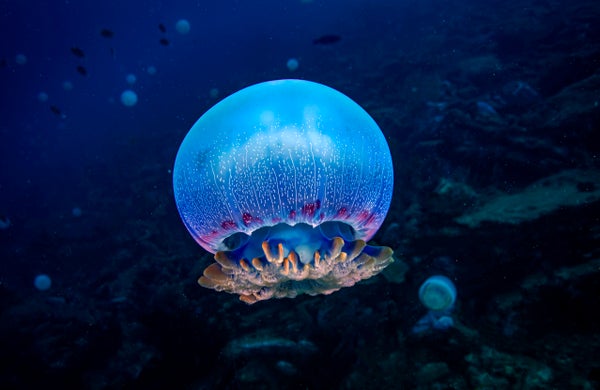
Humberto Ramirez via Getty Images
Jellyfish and sea anemones are curious creatures: these organisms evolved without a brain and, as scientists discovered only in the past few years, don’t need one to sleep. The animals do, however, have neurons—nerve cells that appear interconnected throughout their body. And now a new study shows that how these animals sleep is surprisingly similar to humans, suggesting that sleep may have evolved before even the most primitive brains.
The findings, published on Tuesday in Nature Communications, also help answer one of science’s prevailing mysteries: Why do animals sleep? They add to past evidence from other animals and humans that sleep provides a “window” for maintenance on the brain and body, helping to repair DNA damage and maintain neuronal health.
“This confirms that sleep allows a window for key housekeeping tasks,” says Philippe Mourrain, an associate professor of psychiatry and behavioral sciences at Stanford University, who studies sleep. Mourrain was not involved in the new study.
On supporting science journalism
If you’re enjoying this article, consider supporting our award-winning journalism by subscribing. By purchasing a subscription you are helping to ensure the future of impactful stories about the discoveries and ideas shaping our world today.
The new work shows this function of sleep has been conserved across evolution, he says, from the animals, such as primates, that have one of the most complex brains to cnidarians, such as jellyfish, which have none.
Curiously, the study finds that jellyfish appear to enter a sleeplike state for around eight hours a day and generally at night—a schedule many humans might recognize. Sea anemones also appear to sleep for around a third of the day.
The researchers also showed that when these animals’ neurons incurred additional damage induced by the team they slept more, a finding that Mourrain says gives clues to what makes us fall asleep in the first place.
It’s Time to Stand Up for Science
If you enjoyed this article, I’d like to ask for your support. Scientific American has served as an advocate for science and industry for 180 years, and right now may be the most critical moment in that two-century history.
I’ve been a Scientific American subscriber since I was 12 years old, and it helped shape the way I look at the world. SciAm always educates and delights me, and inspires a sense of awe for our vast, beautiful universe. I hope it does that for you, too.
If you subscribe to Scientific American, you help ensure that our coverage is centered on meaningful research and discovery; that we have the resources to report on the decisions that threaten labs across the U.S.; and that we support both budding and working scientists at a time when the value of science itself too often goes unrecognized.
In return, you get essential news, captivating podcasts, brilliant infographics, can’t-miss newsletters, must-watch videos, challenging games, and the science world’s best writing and reporting. You can even gift someone a subscription.
There has never been a more important time for us to stand up and show why science matters. I hope you’ll support us in that mission.