Summary
- Highguard is a free-to-play 3v3 first-person raid shooter, available today on Xbox Series X|S.
- It is the independently published debut of Wildlight Entertainment, a new studio comprising veterans from Apex Legends, Titanfall, and Call of Duty.
- Wildlight told us about their ambitious plans to support the game with monthly content updates, adding new characters, maps, modes, and more.
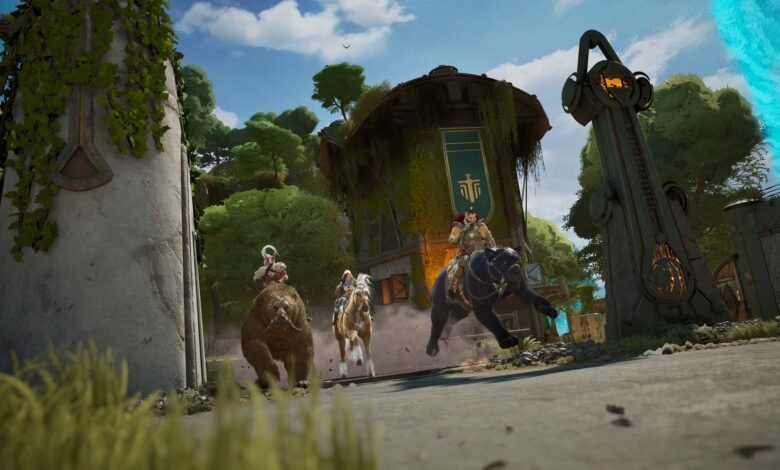
Lots of games offer intense, competitive, squad-based action, but I can’t think of any besides Highguard where I can sling spells and bullets from the back of a majestic, galloping bear as I charge in to destroy an enemy fortress.
Highguard turned a lot of heads with its flashy reveal at the end of the Game Awards last month, but many were left wanting to know more about this mysterious debut from Wildlight Entertainment, a new studio of Apex Legends, Titanfall, and Call of Duty veterans. The developers are first to admit that the intervening month has been quiet, but are confident that the game they’ve toiled over in secret for four years will speak for itself on release today.
I spent a whole day playing the game and interviewing its lead developers and studio founders last week, and I am here to tell you exactly what we’re all about to play with Highguard.
Ready to Raid
As a “PvP raid shooter,” Highguard is built around a new and interesting gameplay loop in which two teams of three players fortify bases, ride out on mounts to gather resources and gain power, and initiate a series of raids to try and destroy the opposing team’s base first. It’s a little bit MOBA, a little bit survival shooter, and a little bit Capture the Flag, among other influences.
Game Director and studio Co-Founder Chad Grenier tells me that the mode’s genesis came from team members enjoying the thrill of raiding an enemy base in multiplayer survival classic Rust, and wanting to distill that into a refined, competitive, repeatable experience. “Every match is about escalation: fortifying, venturing out, clashing, then mounting coordinated raids and defenses until only one base is left standing.”
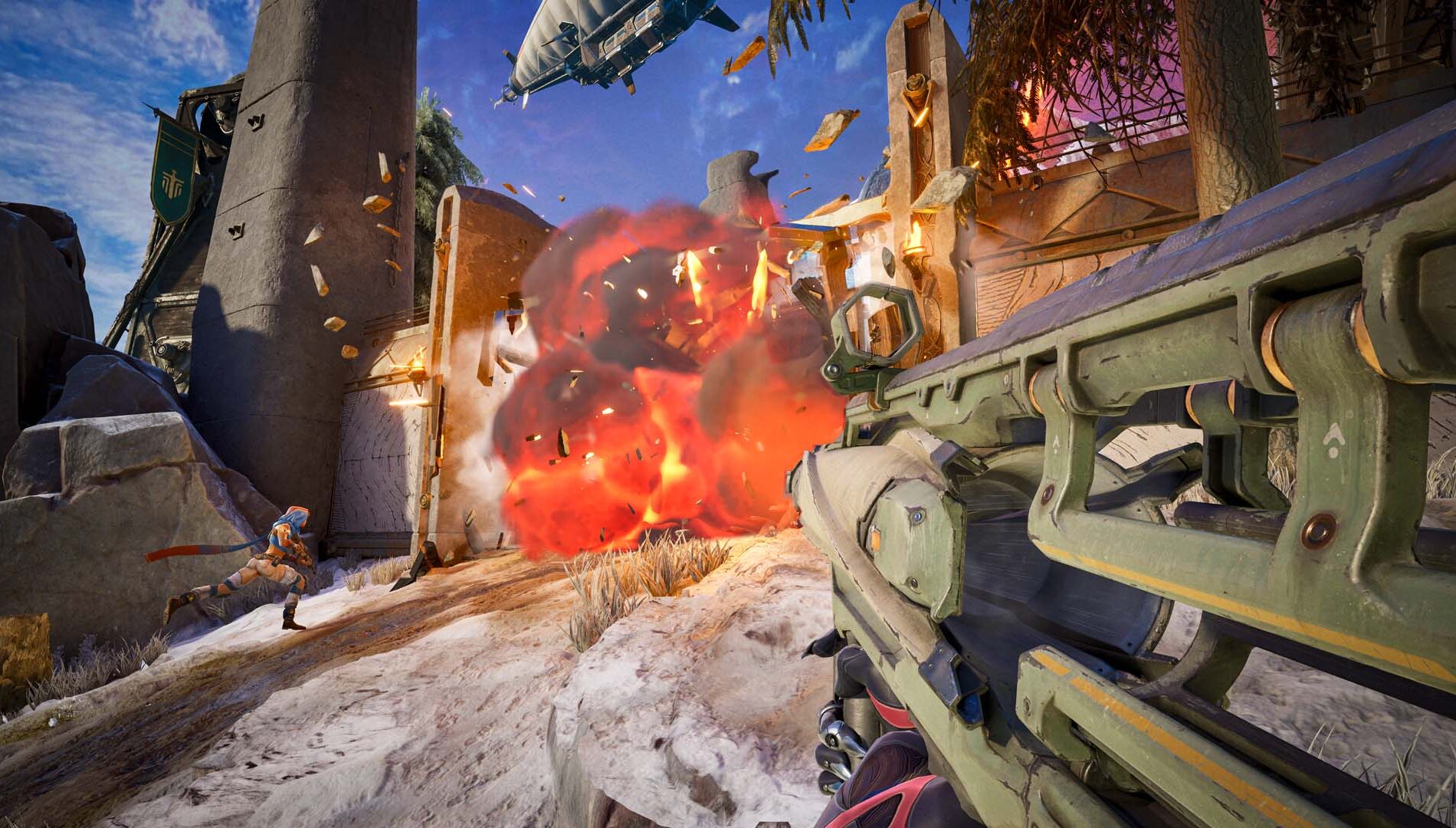
Each round starts with a minute locked in your base to selectively fortify walls, before being cut loose to find better gear and harvest crystals that can be turned in at shops all over the map to also change and upgrade your kit. The maps are wide open, and I very rarely ran into members of the other team until after several minutes into a match, when a storm would form over one of several predetermined locations, where the Shieldbreaker soon materialized. This magical sword is your key to victory—teams fight to grab it first and run it to the enemy base (“like reverse Capture the Flag,” according to Grenier) and insert it into one of several slots around their magical perimeter shield, initiating a raid.
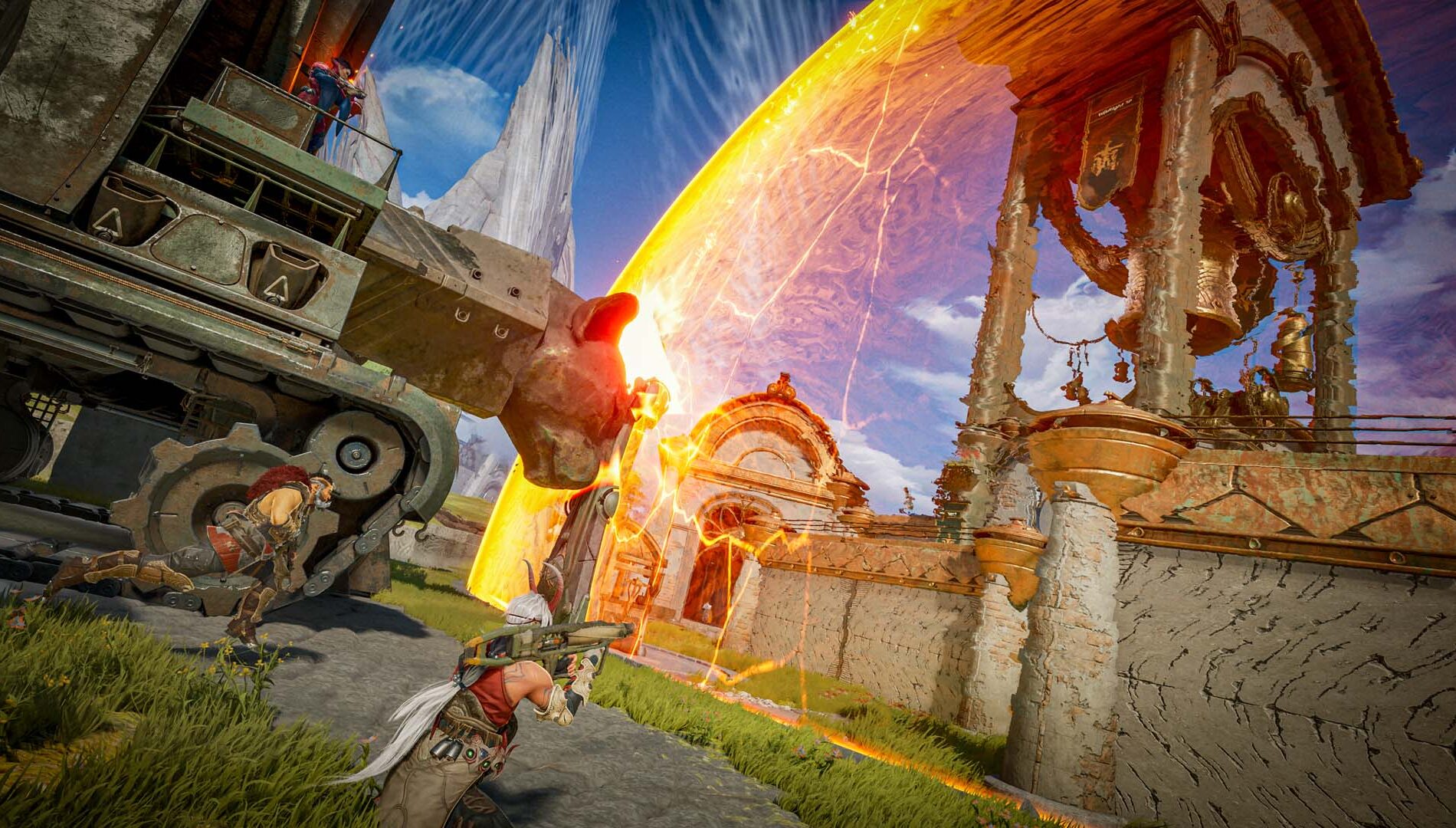
A siege tower immediately materializes from a portal, which cracks a segment of the base’s shield for the invaders to enter, also serving as their forward base for respawns during the raid. The invading team’s objective is then to breach the base (which is full of breakable walls), plant bombs on one of three key spots, and defend them until they go off. Two of the points will do substantial damage to the base’s life total, while successfully destroying the main, centrally fortified point will take it out entirely. The match ends when only one base remains standing.
If both bases are still there when the raid ends, the match resets and another Shieldbreaker starts to form, but with new and improved gear found scattered around the map and in shops. Each of these phases is on a tight timer, on which respawns for both teams will be capped until the next phase begins, which keeps things moving. My matches ran anywhere from 10 to 30 minutes, with some of the longer ones being quite dramatically swingy.
The tempo variation between the phases and escalating power over the course of the match gave it a distinct and pleasant rhythmic cycle of rising anticipation in preparation leading into tense raids with higher and higher stakes. Lead Designer Mohammad Alavi says that this was deliberately tuned to make it enjoyably sustainable, where the same number of hours of nonstop PvP deathmatch would be more exhausting for most players.
Need for Steed
Most of Wildlight’s creative leadership and design team worked on Apex Legends, and it shows in how buttery smooth the action feels.
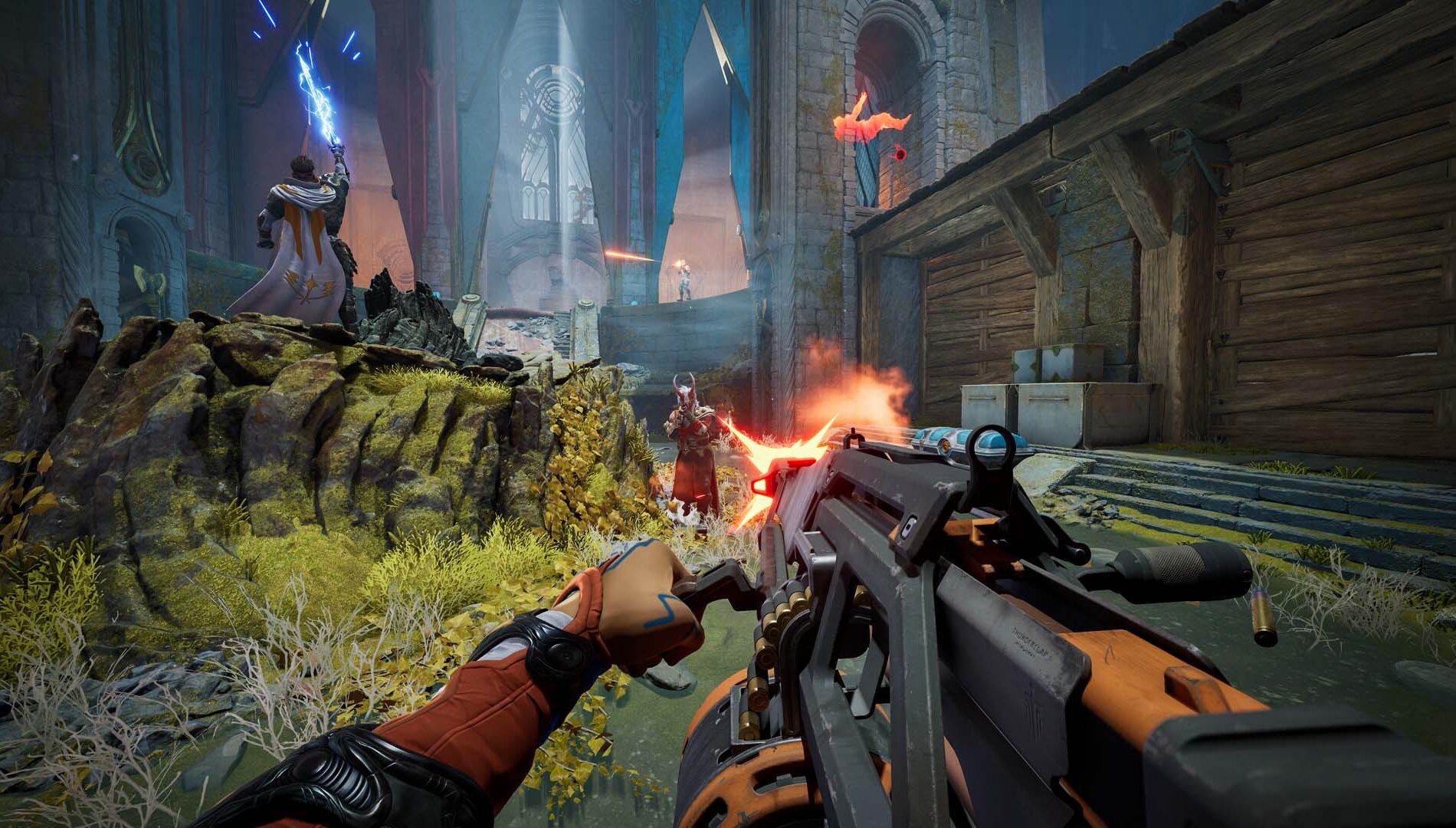
There are 10 weapons available at launch, all of which will feel familiar to a seasoned FPS player. With slots for two at a time, I tended to use the Ranger sniper rifle and Paladin automatic shotgun to cover long- and close-range engagements, as matches would inevitably include both. You also have one of three raid tools (a rocket launcher, an explosive sledgehammer, or a zipline gun), which provide limited-use tactical utility or base destruction. Everything looks and sounds as good as you would expect from so many genre veterans, and the difference in approach between each piece of the arsenal is immediately noticeable.
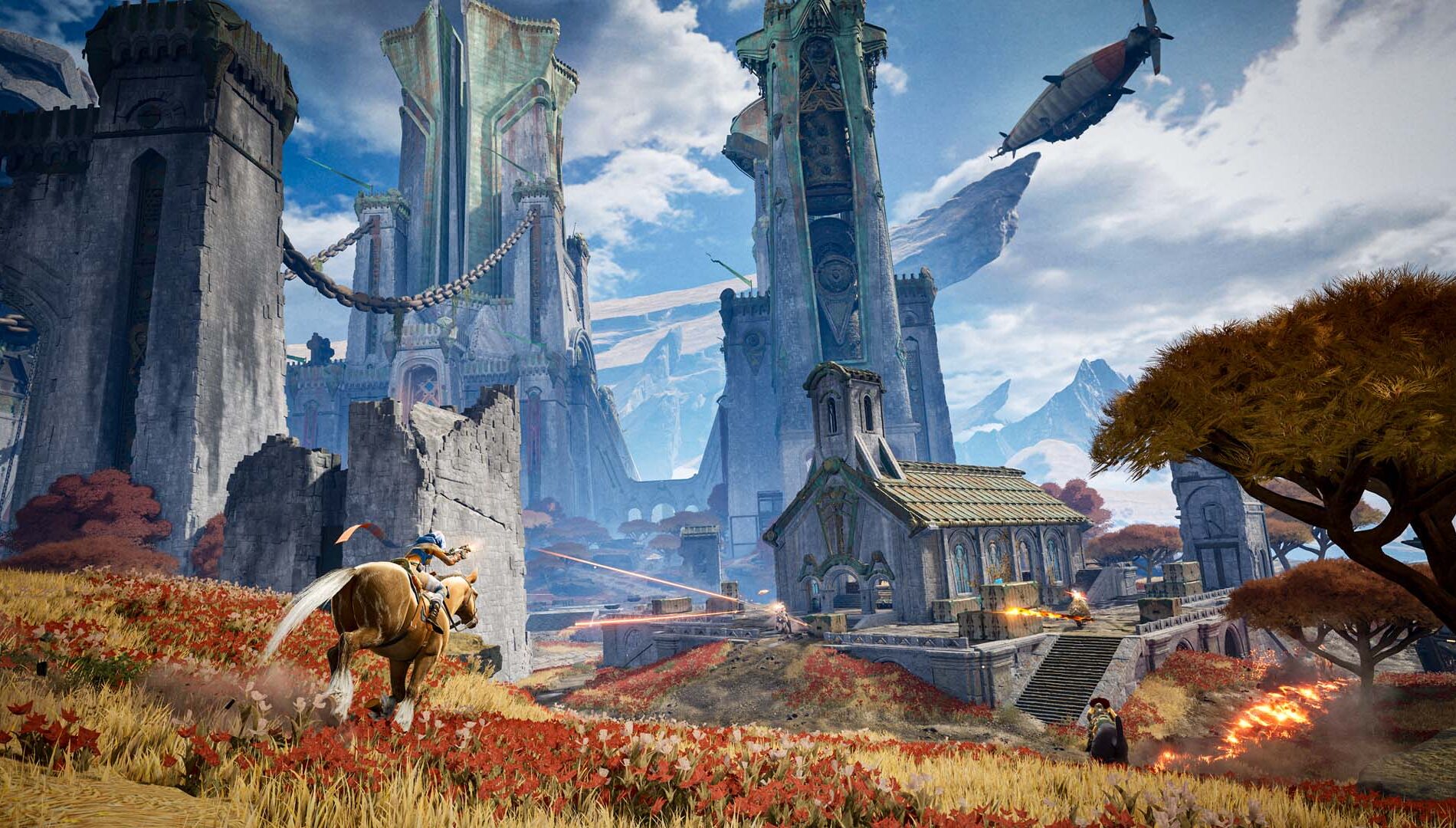
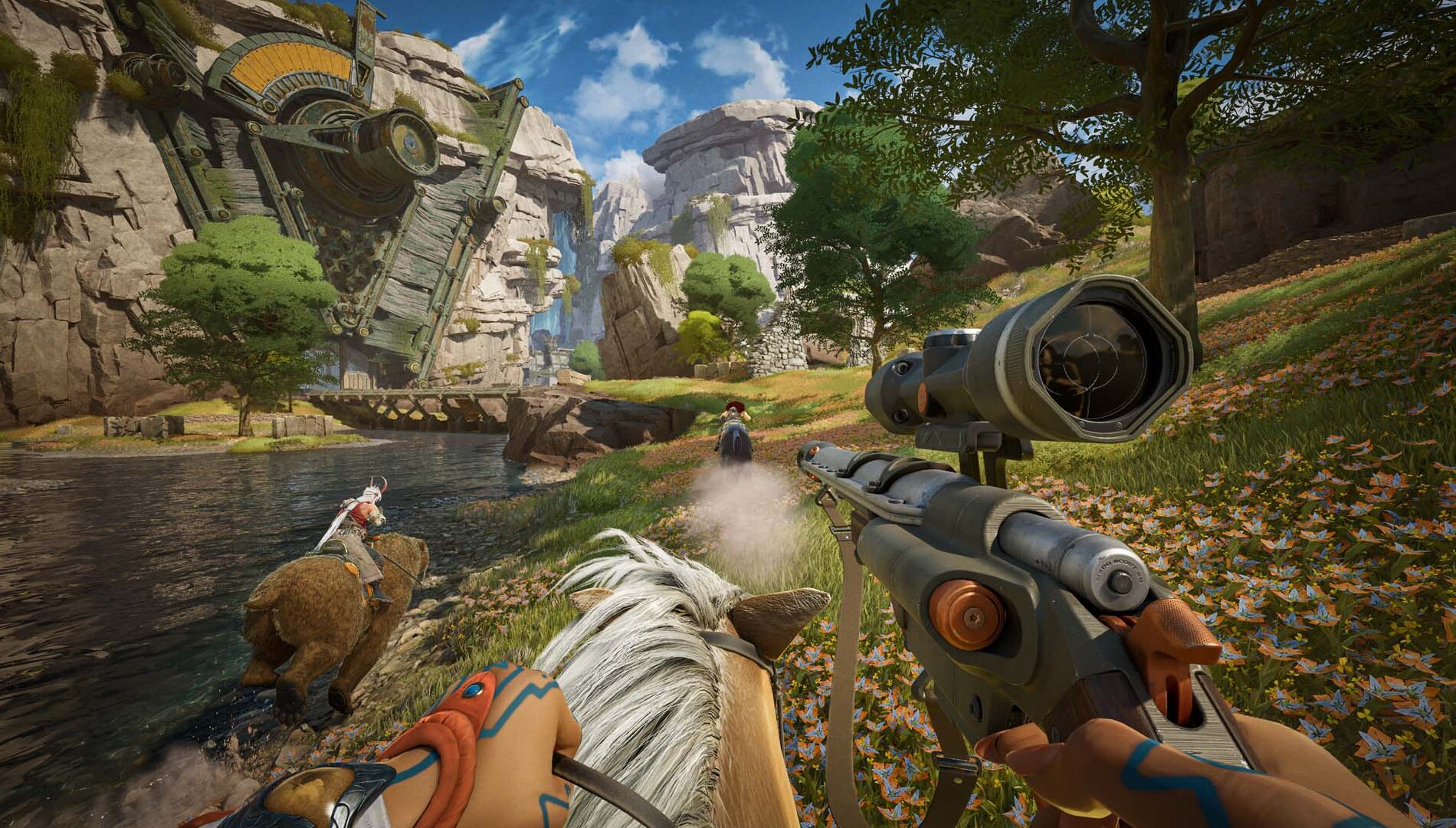
Respawn games are also famous for their movement tech, and Highguard carries that legacy confidently. In addition to the expected running, jumping, sliding, and mantling, the big new mobility addition is mounts, which you can summon and dismiss at will in most parts of the map. There were horses, bears, panthers, and gryphons available to choose from, though the differences are cosmetic. I rode a large, brown bear clad in bone armor, and I loved my chonky, beautiful son.
Mounts are a necessity for covering the maps’ huge distances efficiently, and also lend themselves to fun gameplay moments that I’ve never experienced in a shooter before, like being able to mount up and dramatically gallop off to head the enemy off at the pass as I see the Shieldbreaker icon on the minimap moving up towards our base.
Choices, Choices
Adding to the sense of flexibility and choice, players also choose to play as one of eight Wardens available at launch, with more coming later. They are unique characters, limited to one per team, each with a passive ability, a tactical ability on cooldown, and an ultimate that slowly charges up. The two I ended up spending the most time with both had powerful area denial abilities.
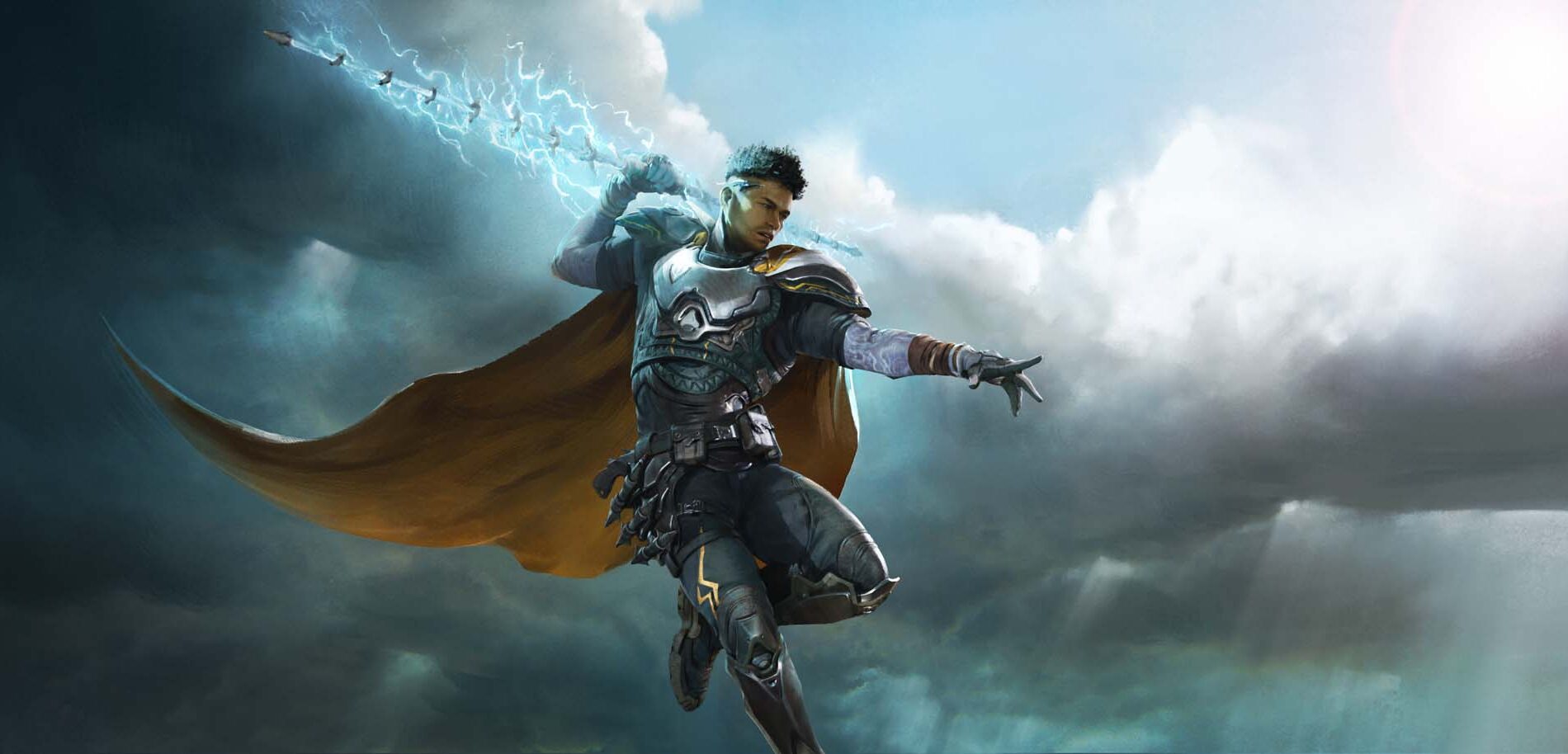
Atticus is a proud, armored warrior that throws lightning spears as his tactical ability, which spark damage to nearby enemies like a Tesla coil until destroyed. When covering an imminently forming Shieldbreaker or a ticking-down bomb, I liked throwing these in corners or above doorways at strategic choke points, peppering the enemy team with additional damage as they tried to come in.
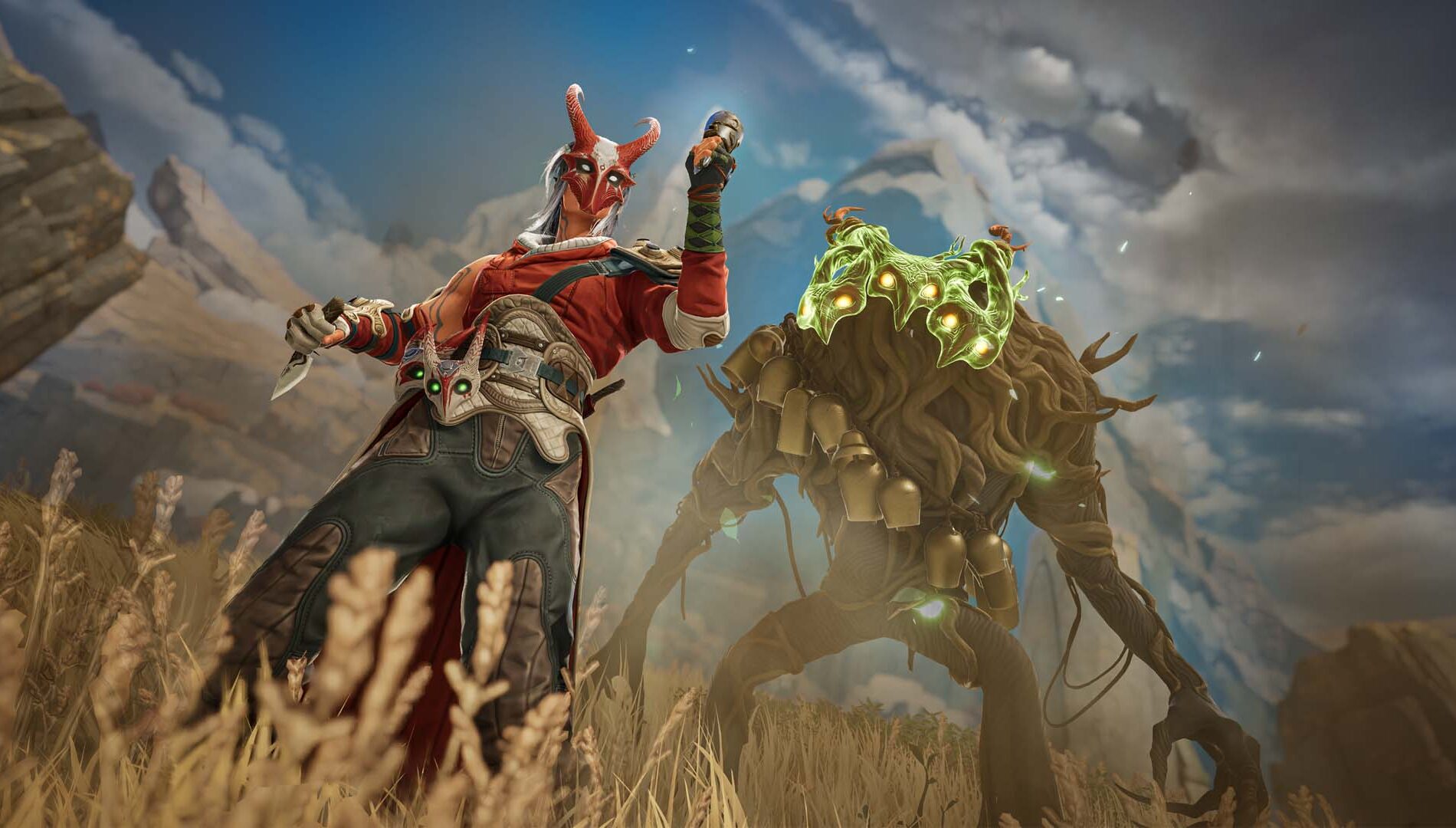
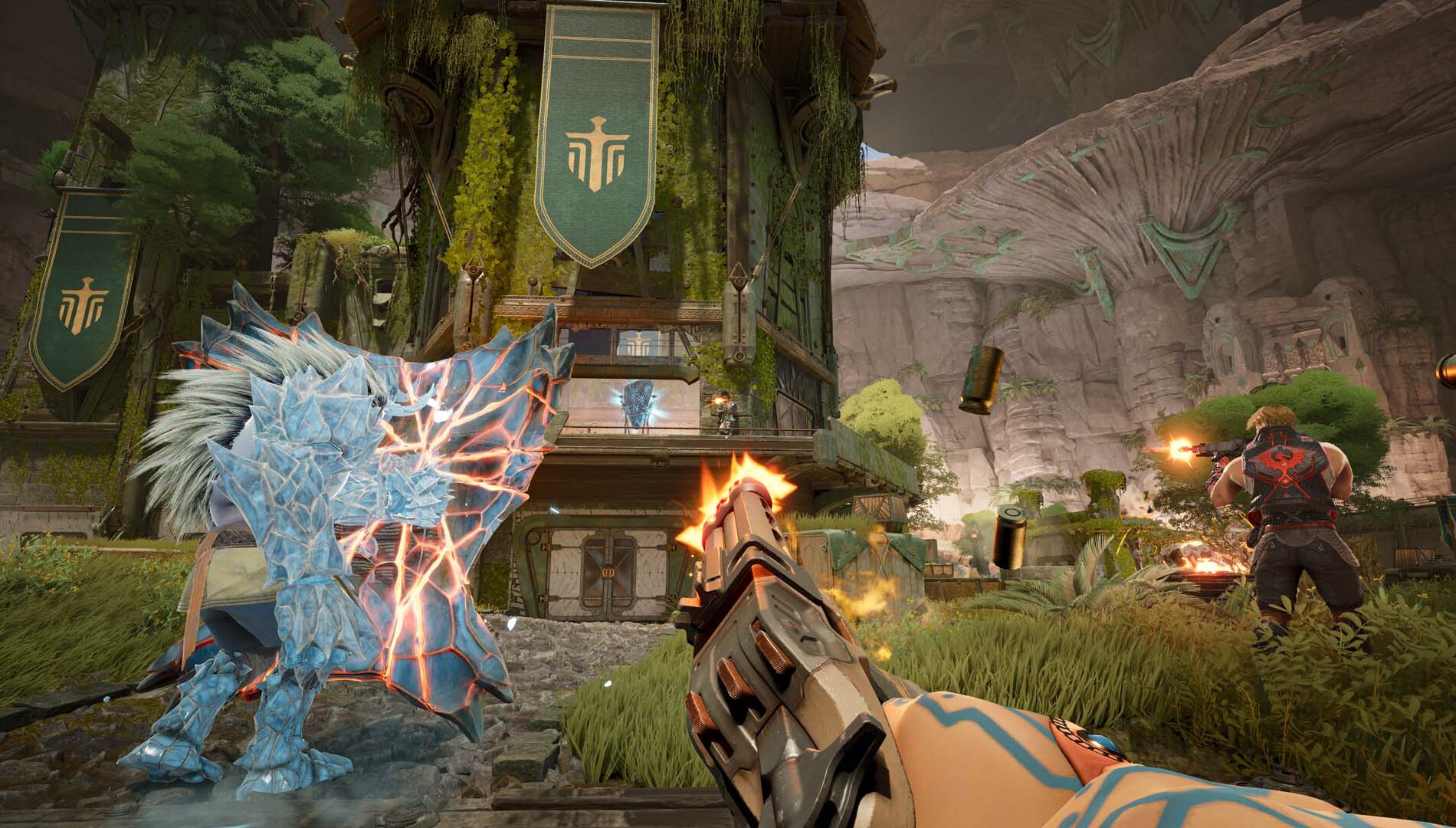
Una, on the other hand, is a masked shaman who summons adorable little nature spirit buddies (not unlike like Zelda’s Koroks), which throw stunning grenades to pester passing enemies as well as occasionally popping up to give her loot. Her ultimate summons a huge tree spirit that can really lock down an important spot in a crucial moment. Both characters reminded me of how much I enjoy playing as Symmetra and Torbjörn in Overwatch, finding the trickiest and most obnoxious spots possible to stick their turrets. Kai was perhaps the character I saw the most in my matches, a monk fused with a frost demon that summons a big wall of ice as his tactical ability, which proved clutch time and again for controlling space.
The bases themselves are also a sort of character choice, as players on each team will vote for one the six total in the game at launch, which will then slot into any of the maps. The bases have distinct advantages and vulnerabilities that interact with the Wardens’ abilities in all sorts of interesting ways. For instance, Hellmouth is a fortress suspended over a lava chasm with narrow bridges that are perfect for shutting down with Kai’s wall.
The Wardens, bases, weapons, and items in the game at launch already provide a fun and wide range of possibilities to explore in how they can remix to synergize or counter one another, giving a lot of dimensions around which the gameplay meta can evolve. Moreover, Wildlight already has a robust plan in place for infusing the game with a generous, steady drip of new content in all of those areas and more.
Eyes on the Horizon
Highguard’s live service additions will come in the form of two-month chapters, divided into two halves. That means that every single month they intend to release some combination of new Wardens, bases, maps, weapons, raid tools, and more. The first update, coming in just a few weeks, will introduce ranked play, and Grenier tells me they have lots of alternate gameplay modes in the works that will cycle in and out – such as Mario Kart-inspired mounted racing. All gameplay content will be added for free, with monetized elements strictly cosmetic.
That’s an ambitious plan, but one for which this team is extremely well prepared. Wildlight CEO and Co-Founder Dusty Welch tells me that, while the Respawn team were very happy with the initial launch of Apex Legends (which arrived as a total surprise), they hadn’t started to plot out any post-release content until after it had come out, leaving months of lag time before they could release anything new. Wildlight and Highguard were conceived with this hard-earned experience in mind to be oriented around live-service production from the very beginning.
“Starting this company, Chad [Grenier] and I knew we have to think about building it differently,” Welch told me, “and the people we hire, the mindset that we have, the pipelines that we set up, the tools, the technologies, the external partnerships and relationships, so that we’re thinking from day one how to successfully operate a live service and have an ongoing, meaningful dialog with our player base, and constantly be delighting and surprising them with content. We didn’t do that well with Apex at launch, and we are extremely well-prepared as we sit here today.”
That whole year of new content for Highguard is already deep into development. Both Welch and Alavi gave the same sly look and non-answer when asked about their favorite Wardens to play, since they’re not in the game yet at launch (Welch confirmed it’s the same one). The standards and expectations for live-service games are higher than ever, but this team comprises people who have been doing it for a very long time already, and they’ve come about as correct as any studio I’ve yet seen chase this model.
Highguard surprised and impressed me. I’m not great at fast, competitive shooters as a baseline, but its vibrant aesthetics and thoughtful design have absolutely piqued my interest. The market for live-service shooters is crowded, but Highguard has the advantage of offering an interesting new gameplay mode that doesn’t map onto any of the existing genres like battle royale or extraction. This may be Wildlight’s first game, but that belies a deeply confident and passionate team at the top of their form, excited to make the best game they can without the constraints of a major publisher.
You don’t have to take my word for it: try Highguard today for free, available on Xbox Series X|S.