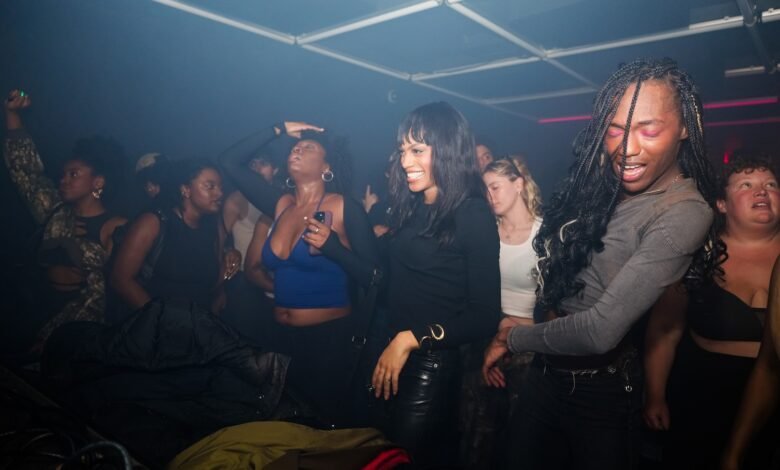
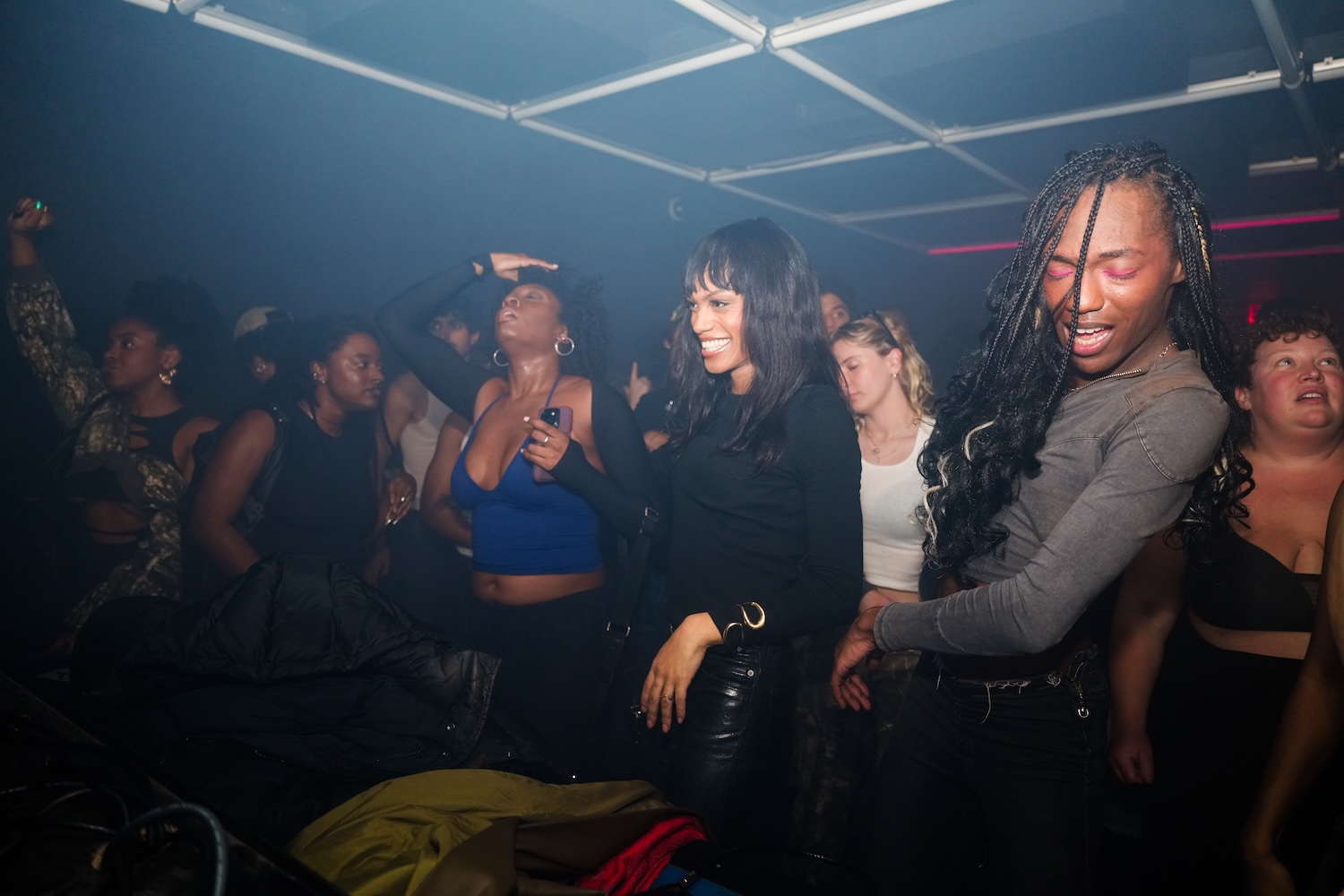
Zack Fox is convinced there’s a mass conspiracy to keep Black people from dancing.
“If I really put my tin foil hat on,” he tells me over Zoom. “I would be 100% in agreement with a conspiracy theory that said there is a CIA-constructed plan to get Black people to move less, to dance less, to enjoy being outside less.” He pauses, sharpens the joke into something edged with truth: The sectioned-off club, the bottle-service island, the sparkler hierarchy, the suspicion that dancing too hard makes you “suspect.”
“If Black people get together and formulate new political ideas and new ways to relate to each other outside of capitalism—and a lot of that is happening in the Black church or in the Black rave—we need to stop the Black rave from happening,” he says of the paranoia at the core of the theory.
It’s a few days before his Friday night set at Paragon, one of the half-dozen venues across Brooklyn participating in Dweller, the borough-wide, Black-led electronic music festival returning in 2026 after a year off. Whether Langley was actually monitoring the function remains unclear. What’s certain: If there is or ever was some deep-state scheme to keep Black people from dancing, it has met an active resistance at Dweller.
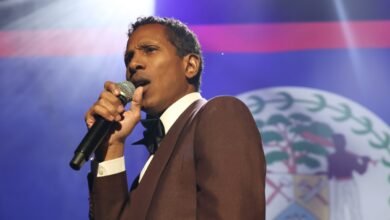
Fox’s set at the Bushwick venue beneath the Broadway J/M/Z was dense and deliberate. It tunneled into Detroit techno’s sternum, swung into Jersey club pockets, flirted with house and church music at times. Absent were the festival bombast, the oversized stage theatrics—he warned me that might be the case. “I wouldn’t want people to expect a big-stage festival set out of this,” he said. “We’re gonna go way deeper.”
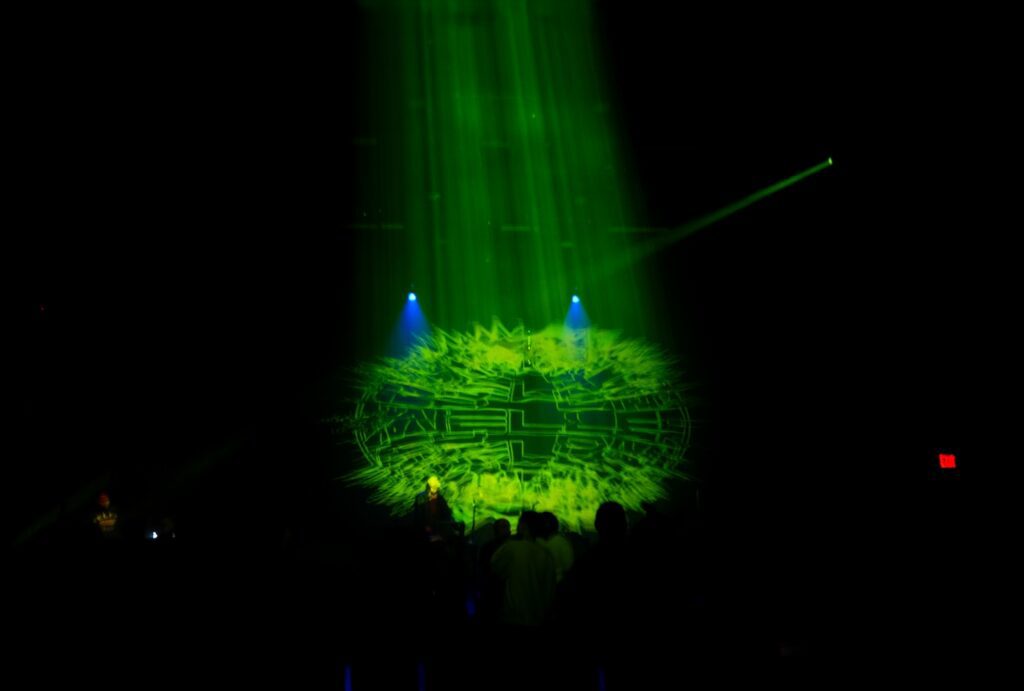
(Photo by Texas Isaiah for Dweller)
Dweller kicked off February 17 and ran through February 22, unfolding across Paragon, Nowadays, Public Records, Bossa Nova Civic Club, Pioneer Works, Signal, and Basement.
About 100 artists were featured on this year’s line-up—Junglepussy, Introspekt, KeiyaA, Juliana Huxtable, Kevin Aviance, Ge-ology, A Guy Called Gerald, and DJ Travella to name just a sliver—but to read their names on the full bill is to trace a route through Detroit, Chicago, London, Lisbon, Dar es Salaam, Atlanta, cities that built electronic music before it became a global export.
This is why Dweller exists. Not as a novelty showcase or diversity initiative, but as infrastructure, as reminder, as recalibration.
Electronic music is a billion-dollar industry, yet the Black architects who shaped techno, house, club, and experimental sound still hover at the margins of its largest stages. Dweller tightens that gap. It pulls O.G.s, underground lifers, experimentalists, rappers, and global club disruptors into the same room and lets the narrative realign itself. The festival’s return only sharpens that intention. More events. Broader reach. More connective tissue between scenes.
The festival began in 2019 as a six-night run at Bossa Nova in Brooklyn and has grown so much since that in 2025, founder Frankie Decaiza Hutchinson and her team needed the year off to regroup. “There’s a few touch points, and I think burnout was one of them,” Hutchinson says.
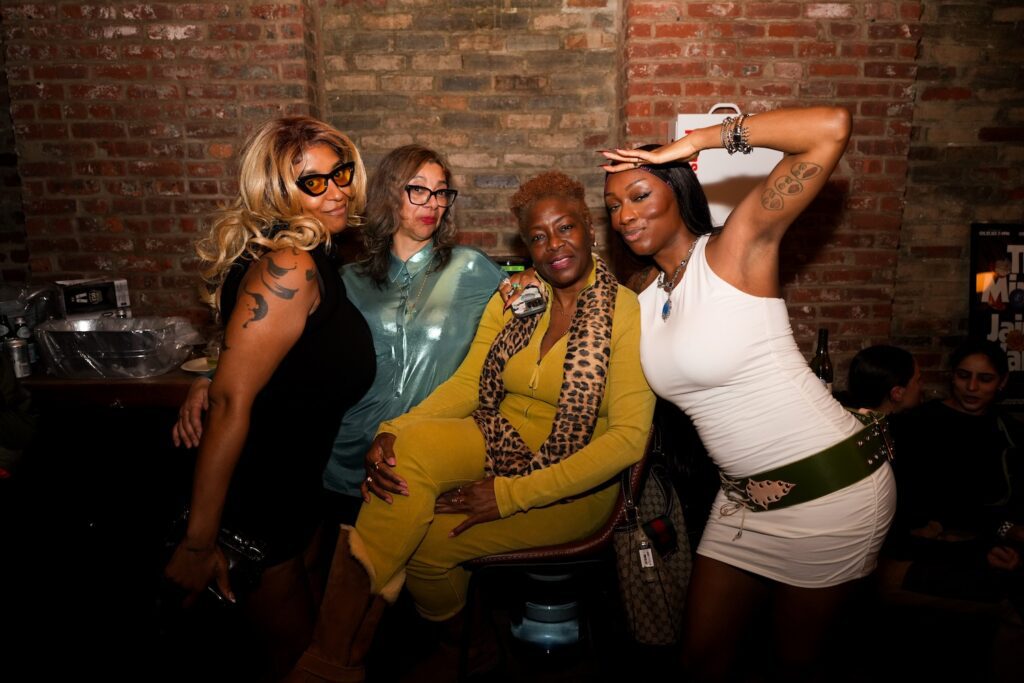
Dweller founder Frankie Hutchinson (left) on Day 5 of the festival at Pioneer Works in Red Hook (Photo by Texas Isaiah for Dweller)
The labor of building an independent festival, without a stable way to pay people, had begun to hollow the team out. “Having put in so much work to one event, and there not really being a solid payment infrastructure for the time that we’re all putting in—it’s hard to kind of commit to another year of that,” Hutchinson says.
Most years, she had been able to see how the festival would look, sound, and feel in “visions,” and be able to imagine the next edition clearly. After 2024, the vision blurred. “We can’t just be doing it because we feel like we have to do it for people,” she said. “We want to keep the light alive within us first.” The team took the year off to tend to their mental health, read books, sleep. They’re back, no doubt, but bluntly, the payment system remains unsolved. “But we really missed doing it,” Hutchinson said. So they returned bigger and more expansive, even if that wasn’t entirely the plan.
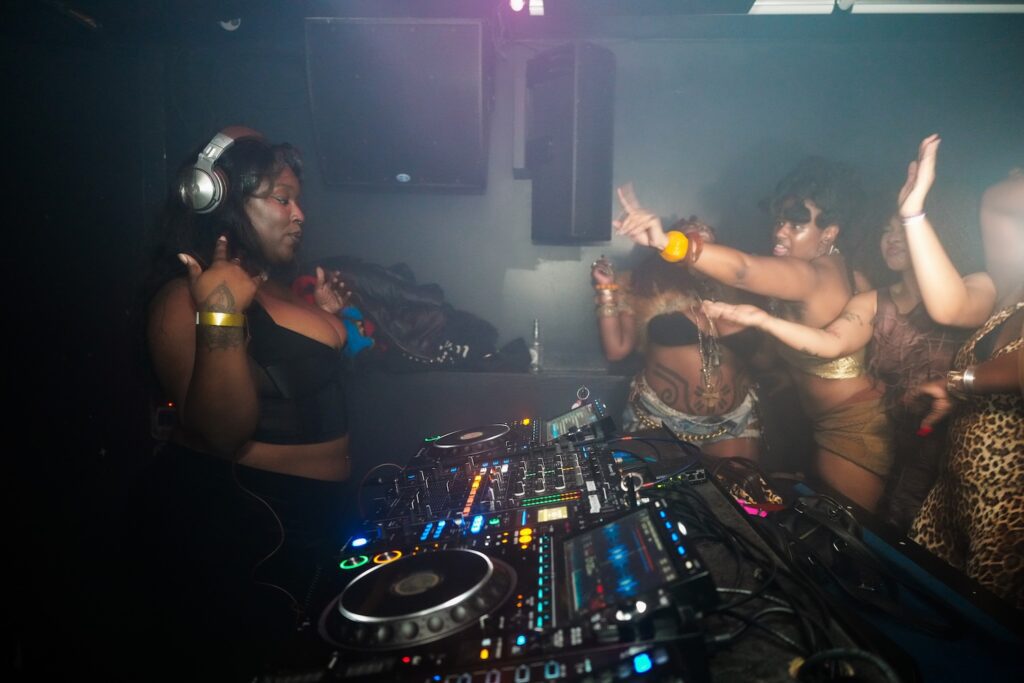
(Photo by Texas Isaiah for Dweller)
When Dweller opened its doors again, the shift was self-evident. DJs moved with focus onstage, locked into their blends, chasing tension and release with precision. On the floor, people answered back. There was no stiffness in the room. People are there to dance. Dina, a Detroit-based DJ and producer who has attended the festival since 2022, says that’s exactly why she’s there. “Representation is really important,” she says. “This is a festival that celebrates what Black people contribute to dance music. It is so important, because it’s like the biggest artists are these white guys, and they didn’t even make this music.” NYC treats its origins with respect, and that keeps pulling her back in year after year.
“Everybody who comes out to this festival comes to cut up,” she says, laughing. “It’s just so beautifully representative of the beauty of Black people and our sound.”
That beauty has a history and a price tag. Electronic music is a billion-dollar industry attached to a sound Black people pioneered. Detroit Techno was born from Black futurists like Kevin Saunderson (current backer-in-residence at Paragon) and Juan Atkins, summoning the soul of sound machines in abandoned factories. Chicago House rose from Frankie Knuckles’ queer sanctuary at the Warehouse. Ballroom culture, Jersey club, Memphis rap, Miami bass; each a distinctive percussive dialect in a rich lineage the commercial festival circuit rarely, if ever, reflects.
“Culturally, there have been shifts,” she explained. “But there is always going to be that gap. But in more underground spaces and in more mid-level clubs, I would say there has been a shift. I do see a lot more of OGs getting their flowers, but I don’t know if it will ever be enough, truthfully.”
Dweller is doing what it can to fill in some of that gap. To Fox, the festival functions as more of a realignment with its roots. “[Dweller’s] not impressive because they’re doing something brand new,” he tells me. “It’s because they’re saying, in the Black American tradition of electronic music, this is the most normal thing we could be doing, which is giving you a Black ass lineup of people who do Detroit techno; people who played in Berlin, but they’re Black. If we were in Detroit in the 90s, this would not be something new. This would just be like ‘We’re going out tonight!’”
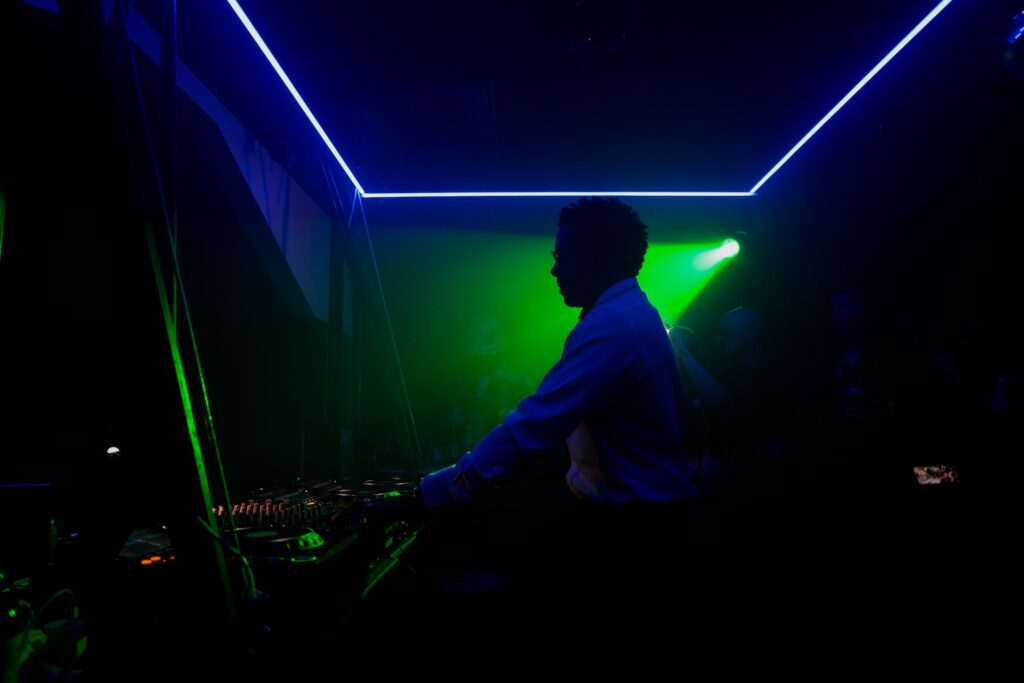
Zack Fox performing at Paragon in Bushwick (Photo by Texas Isaiah for Dweller)
Fox’s path to the lineup was almost incidental. He didn’t campaign for it-there was no manager blitz, no carefully timed email thread. It started in Miami, mid-conversation, the way most good things do. “I’m like 99% sure I was just talking to Frankie as a person,” he explained. “Like, Black people to Black people.”
They were swapping notes about techno, about Jersey club, about digging deeper. Fox mentioned that he’d been sharpening his DJ sets, leaning harder into the underground. Then he said it plainly. “My dream is to play Dweller. Like, Dweller. That’s my one,” he recalled. Hutchinson laughed, telling him, “We should get you on Dweller.” Yeah, we should, Fox remembers thinking. “That’s a great idea. Who do I hit up about that?”
“She was like, ‘Me. I’m Frankie.’” He shakes his head retelling it. “I didn’t know who the organizers were. I was just a fan. I’m looking at the graphics, the flyers, the videos of the sets, the people they’re booking. It just felt very serendipitous.” Hutchinson says what stood out wasn’t his name recognition. “It’s his sincere interest in the underground,” she explained. “And the way he connects dots and elevates other Black DJs. It’s cool when somebody at that level is kind of seeking community.”
At Paragon, there were no velvet ropes denoting importance or class identity. No one stood stiffly calculating optics. No one guarded a section. Between sets, friend groups and strangers alike compared notes on which room to hit next. Names stacked, then dissolved. “I hope that when it’s time for the night to happen, everybody forgets whose name was on the bill,” Fox said. “We live in a time where personality and public figures and celebrities are highly abundant and low in value.”
The music is the story, he says. He imagines a future where the flyer simply reads “Dweller,” people trust the curation, buy the ticket, show up, and dance.
The post The Black Rave is Alive and Well at Dweller appeared first on BKMAG.