Why are New York drivers paying more for gasoline a week after U.S. air strikes on Iran?

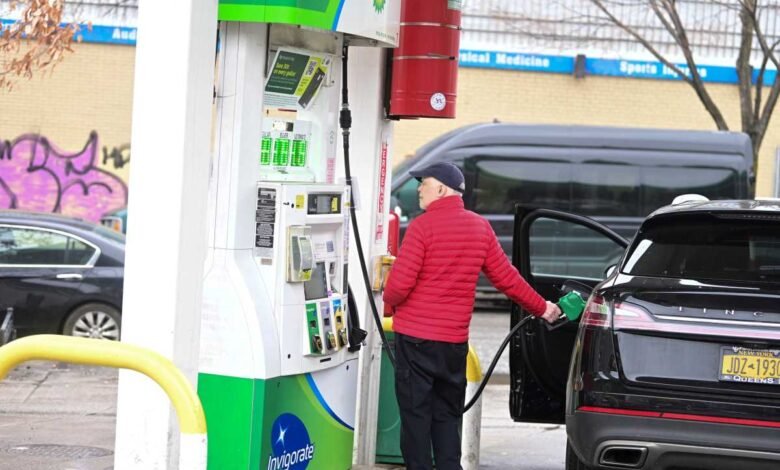

A driver pumps gas at a BP station in the Bronx on March 6, 2026, where a gallon of regular gas went for $3.39 that day.
Photo by Lloyd Mitchell
New Yorkers are suddenly paying much more at the pump to fill up their vehicles, as gasoline prices have surged nearly a week after the U.S. air strikes on Iran began.
The American Automobile Association (AAA) reported on Friday that the average price for a gallon of regular gas in New York City rose by about 31 cents over the last week — from $2.988 on Feb. 27 to $3.296 as of March 6. The current average price of gasoline is about 14 cents higher than it was at the same point a year ago ($3.152).
Diesel prices also surged 39 cents in one week, from $4.20 to $4.59 per gallon. That spells trouble for trucking companies and those who rely on them, as the extra fuel costs will likely be passed on to consumers in higher prices later.
Gas prices in New York City still remain slightly below the national average of $3.32 as of March 6. Nationwide, gas prices have surged by an average of 27 cents, according to AAA.

The surge in gas prices comes a week after the joint U.S./Israel air strikes in Iran, which started on Feb. 28 in an effort to oust the fundamentalist Islamic regime in power there for 47 years.
Iran is not only one of the world’s largest oil producers but is also located near the Strait of Hormuz — the narrow waterway linking the Persian Gulf to the Arabian Sea used by tankers around the world to access other oil-rich nations in the Middle East, including Iraq, Kuwait, Qatar, Saudi Arabia and the United Arab Emirates.
After the attack was launched, Iran’s regime warned that any vessel attempting to pass through the Strait of Hormuz would be fired upon. The threat brought tanker traffic to a standstill, thereby reducing shipments of oil from the region, lowering the supply at oil refineries that produce gasoline — and driving up prices as a result.
As of 11:14 a.m. on Friday morning, crude oil traded at $89 per barrel. On Feb. 27, that price was just $63.

The price spike is similar to one Americans experienced four years ago, in March 2022, weeks after Russian forces invaded Ukraine. At the time, the Biden administration tapped into the country’s strategic petroleum reserve to increase supply and lower gasoline prices.
New York state also instituted a seven-month gas tax holiday to drop prices at the pump. amNewYork reached out to Gov. Kathy Hochul’s office for comment about any pending state action on gas prices now, and is awaiting a response.
In an interview with Reuters published on March 5, President Trump said he was not concerned about the price spike, expressing confidence that costs will fall once the military operation is over.
“They’ll drop very rapidly when this is over, and if they rise, they rise, but this is far more important than having gasoline prices go up a little bit,” Trump said.
Administration officials, including Defense Secretary Pete Hegseth, have not provided a timeline on when the military operation against Iran will end.
At least 1,200 people have reportedly died in the operation and retaliatory attacks, including at least six American soldiers.