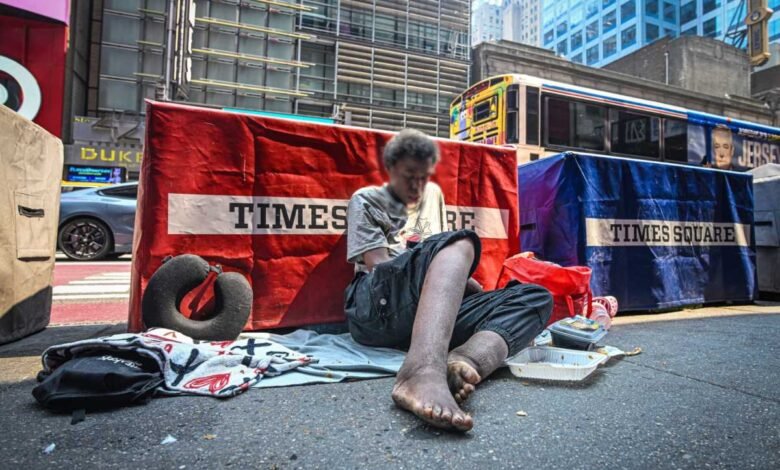
As one of the state’s frontline substance use and mental health providers, Phoenix House has watched a steady rise in New Yorkers — housed and unhoused alike — arriving in acute need.
Every day across our centers, our staff meet people at the worst moment of their lives, mid-breakdown, mid-overdose, often with nowhere else to turn. But what we’re not seeing enough of in this city is the crisis stabilization infrastructure built to catch them before it’s too late.
That toll is already visible in the data. According to the NYC Department of Homeless Services and the Office of the Chief Medical Examiner, 634 unhoused New Yorkers lost their lives in the twelve months ending June 2025. Drug-related causes were the single leading cause of mortality, responsible for roughly 4 in 10 of those deaths. Notably, this data arrives despite a real decline in overdose deaths citywide this past year.
Progress is happening in spurts but it is still nowhere near enough and when it comes to behavioral health treatment options, there remains a proven, yet overlooked solution: supportive crisis stabilization centers.
Supportive crisis stabilization centers offer 24/7, voluntary support with an emphasis on peer and recovery support— a place where someone in an acute psychiatric or substance use crisis is met with care instead of handcuffs or an unnecessary hospital bed, and connected to longer-term recovery services before they fall through the cracks again. The data is telling: communities that have already built these crisis care networks see shorter psychiatric ER boardings and fewer unnecessary hospital admissions.
But New York City still doesn’t have enough of them.

The scale of demand is impossible to ignore. In New York City alone, over 1.2 million people — more than 1 in 4 adults — experience a mental health disorder and approximately 207,000 New Yorkers sought substance use treatment in 2023. While behavioral health challenges touch New Yorkers across every housing status, state estimates suggest that up to 10% of residents experiencing homelessness also live with substance use disorder or severe mental illness. With nearly 90,000 residents currently lacking treatment for substance use disorder, and another 945,000 people forgoing essential mental health care, there are tens of thousands of community members forced to cycle between the streets, shelter, and the ER because of lingering gaps in our city’s crisis care system.
Whether a person is seeking shelter or is currently housed, every single New Yorker deserves access to supportive care in their very own neighborhood. We know what happens in the treatment gap. Families trying to get help for a loved one mid-crisis are too often met with law enforcement instead of a stabilization center or held in a jail cell when rehab would better serve them. And as the summer heat wears on, the risks only compound: dehydration, heat stroke, and worsened outcomes for people already battling housing insecurity, substance use, or serious mental illness.
New York City has already proven that this kind of transformation is possible before. Homicides across the five boroughs have fallen to their lowest level in nearly seven decades, lower than every year since the 1950s, and earlier this year, shootings reached their lowest point since consistent record-keeping began in 1993. That decline didn’t happen overnight nor by accident. For decades, city leaders have rightfully directed civic attention, funding, and political will toward driving down violent crime. We owe our neighbors dying of overdose and lack of shelter that same level of sustained commitment.
Phoenix House stands ready to be part of the solution, but providers can’t build a citywide crisis infrastructure alone. We need the City to invest in a real network of crisis stabilization centers in every borough, staffed and funded around the clock. Families need somewhere to call besides 911. Outreach workers need somewhere to bring a person in distress besides an ER waiting room. New Yorkers in crisis deserve somewhere to go besides a packed shelter.
The cost of inaction is already written in this city’s mortality data. Every day without a crisis stabilization center, more New Yorkers end up in an ambulance, a jail cell, or a body bag who could have entered treatment instead. The sooner we build this piece of the behavioral health system, the more lives we can save.
Ann-Marie Foster, MPA, FACHE, is the President & CEO of Phoenix House of New York & Long Island, which offers clinical services, residential and outpatient treatment for people with substance use and co-occurring mental health disorders. She was a member of the New York State Bar Association’s Taskforce on Opioid Addiction.