New federal monitor report: Black and Hispanic New Yorkers make up 91% of those stopped and frisked by NYPD special units found to be violating the Constitution

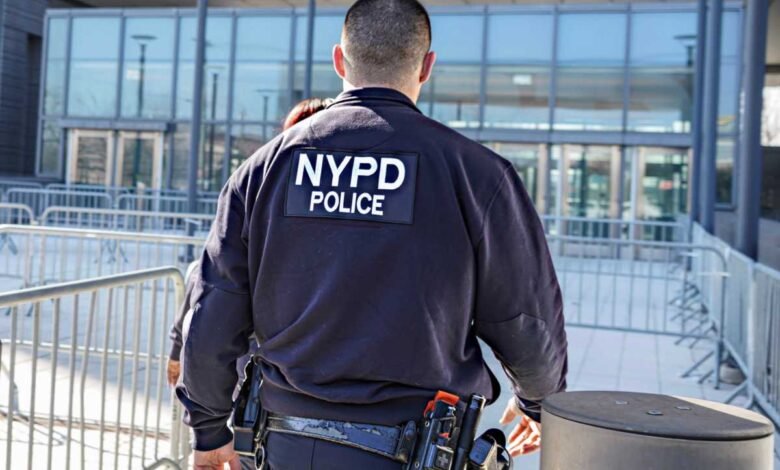

Specialized units in the New York Police Department created under ex-Mayor Eric Adams are persisting in carrying out unconstitutional stops, frisks and searches that disproportionately target Black and Hispanic New Yorkers, the court-assigned federal monitor tasked with bringing the NYPD into compliance with the Constitution said Monday in her latest report.
NYPD Federal Monitor Mylan Denerstein said that only 83.4% of the stops, 68.6% of the frisks and 61.7% of the searches made by the NYPD’s specialized policing units in 2025 were constitutional. Her assessment comes in her 31st report on the department since she was appointed by U.S. District Judge Analisa Torres as part of a landmark 2011 settlement that found the NYPD’s stop and frisk policy was unconstitutional and involved racial profiling.
The specialized policing units Denerstein’s talking about include the controversial Neighborhood Safety Teams, Public Safety Teams and Community Response Teams developed under Adams. The units are largely made up of plainclothes officers who drive unmarked cars, are tasked with “proactive policing” in high-crime areas and make more self-initiated stops than other cops – meaning they decide to stop and search New Yorkers based on their own observations rather than in response to a 911 call or information from a witness or complainant.
“With the exception of stops in the third quarter of 2025, the NYPD failed to meet the established 2025 compliance benchmarks,” Denerstein wrote. “Specialized units had a particularly low compliance rate for the most intrusive encounters, frisks and searches, and no sustained improvement over the course of 2025.”
Additionally concerning, Denerstein said, 91% of the people stopped by cops in these units are Black or Hispanic, meaning the units are disproportionately targeting people of color. And, the department hasn’t been properly auditing the stops the Community Response Teams (CRTs) made since 2023 – which conduct a high volume of self-initiated stops – meaning that proper review of that group’s compliance with the Constitution hasn’t been happening until March of this year, when Denerstein caught the lapse.
“This is unacceptable because the NYPD has the ability to do better,” Denerstein said. “The Department is well aware of the compliance issues it faces. It is time for the Department to take ownership of its issues and solve them.”
When asked for comment on the report and if it had plans to bring its practices into compliance with court orders, the NYPD noted that it’s been stopping significantly fewer people since Denerstein started reviewing its actions in 2011 and would be reviewing the new report.
“The NYPD has gone from over 680,000 reported stops in 2011 to less than 30,000 in 2025. There is still more work to be done, and the NYPD continues those efforts in collaboration with the Federal Monitor and her team,” the department’s public information office said in a statement. “We thank the Monitor for her report and look forward to reviewing it.”
Denerstein said she was confident the NYPD’s special units were able to meet the compliance benchmark she set for it – 90% of all stops, frisks and searches to be constitutional – because these units occasionally meet that benchmark and the department’s other, non-specalized officers were often closer to hitting it: Officers in other units had a lawful compliance rate in 2025 of 94% for stops, 83% for frisks, and 79% for searches, compared to specialized units’ compliance rates of 83% for stops, 69% for frisks, and 62% for searches.
“Compliance rates for specialized units remain well below those of officers assigned to routine patrol functions or non-NST, PST or CRT units,” Denerstein wrote. “The NYPD’s specialized units continue to engage in unlawful Terry stops at rates nowhere near substantial compliance. The NYPD must implement effective strategies, or it will continue to be non-compliant.”
It’s possible, the report says, that that’s because the NYPD’s other units are engaging in self-initiated stops less. Denerstein’s report notes that self-initiated stops are less likely to be lawful than ones based on a credible tip: For self-initiated stops conducted by officers in the specialized units, only 80% of stops, 64% of frisks, and 55% of searches in 2025 were assessed as lawful.
Notably, those numbers are below the lawful rates for self-initiated stops made by non-specialized units, meaning that, despite being highly trained, the specialized units fall out of compliance with the Constitution more than other cops.
It’s in the NYPD’s best interest to comply with Denerstein’s recommendations and the court-ordered settlement, the report says – not only because not doing so is illegal – but because making lawful stops that are also backed up by a credible tip helps cops accomplish their goal of arresting people who might actually be crime suspects.
“Stops, frisks, and searches grounded in the legal standards officers are trained to follow are not only constitutionally required but are also more likely to produce better public safety results. Encounters that lack the requisite legal foundation are more likely to come up empty,” Denerstein writes. “The 2025 data from the specialized units reflects that when officers have genuine, articulable reasons for a stop, frisk, or search, they are more likely to find what they are looking for.”
Legal Aid Society attorney Karina Tefft said she had a bit less confidence in the NYPD coming into compliance with the Constitution without further intervention than Denerstein seems to. The reports say “a lot of the same things” year after year and the compliance numbers haven’t moved very much, Tefft said, which is a “major problem.”
“The NYPD has never really moved the needle, and that’s extremely disappointing,” said Tefft. “The monitorship now has been going on for 13 years and the NYPD is still very far from being in compliance with the Constitution … The NYPD is not making these improvements. They shouldn’t be allowed to do this. They need to change their practices.”
“They cannot continue in this way,” the attorney added. “What they’re doing is unconstitutional, and it’s deeply racist.”
What can be done to more forcefully push the NYPD to alter its policies? The court has broad authority to make additional orders – for example, it could order the specialized units disbanded if things continue without improvement. The parties bringing the lawsuit could also use certain mechanisms to petition the court, like asking for the NYPD to be held in contempt for not following orders. Policymakers or the NYPD itself could also implement more forceful action and rule-setting based on the reports.
“It’s long overdue, and fundamentally, what they’re doing, especially in these specialized teams, is causing lasting harm, and they’re not doing anything to improve public safety,” Tefft said, emphasizing that 91% of people stopped by these units are non-white. “It’s not only a legal imperative, but a moral imperative that they stop what they’re doing. It’s deeply racist. It violates the Constitution, and subjecting people to unlawful stops is no small thing. These experiences can be deeply traumatizing and make people feel uncomfortable in their own neighborhoods or their own homes.”
A spokesperson for Mayor Zohran Mamdani said in a statement that the mayor believed constitutional policy was important and would be reviewing the report and working to “ensure” the NYPD acts in line with the Constitution.
“The Mamdani administration believes that constitutional policing, justice and public safety must go hand in hand,” said Mamdani spokesperson Sam Raskin. “Every New Yorker deserves to be treated fairly and lawfully by members of the NYPD. We are reviewing the report and will continue working to ensure that the Police Department fulfills its important mission while protecting the constitutional rights of all New Yorkers.”