Two decades ago, when ramen’s modern era began in this country, and in this city, we looked to the emergent genre of restaurant with great expectations. In Japan, ramen is a regional dish that changes by the prefecture. There are styles tied to specific places, broths with contents dictated by history, climate, and geography. It’s a living and reactive cuisine. When it came to America—our gigantic, diverse stockpot of food cultures and climes—for perhaps the final time in history, chefs came to the bowl of ramen, held their breath, and stood in contemplation of a new world whispering promises of limitless possibility.
Today, that dream has largely been deferred. As is the case with many industries in this country, ramen has been outsourced to experts who know its core market and margins in and out. The city is defined by chains imported from Japan who are specialists, mostly very good at one thing. If you want a great tsukemen, you go to TabeTomo or Okiburo. If you have a sinus issue and need relief, you go to Totto. If you want those sinuses blown out, go to Karakatta. If you want bold and a little sweet, go to Misoya. If you want a big, delicious, heavy bowl of pork glossed with fat, you can go to Ichiran or Danbo.
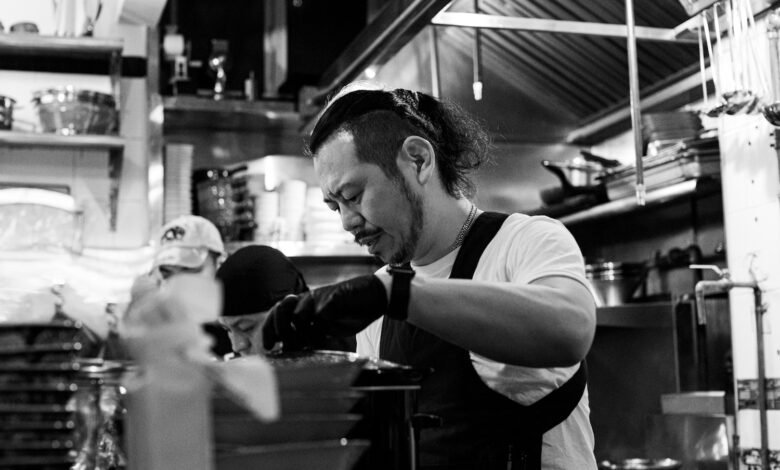
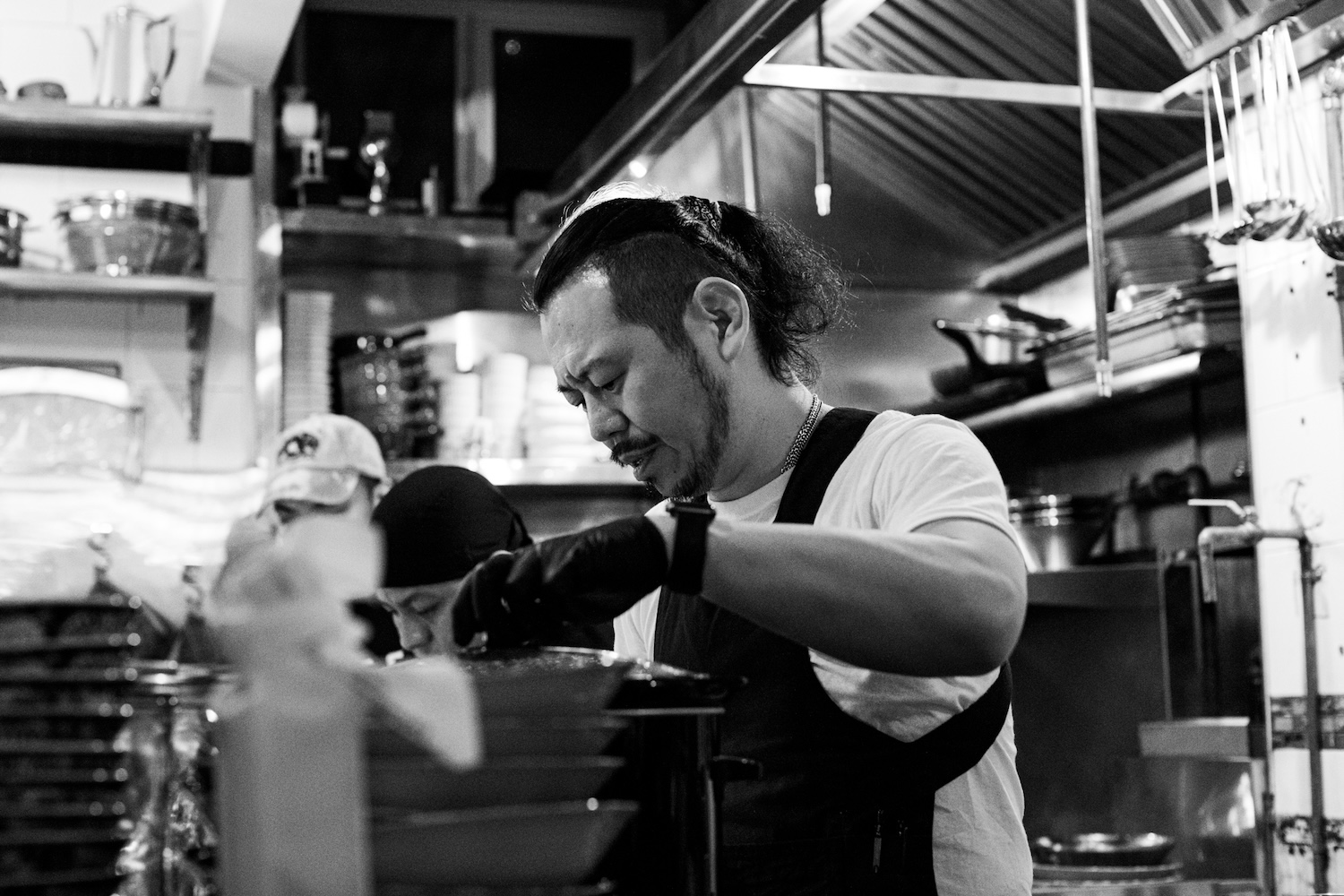
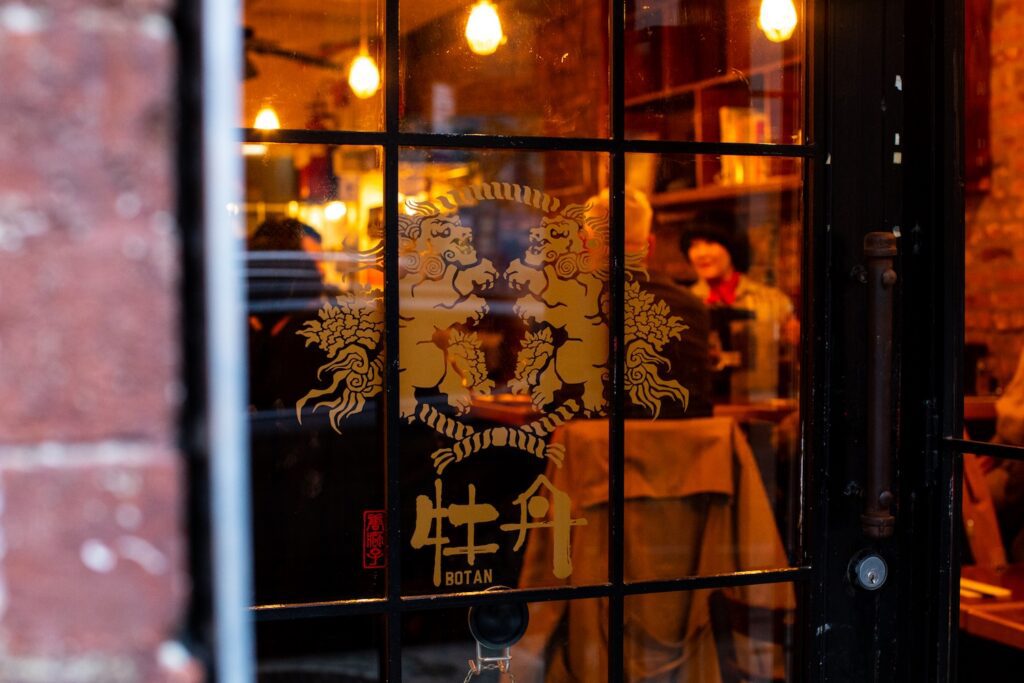
There are some exceptions (shout to Nakamura and the great Ramen by Ra), but if you’re interested in revisiting the utopian vision of what we once believed ramen could be, the horn of fire is still being carried by ramen master Fumihiro Kanegae at Karazishi Botan on Smith Street. The Fukuoka native left a job as a microbiologist to join the recipe and development team at Ippudo, the 40-year-old Japanese ramen chain with over 200 locations worldwide, which was explained to me as “ramen’s McDonald’s” when it opened its first American location in Union Square in 2008. That doesn’t quite do justice to the level of thoughtful quality Ippudo has made routine over the past two decades, but it communicates how unlikely Chef Foo’s journey has been: first graduating to the title of Ramen Master within a major ramen corporation—where he opened locations across Asia for many years before settling in New York—then falling in love with Brooklyn, and eventually going solo on Smith Street.
In an industry characterized by studio-backed productions, Karazishi Botan is a scrappy indie auteur. Unless you’re a super regular, you don’t go to the shop because you’re in the mood for any style or specific bowl of ramen; you go because you are interested in sampling whatever crazy shit Chef Foo is interested in this season. The language on the constantly changing menu is full of allusions to Wakanda and Tony Stark, as are the figurines on the shelf behind the bar hiding next to bottles of soju, that make Foo’s love of Marvel part of the restaurant’s dorm room decor.
Kenegae’s trademark weird, light, flavorful ramens might be served with sidecars of yuzu juice and instructions to add a bit mid-slurp. Bowls come out under cloches of smoke, or served with an Iron Man shield for a guest to hold for a picture, then rest on their lap throughout the meal for no particular reason. The big, equally odd apps menu is befitting of a proper Japanese drinking house, with barbecued ribs, many dumpling varietals, and fries dusted in cheese powder. It is appropriate that the space occupies the ancestral home of Battersby, another shop animated by magic, whimsy, and genius coaxed from an impossibly intimate space. It’s the kind of restaurant where no matter how much you order or how often you go, you’ll walk out wishing you ordered more and visited more often.
With all due respect to the Michelin aspirations, luxuries, and check averages that come with a visit to Jeju Noodle Bar in the West Village, we need to stop kidding ourselves. Karazishi Botan is more than the idiosyncratic retro-future vision of what we once thought ramen in this city could be. It’s arguably the best ramen shop in New York.
I had the extreme honor and pleasure to speak with Chef Foo over the phone recently—aided by his patient and talented interpreter Ayako Kaneyoshi—about his inspiration, his art, and the peculiarities of New York ramen.
(This interview has been edited, condensed, and converted from third person, via interpreter, to first person for clarity, and to make me sound like less of an asshole.)
Courtesy of Karazishi Botan
How did you first get into ramen?
Fumihiro Kanegae: I cooked Italian food before getting into ramen, but quit, then did some research in microbiology, among other things, then went back to the food world. I joined Ippudo in 2000, with their product and recipe development team, and since then worked in every international location, including New York. It took about six years to attain the title of ramen master. Around that time, Ippudo was opening locations very actively in Asia, particularly China, and I was doing a lot of the development on my own. That’s when the company said, “You’re already doing it, we’ll give you the title.”
Microbiology?
When a manufacturer makes beverages, they have to research the microorganisms in it to decide what the shelf life is. So it was working with a beverage manufacturer to decide how long their products would last on the shelf.
Perfect job for a mad scientist. Can you describe your style of ramen?
Fukuoka is the home of ramen. It’s where Ippudo was born, it’s where Ichiran was born. It’s the birthplace of tonkotsu. That’s my hometown, and I was deeply connected to Ippudo. But while I was working at Ippudo, I traveled throughout Japan, and then throughout the rest of the world, and I’ve lived in New York for so long. So at Karazishi Botan, I’m trying to reflect more of what I’ve learned in my travels.
Why did you decide to transition from a stable and secure corporate job to going independent with your own ramen shop in Brooklyn?
[Ippudo] became so big, it became more and more difficult to work as a chef or express myself as a craftsman who wants to explore different flavors and different ideas. I was trying to make local specials, depending on what was available at the market, and the sense I got was the company wanted a more uniform experience at its franchise locations.
On your menus there are numbers running into the hundreds that accompany each bowl of ramen. How many bowls have you created and made a record of in your career?
The numbers that you see on the menu are limited to the U.S. creations. They don’t include the recipes from Japan or London or China. Those are not included.
Oh my God.
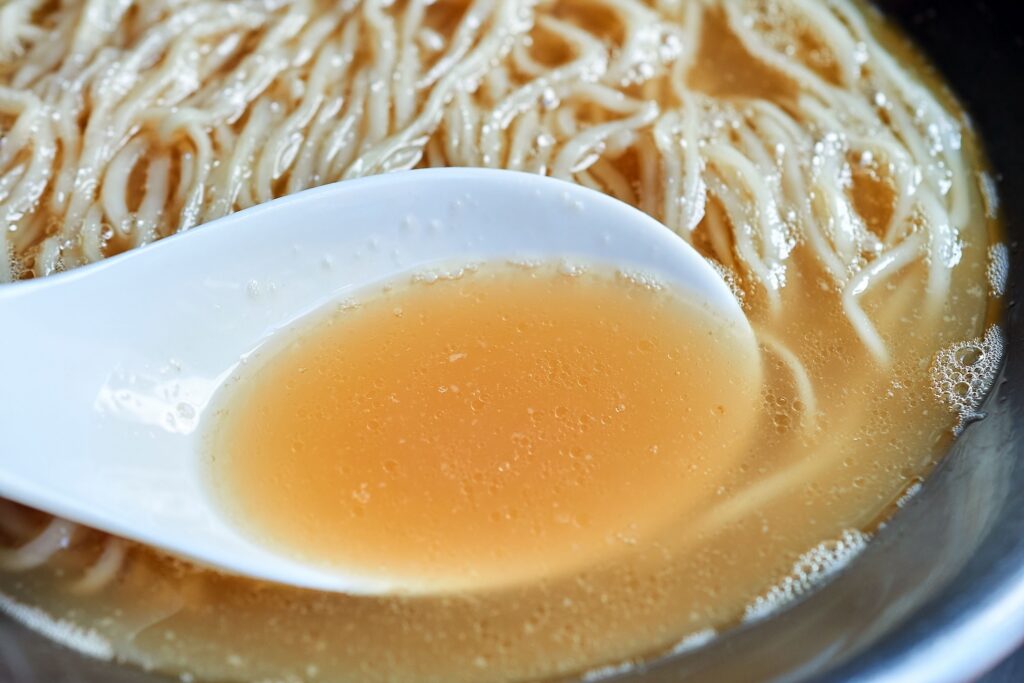
Overall, it’s probably over 3,000 at this point. Some were never released. Some were just waiting in the line for space on a menu and my feelings changed. Some were based on recipes that now feel outdated, but I keep creating new menus because as long as I have different ideas, I want to turn them into different bowls. So there’s always new ramen on my mind and also in my recipe book.
Courtesy of Karazishi Botan
I would love for you to publish that book. How do you design a new bowl? Is there a general starting point everything else flows from?
I find inspiration by walking around town, checking out different stores and places, looking inside, tasting food, but generally the ideas just come to me. A lot of the time I’m walking down Smith Street and just observing the people near the restaurant. I love to walk around.
The first thing that comes is the inspiration, the dream of the flavor that I want to achieve. That is the goal in mind when I start developing a new ramen. It’s like a building. I begin with basic structure, and then gradually build, say, the meat around it, then garnishing it to reach that final image that I originally had.
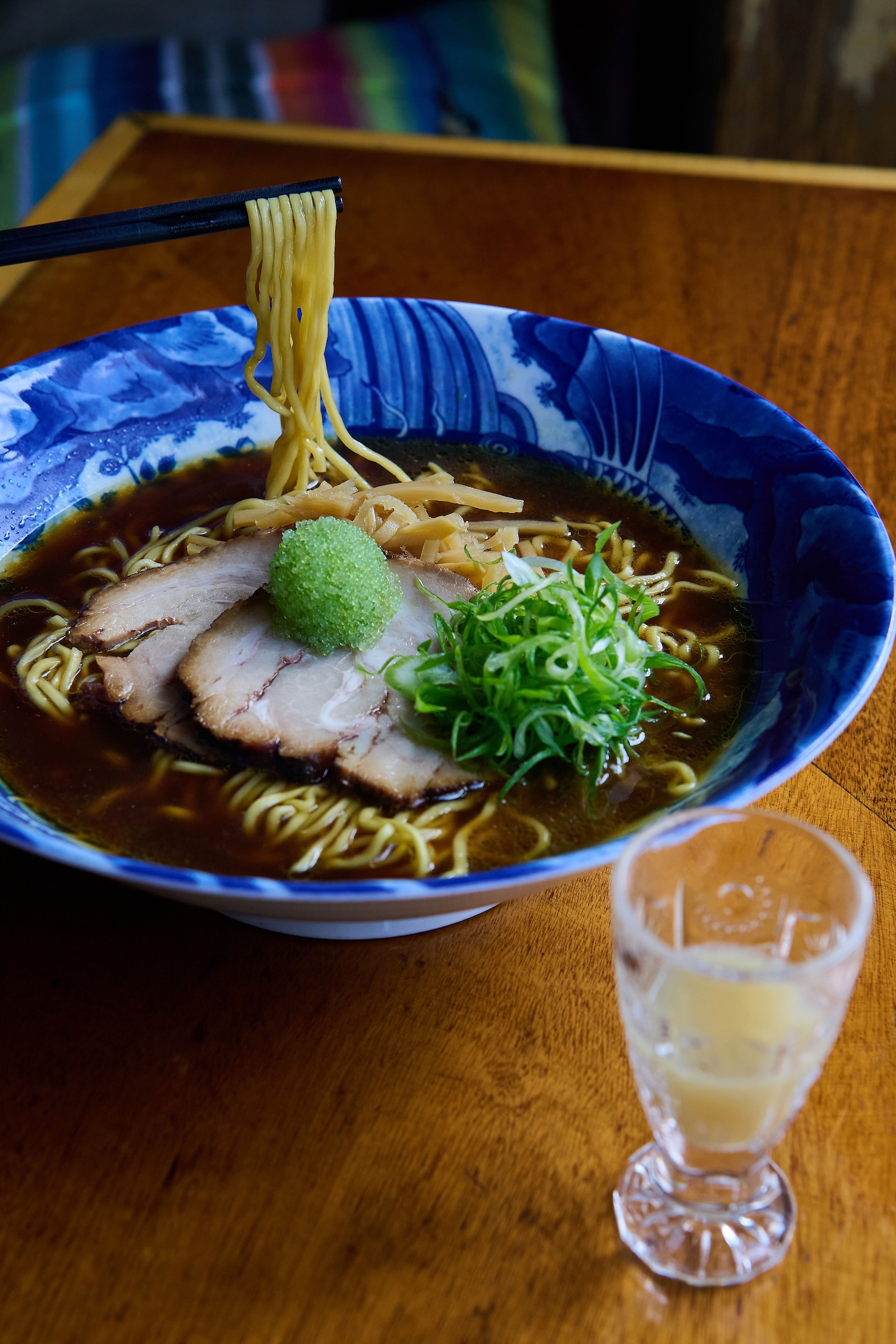
The Point Blank, for instance (Author’s Note: An ethereal, layered, bizarre, shoyu pork bone broth shot through with horseradish and topped with chashu and wasabi tobiko) began as a blurry concept. Japanese people vigorously slurp up the ramen, but Americans don’t, so I wanted to make a ramen that’s really hard to slurp. I made the Point Blank so it can’t really be slurped, because the horseradish and wasabi hits you, and people start coughing. So it was something specifically for our guests in New York. It also launched during the COVID pandemic. I wanted to create a ramen that is good for your body, and wasabi and horseradish are known for their antibacterial properties. It’s good for your health and it protects you. So I combined those two ideas: An unslurpable ramen, that is uplifting for your body and your soul.
There’s also the Iron Man series. Iron Man started because I wanted to make ramen by aging bones. A lot of ramen chefs use different bones, but not many of them age their bones because it takes too much effort and time. I knew it would lend the broth so much more depth. It started off as a clear broth, a beautiful ramen with a lot of flavor, but now we’re on version seven, and I already have recipes up to version ten. It’s one of those recipes that continues to evolve as we serve it, but every bowl has its own goal and its own story.
Courtesy of Karazishi Botan
As a Jew, I really appreciate your love of horseradish. You use a lot of unconventional heat and acid in your bowls to round out your light but intense broths. How do you think about achieving balance?
I think it’s just a matter of all the training I had to go through at Ippudo, serving guests from all over the world with different palates. My former boss, Shigemi Kawahara, was very scary and I had to work really hard to adjust and balance flavors for him. Also, once I had to create a ramen for Momofuku Ando, and I was very nervous and had to do a lot of research for that, so hopefully all that work paid off when you taste the balance in one of my bowls.
My broths are light because I’m too old for heavy ramen. I am very conscious of what goes into my food, and one thing that differentiates Karazishi Botan from other shops is we do not use MSG. My goal is to create ramen that can be enjoyed by everyone, from a very young child to elders. I am a father of three, and won’t create any ramen I wouldn’t feed to my own children.
A personal crusade of mine is New Yorkers, in particular, have this problem with ramen in warm weather. In Japan, and in some hotter climates around the world, this is not an issue. Based on your work experience and extensive travel, do you have any idea where this issue comes from? Why doesn’t it translate culturally?
In Japan in the summer, the sales actually go up. People like to have hot food during the hot weather season and sweat it out. But I think one issue is it’s just too hot here, and it’s getting hotter every year. I totally understand if New Yorkers don’t want to sweat and eat ramen in hot weather.
But one theory is the categorization of how Americans view ramen. In Japan or other Asian countries, ramen is a noodle dish, and people look at it as eating noodles that are sometimes in broth. But in New York, a lot of people think of ramen as a soup with noodles. It’s a subtle difference, but maybe that perception has something to do with it.
How frequently does the menu change at the restaurant?
At least four times a year. And then specials come off and on very frequently.
This will run in September, is there any date set for the Fall menu?
Hopefully the beginning of October. That is the target. I’m just finalizing what the seasonal ramen special will be, and this is a problem that happens every season. The seasonal menu goes away after every season. That’s how it should work, but a lot of regulars get very attached to certain items on the menu and will say, “If you’re not going to serve this ramen, I’m not going to come back.” So a lot of bowls are not able to come off the menu, like Point Blank, which started as a seasonal special that ended up staying because guests demanded it. I have to decide how many to take off and how many to keep, because kitchen space is very limited. But I want to introduce several new items on the menu I’m finalizing right now.
What’s up with the Marvel thing?
The collaboration we did last year?
No, just like, Marvel as a character and theme in your restaurant.
Well, you can see I’m a devoted fan. I still look up to superheroes, even as an adult. By naming items on the menu after them, with the little toys on the shelf, they remind me to stay connected to childhood memories and the child within myself.
We end every interview by asking the chef what the last great dine-in or takeout meal they had in Brooklyn was.
Bar Goto Niban. I love it there. I feel like bars can be intimidating or uncomfortable, when it comes to figuring out what to order. Bar Goto is so comfortable for me. It’s different, and all the food and drinks are delicious, it’s a special place. They use a lot of Japanese ingredients in their cocktails, and it’s very approachable for me.
The post Open Kitchen: The Ramen Master on Smith Street appeared first on BKMAG.