SCIENCE
-
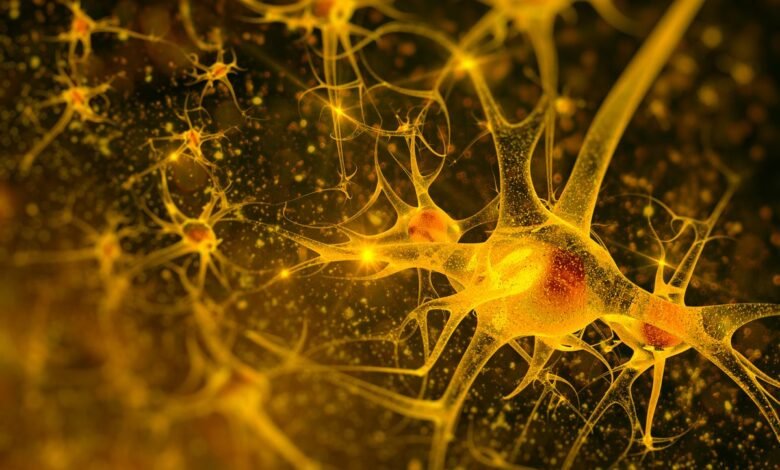
‘Super agers’ with great memory have more young brain cells
[ad_1] Adults whose brains still have strong neuron production seem to have better memory and cognitive function than do those in whom the ability wanes, finds a study published today in Nature. The authors examined brain samples from deceased donors ranging from young adults to ‘super agers’ — people older than 80 with exceptional memory. They found that young and…
Read More » -

Heart disease in young women projected to rise sharply by 2050
[ad_1] February 25, 2026 4 min read Add Us On GoogleAdd SciAm Heart disease in young women projected to rise sharply by 2050 A new projection study estimates that nearly a third of women aged 22 to 44 will have been diagnosed with a cardiovascular disease by 2050 By Lauren J. Young edited by Claire Cameron KATERYNA KON/SCIENCE PHOTO LIBRARY/Getty…
Read More » -

Science journalism on the ropes worldwide as U.S. aid cuts bite
[ad_1] In June 2025, a year-long investigation exposed an illegal trade smuggling timber from protected areas in the Congolese rainforest into neighbouring Burundi. Award-winning Burundian journalist Arthur Bizimana and his collaborator Martin Leku, from the Democratic Republic of the Congo, risked their safety by travelling deep into the rainforest — the world’s second-largest — to gather material for their exclusive…
Read More » -

Are you constipated? It could be because of these two bacteria
[ad_1] February 19, 2026 2 min read Add Us On GoogleAdd SciAm A pair of gut bacteria may cause constipation A new study pinpoints two species of bacteria that work together to dry out the lining of the gut and cause constipation By Jackie Flynn Mogensen edited by Claire Cameron Kirn Vintage Stock/Corbis via Getty Images It is as unfortunate…
Read More » -

The mathematical mystery inside the legendary ’90s shooter Quake 3
[ad_1] Game developers didn’t have it easy in the 1990s. Because they had extremely limited computing power, they had to write their code as efficiently as possible. Consider the first-person shooter Quake III Arena, usually called Quake 3, for example: players navigated a three-dimensional world, so the programmers had to find the cleverest ways to handle 3D graphics and the…
Read More » -

Why an Army antidrone laser grounded flights at El Paso International Airport
[ad_1] Late on Tuesday night, the city of El Paso, Tex., learned that the airspace over El Paso International Airport had been closed as of 11:30 P.M. local time. The ban, initially posted as lasting 10 days, was then shortened to a matter of hours. Secretary of Transportation Sean Duffy later announced on X that the shutdown had occurred as…
Read More » -

Earth’s core may contain 45 oceans’ worth of hydrogen
[ad_1] February 10, 2026 2 min read Add Us On GoogleAdd SciAm Earth’s core may contain 45 oceans’ worth of hydrogen An experiment to quantify the amount of the universe’s lightest element in Earth’s core suggests that the planet’s water has mostly been here since the beginning By Stephanie Pappas edited by Andrea Thompson Earth’s core may contain up to…
Read More » -

What were the first animals? The fierce sponge–jelly battle that just won’t end
[ad_1] Which animals came first? For more than a century, most evidence suggested that sponges, immobile filter-feeders that lack muscles, neurons and other specialized tissues, were the first animal lineages to emerge. Then, in 2008, a genomic study pointed to a head-scratching rival: dazzling, translucent predators called comb jellies, or ctenophores, with nerves, muscles and other sophisticated features. That single…
Read More » -

‘Extraordinary’ brain network discovery changes our understanding of Parkinson’s disease
[ad_1] Scientists have found a key brain network that’s disrupted by Parkinson’s disease, according to a study published today in Nature. The results change doctors’ understanding of what causes Parkinson’s symptoms and may unlock more effective and precise treatments. Parkinson’s has long been considered a movement disorder. Its hallmark symptoms include involuntary muscle contractions, tremor and difficulty walking. But the…
Read More » -
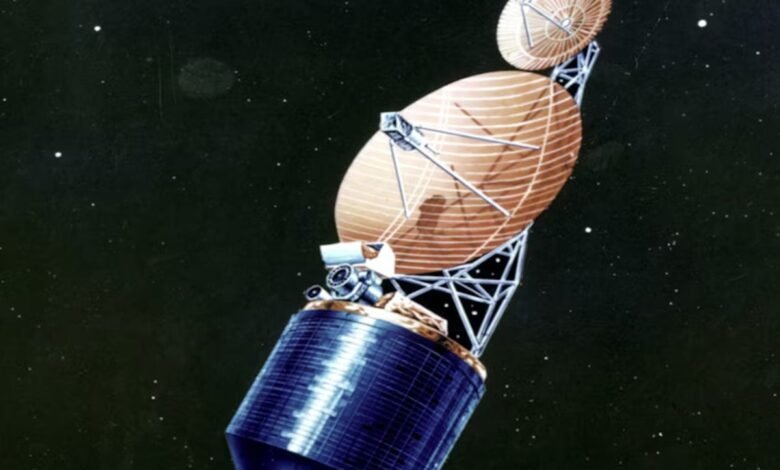
U.S. quietly declassifies Cold–War era ‘JUMPSEAT’ surveillance satellites
[ad_1] February 1, 2026 1 min read Add Us On GoogleAdd SciAm U.S. quietly declassifies Cold–War era ‘JUMPSEAT’ surveillance satellites The National Reconnaissance Office has now declassified a satellite program used to spy on America’s adversaries By Jackie Flynn Mogensen edited by Claire Cameron National Reconnaissance Office Some forty years ago, the U.S. launched a series of secret satellites, designed…
Read More »