
SCIENCE
-
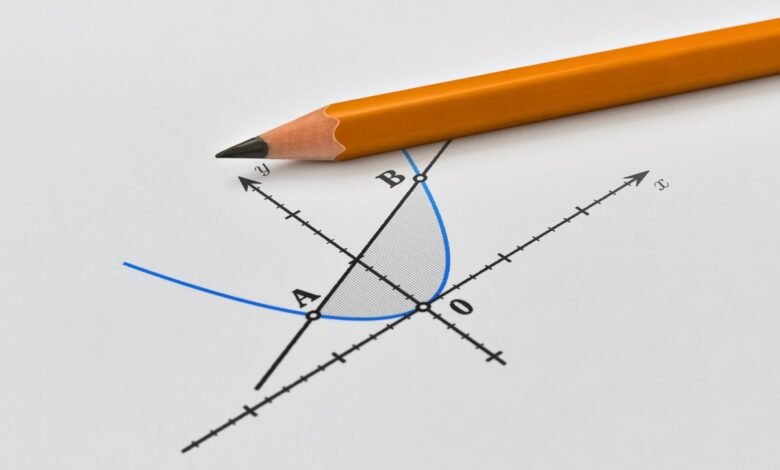
Why parabolas are crucial to cryptography
This article is from Proof Positive, our friendly math newsletter that’s delivered to your inbox every Tuesday afternoon. Sign up today and read it first. Quadratic functions plague many students during school, popping up everywhere from binomial expansions to the geometry of parabolas and accelerated motion in physics. But the graphs of quadratic functions actually have a use that is…
Read More » -
388 years ago, Galileo worked out why human giants can’t exist—and explained a law of nature
Acording to legend, giants once roamed the Earth. In Homer’s Odyssey, Odysseus encounters the Cyclops, the one-eyed son of Poseidon, living in a huge cavern, hungry and angry. He grasps men and sheep in one hand, devouring them whole. In the days of King Arthur, a clever young boy earned the title of “Jack the Giant Killer,” using his sharp…
Read More » -

See hundreds of stingrays swarming off the coast of New York
Incredible new video footage reveals a convoy of hundreds of stingrays—a grouping that marine biologists call a “fever”—off the coast of Southampton, N.Y. In the videos, shot by drone by Joanna Steidle, the creatures can be seen gliding just beneath the water’s surface like hundreds of raviolis floating in aquamarine broth. These are cownose rays (Rhinoptera bonasus). The fish are…
Read More » -

Europe’s wildfires are igniting forgotten WWII and Cold War bombs
When a wildfire broke out in the Müritz National Park of north-eastern Germany in July, it was no routine firefighting job. Bomb disposal teams had to work alongside firefighters because the forest floor is contaminated with Cold War-era munitions. Crews could not approach parts of the blaze directly for fear of detonations. Soon after, a wildfire tore through 42,000 hectares…
Read More » -
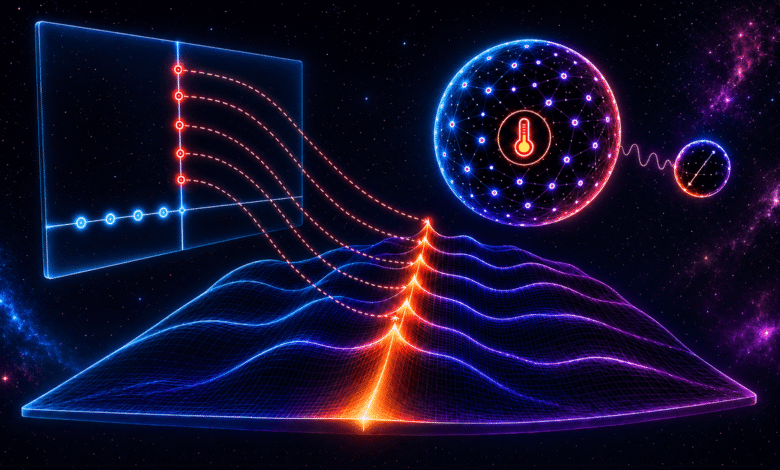
Can quantum computers solve math’s hardest problem?
The Riemann hypothesis claims that the locations of prime numbers along the infinite number line all adhere to a beautiful and orderly, but obscure formula. Yet 167 years after German mathematician Bernhard Riemann made this guess, and in spite of a million-dollar bounty, mathematicians still have no idea how to prove it. Now a team in China has managed to…
Read More » -
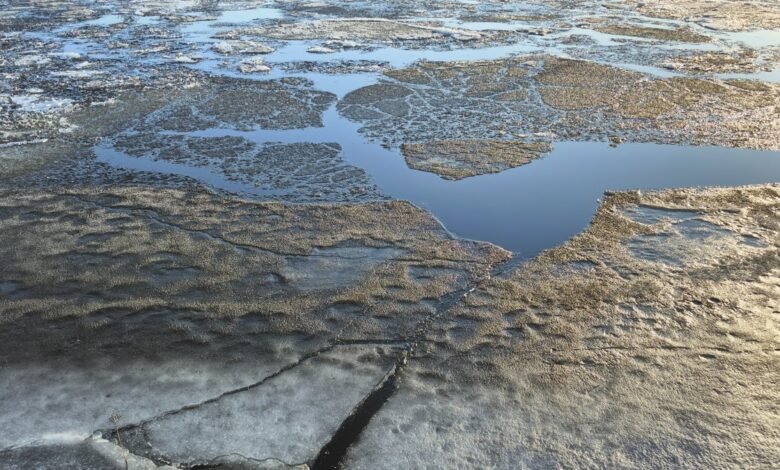
It’s 90 degrees in the Arctic right now
The Arctic is cooking. Across northern Russia—a region that is famously bitterly cold—temperatures this week have routinely surpassed 90 degrees Fahrenheit (32.2 degrees Celsius), adding to the mountain of broken heat records this summer has racked up so far. In recent days, the Selagoncy meteorological station, near the border of the Arctic circle, recorded 93.0 degrees F (33.9 degrees C);…
Read More » -

Postpartum psychosis is at the center of the Lindsay Clancy trial. What is it?
Lindsay Clancy, a 35-year-old former nurse, is on trial in Massachusetts for the murder of her three young children in 2023. The details of the case are disturbing—according to court records, Clancy strangled her children, aged five years, three years and eight months, to death before she attempted to take her own life. Clancy has pled not guilty to the…
Read More » -

How mental exhaustion changes the choices you make
This scenario will feel familiar to many parents: Imagine spending the day watching your kids—making them breakfast, settling arguments, answering their questions and trying to keep them from getting bored. By the end of the day, you finally take a moment to think about what to make them for dinner, and with it, whether you have the ingredients, how long…
Read More » -

The math of traffic jams and how to avoid them
Millions of people will take to the roads this holiday season, only to end up spending frustrating hours sitting in traffic jams. Congestion costs drivers time, fuel and patience – while also increasing pollution and placing huge pressure on transport networks. If you’ve ever found yourself staring enviously at the lane next to you, convinced it’s moving faster, you’re not…
Read More » -
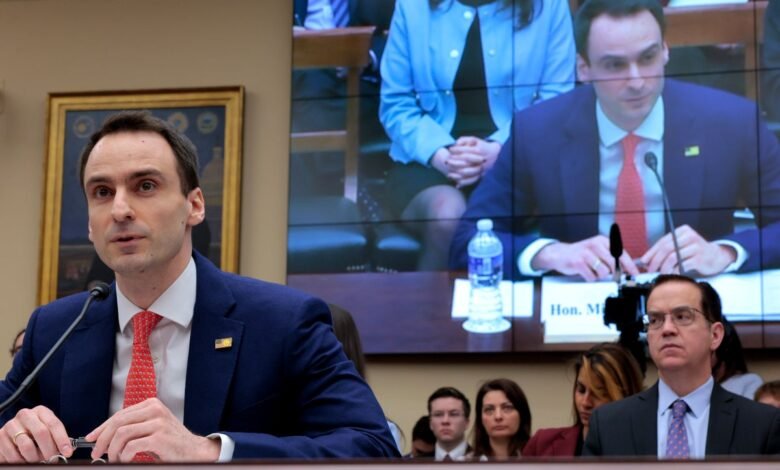
U.S. pledges $5 billion to boost AI in government-backed scientific research
Overall federal funding for scientific research is set to decline in 2027, the most senior White House science figure said on Wednesday. The government, however, pledged to spend $5 billion on promoting artificial intelligence in science. Michael Kratsios, the White House’s science and technology adviser, told the House Committee on Science, Space, and Technology that the money will be drawn…
Read More »