SCIENCE
-
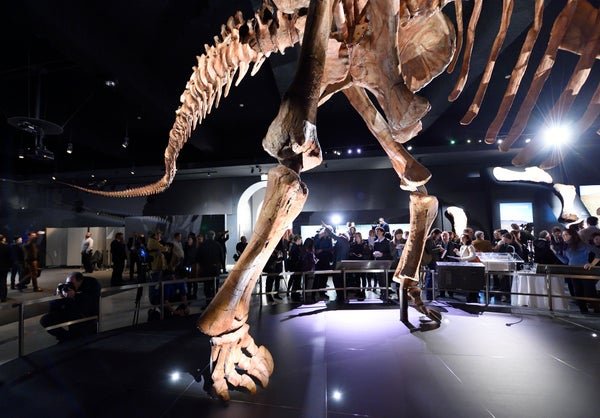
Titanosaurs—The Biggest Land Animals in Earth’s History—Thrived by Combining Reptilian and Mammalian Traits
[ad_1] Titanosaurs—The Biggest Land Animals in Earth’s History—Thrived by Combining Reptilian and Mammalian Traits The secret to titanosaurs’ remarkable biological success may be how they merged the best of both reptilian and mammalian characteristics to form a unique way of life By Kristi Curry Rogers & The Conversation US The Titanosaur, the largest dinosaur ever displayed at the American Museum…
Read More » -

Meet the Real-life Versions of Dune’s Epic Sandworms
[ad_1] Meet the Real-life Versions of Dune’s Epic Sandworms A Dune-loving worm paleontologist makes the case that worms have been just as important on Earth as they are in the blockbuster film. By Julian Nowogrodzki & Nature magazine Sandworms pursue a crowd in this scene from Dune: Part Two Credit: Warner Bros./FlixPix/Alamy Stock Photo The film Dune: Part 2 might…
Read More » -

Is Marijuana Bad for Health? Here’s What We Know So Far
[ad_1] Is Marijuana Bad for Health? Here’s What We Know So Far Marijuana’s health impacts—good and bad—are coming into focus By Jesse Greenspan Credit: Cappi Thompson/Getty Images With decades of legal and social opprobrium fading fast, marijuana has become an extremely popular commercial product with more than 48 million users across the U.S. Health concerns, once exaggerated, now often seem…
Read More » -

What Plant Migrations Tell Us about Ourselves
[ad_1] What Plant Migrations Tell Us about Ourselves New insights into why animals play, how to hunt an asteroid, and more books out now By Erica Berry An underwater view of a kelp forest. Credit: Brent Durand/Getty Images NONFICTION Dispersals: On Plants, Borders, and Belonging by Jessica J. Lee Catapult, 2024 ($27) As a child in Canada, Jessica J. Lee…
Read More » -
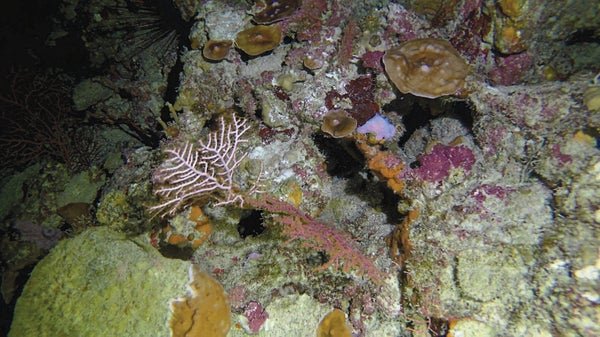
Even ‘Twilight Zone’ Coral Reefs Aren’t Safe from Bleaching
[ad_1] February 26, 2024 2 min read Even ‘Twilight Zone’ Coral Reefs Aren’t Safe from Bleaching Coral reefs hundreds of feet below the ocean surface aren’t as safe as scientists thought By Carolyn Wilke Recovering corals at the Chagos Archipelago. Credit: University of Plymouth As marine biologist Nicola Foster and her colleagues steered a remote-controlled submersible through the coral reefs…
Read More » -

The Life and Gruesome Death of a Bog Man Revealed after 5,000 Years
[ad_1] Before he was bludgeoned to death and left in a Danish bog, an ancient individual now known as Vittrup Man was an emblem of past and future ways of living. He was born more than 5,000 years ago into a community of Mesolithic hunter-gatherers who probably lived in northern Scandinavia as their ancestors had for millennia. But Vittrup Man…
Read More » -

Could Neanderthals Make Art? | Scientific American
[ad_1] For centuries, the “Unicorn Cave,” or “Einhornhöhle,” in central Germany has been famous for its many thousands of bones. In medieval times, people thought the bones came from unicorns. But a few years ago, archaeologists excavating the cave unearthed an unusual object: a toe bone from a giant deer. The material itself was noteworthy: Although giant deer were once…
Read More » -
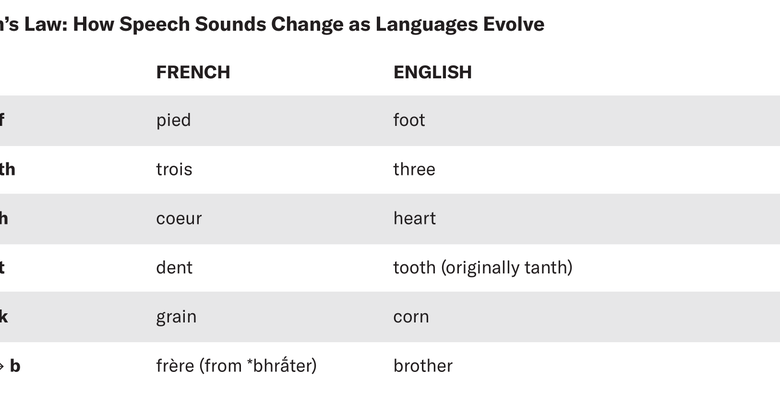
New Linguistics Technique Could Reveal Who Spoke the First Indo-European Languages
[ad_1] Almost half of all people in the world today speak an Indo-European language, one whose origins go back thousands of years to a single mother tongue. Languages as different as English, Russian, Hindustani, Latin and Sanskrit can all be traced back to this ancestral language. Over the last couple of hundred years, linguists have figured out a lot about…
Read More » -
Dominatrices Are Showing People How to Have Rough Sex Safely
[ad_1] [CLIP: Lady Harper Chase, speaks in her Intro to Whips class: “For me, my style of dominance…, I call myself, like, a nurturing pervert. This is a two foot signal whip. I call him swishy…. I just go like this on a person: tap, tap, tap, tap, tap.”] [CLIP: Intro music] On supporting science journalism If you’re enjoying this…
Read More » -

Sucking Carbon from the Air Becomes A Lead Strategy
[ad_1] CLIMATEWIRE | The Department of Energy announced up to $100 million in funding for carbon removal pilot projects Monday in an effort to advance technologies designed to suck CO2 directly out of the atmosphere. While there are a variety of strategies that can be used to remove carbon from the air, both natural and technological, applicants are invited to focus on three…
Read More »