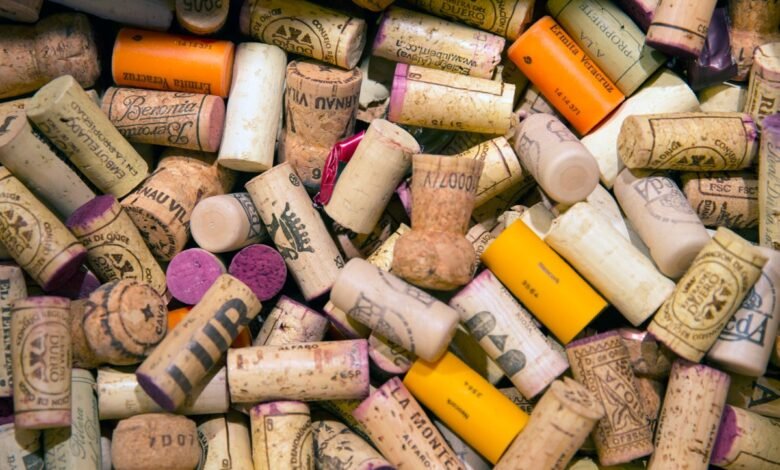
In most lines of work, an office filled with wine bottles might raise eyebrows. At the Food and Wine Science & Technology laboratory, located in the heart of France’s Burgundy wine region, it would be more concerning if there weren’t any.
Researchers at the lab study what happens to wine after it leaves the winery, investigating the physical and chemical processes that shape a bottle long after it is first corked. One of the biggest questions in modern enology—the science of wine and wine making—is: How does oxygen slowly enter a sealed bottle over time?
That trickle of oxygen can make or break a wine. In carefully controlled amounts, oxygen helps shape a wine’s flavor and aroma as it matures. Too much, however, and the wine oxidizes prematurely, impairing the very qualities winemakers hope to preserve; it can even make white wine turn brown.
On supporting science journalism
If you’re enjoying this article, consider supporting our award-winning journalism by subscribing. By purchasing a subscription you are helping to ensure the future of impactful stories about the discoveries and ideas shaping our world today.
In recent years, researchers have identified several distinct mechanisms governing how oxygen moves and reacts inside a bottle, but studying all of those processes for a single bottle of wine has proven difficult. In a new study, published on Friday in Science Advances, scientists at the lab tracked each of these mechanisms simultaneously, revealing how a bottle’s oxygen exposure changes from its first days after bottling through years of storage.
Oxygen transfer involves several interacting processes; many of them converge at the humble cork. “Usually, people don’t pay attention to the cork stopper,” says Julie Chanut, the study’s lead author and a researcher at the Food and Wine Science & Technology lab. “You open your bottle of wine, and you just throw it.”
But a cork is more than a plug. Cork, which is 80 to 85 percent air, acts as both a barrier and a participant in a complex series of physical and chemical interactions. To watch those interactions unfold, the team built miniature bottle systems fitted with corks. “The challenge is time,” says the study’s senior author Thomas Karbowiak, a professor at the Institute Agro Dijon in France. “We face the particular case of a product without a shelf life, which means we have to study over a very long time, sometimes, to see something.”
To accelerate the process, the researchers varied the lengths of the corks. Because oxygen travels more quickly through shorter corks than longer ones, this approach allowed the team to observe mechanisms that often play out over vastly different periods—sometimes as long as multiple years—within an 18-month experiment.
The process begins in the first few days after bottling, when oxygen quickly redistributes between the air trapped above the wine and the wine itself, eventually reaching a balance. Over the following months, oxygen stored inside the cork gradually diffuses into the bottle.
Then the chemistry shifts. Compounds from the cork dissolve into the wine and react with the available oxygen in the bottle, effectively consuming some of it and causing oxygen levels to decline. Only over the longest time horizons does oxygen from outside the bottle slowly permeate through the cork.
The results reveal that oxygen transfer is not a single continuous process but a succession of overlapping physical and chemical events.
The findings could help both winemakers and cork manufacturers better predict how a wine will age. Different wines are intended to be stored over different time periods—some are meant to be consumed within months of bottling, while others may spend decades in a cellar—and controlling oxygen exposure is critical to preserving flavor and aroma.
The work also highlights how much remains unknown regarding the chemistry of wine bottles and their cork sealing systems. Cork is a biological material with properties that change as it absorbs moisture and ages, potentially altering how oxygen moves through it. The next challenge, Karbowiak says, is to understand how the material itself evolves over years of contact with wine.
It’s Time to Stand Up for Science
If you enjoyed this article, I’d like to ask for your support. Scientific American has served as an advocate for science and industry for 180 years, and right now may be the most critical moment in that two-century history.
I’ve been a Scientific American subscriber since I was 12 years old, and it helped shape the way I look at the world. SciAm always educates and delights me, and inspires a sense of awe for our vast, beautiful universe. I hope it does that for you, too.
If you subscribe to Scientific American, you help ensure that our coverage is centered on meaningful research and discovery; that we have the resources to report on the decisions that threaten labs across the U.S.; and that we support both budding and working scientists at a time when the value of science itself too often goes unrecognized.
In return, you get essential news, captivating podcasts, brilliant infographics, can’t-miss newsletters, must-watch videos, challenging games, and the science world’s best writing and reporting. You can even gift someone a subscription.
There has never been a more important time for us to stand up and show why science matters. I hope you’ll support us in that mission.