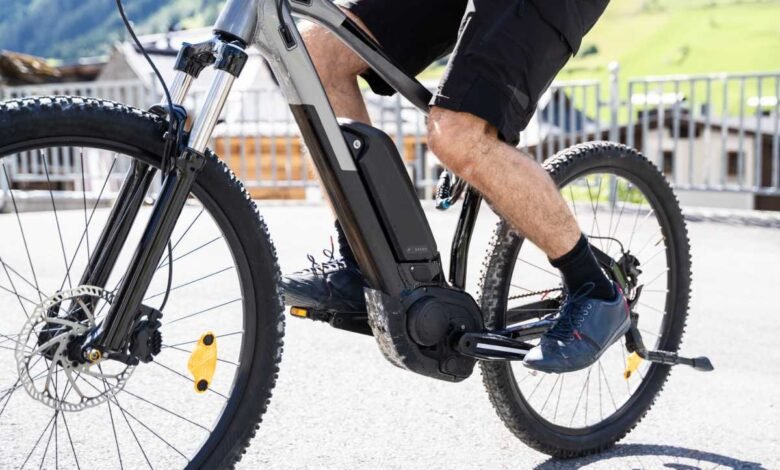
Emergency and trauma doctors in NYC are warning that injuries from e-bike crashes and other micromobility device collisions are becoming increasingly more common in area hospitals.
Physicians from major Manhattan medical centers told amNewYork that emergency departments and trauma centers are treating more patients hurt in collisions involving e-bikes, e-scooters, and other micromobility devices as their popularity continues to grow throughout the city. Injuries range from broken bones and head trauma to internal injuries, with many patients requiring surgery or lengthy hospital stays to recover.
According to Hannah Weiss, MD, a resident in the Department of Neurosurgery at NYU Grossman School of Medicine, brain and spine injuries from micromobility device collisions have surged among both riders and pedestrians.
“I’ve seen many injuries that permanently change people’s lives. We take care of healthy people who come in after a bike or scooter crash with a severe brain injury. Sometimes these individuals require emergency surgery,” Weiss said.
Weiss and colleagues even released a study in April about the alarming trend. The team analyzed 914 patients treated for injuries linked to both pedal-powered and electric micromobility devices at NYC Health + Hospitals/Bellevue over five years from 2018 to 2023.
The study found that e-bikes and scooters are driving a sharp rise in serious brain and spine injuries at one of the busiest hospitals in NYC: Health + Hospitals/Bellevue in Lower Manhattan. Nearly 7% of trauma admissions involved micromobility crashes, with pedestrians often suffering worse brain injuries than riders.

The share of trauma cases seen in Bellevue’s emergency room — whether patients were admitted or not — that involved such devices increased from less than 10% in 2018 to more than 50% by 2023.
“That was one of the major takeaways from the study,” Weiss said. “When we broke it down by year, in 2018, we only saw 7.9% accidents that involved any sort of electric bike or scooter, and it went up to 55% by 2023.”
Pedestrian injuries, per the study, were especially severe, Weiss explained.
“Another important takeaway from our study is that the group of people that actually did the worst with medical outcomes or severity of injuries was actually people who were not riding a bike or scooter but instead just walking across the street and hit by a bike or scooter,” the doctor said.
Roberta Simon knows the pain of an e-bike collision all too well. She told amNewYork she was out for a run in Central Park in Aug. 27, 2024, when a teenager riding an e-bike collided into her. She does not remember much from the collision, but recalled waking up days later in Mount Sinai Hospital.
The young cyclist remained at the scene when police arrived to take a report. Simon said she suffered a brain bleed and needed 40 staples in her head. She spent about a week in the hospital, but later needed to be readmitted due to her sodium levels being dangerously low.
“Two days later, I had to be rushed back to the hospital,” she recalled. “I spent another almost week there.”
Simon suffered temporary hearing loss as a result of her injuries.
“It’s a little surreal. I’m just now starting to be better about it,” she said. “It was bad”
Danielle Defoe, MD, the associate trauma medical director at Jamaica Hospital, told amNewYork that she has seen a significant increase in collisions involving micromobility devices. Like Weiss, she has seen the number of injuries creep up each year.
“When I looked back at our data, in 2021 and 2022, we were only seeing between 30 and 40 patients a year from these accidents. But in the past year, we saw over 100 patients,” Defoe said. “It’s a pretty significant increase in the number.”

Even though the statistics pertain only to Jamaica Hospital, DeFoe said it is likely that many hospitals across the city have been seeing increases, too.
Some of the most common micromobility device-related injuries treated at Jamaica Hospital include fractures and traumatic brain injury. The ages of patients run the gamut.
“It’s a mix,” the doctor said. “The thing about these e-scooters and e-bikes is that it’s easy for people of any age to get on. So we’re seeing a mix that way. There are pediatric patients, ages 15 and 16, to 60s and 70s.”
Defoe said the patients include micromobility device users who are hit by other vehicles, as well as pedestrians hit by e-bikes and e-scooters.
What does the Department of Transportation say?
When amNewYork contacted the NYC Department of Transportation (DOT), the department cited an article from Streetsblog that appeared aimed at discrediting the medical doctors’ findings and research.
“Safer street design is the best way to mitigate rising-but-still-rare injuries stemming from the increase in biking and electric micromobility use, according to a new analysis of emergency room data that is being widely misrepresented by multiple media outlets as part of an anti-e-mobility, pro-driving agenda,” the biased article starts, as it pivots away from micromobility-related injuries to motor-vehicle injuries.
Meanwhile, the DOT said that as of July 1, fatalities involving riders of e-bikes, stand-up scooters, and mopeds have increased from 16 to 18 compared to last year, though they remain below the 23 recorded at this point in 2024 and 2023.
Collisions without deaths have also increased, according to the NYPD’s latest statistics as of July 5. E-bike crashes jumped to 491 this year, compared to 358 during the same time last year. Stand-up scooter crashes also increased during the same period, from 510 to 677.
Moped collisions decreased this year, dropping from 814 in 2025 to 562 in 2026.
Vincent Barone, a spokesperson for DOT, sent amNewYork a statement discussing safety improvements to city streets:
“We applaud Bellevue Hospital for this important study, which aligns closely with our data and reinforces the importance of our Vision Zero work and building safe streets. The Mamdani administration has been working with urgency on a multi-pronged approach to improve our street infrastructure, remove illegal devices from our streets, and champion legislation to finally hold app companies accountable for incentivizing unsafe riding behavior.”
NYC DOT penned a letter to app companies reminding them they are legally required to provide safety equipment to workers and ensure the workers take a new NYC DOT safety training. Mayor Zohran Mamdani also said in March he would work with the NYC Council to address the “root causes of unsafe e-bike and cycling delivery practices.”
As for the doctors, they say raising awareness about safety is key.
“I just don’t think the public is aware of the true rules of e-bikes, and they are not really obeying the rules of the road,” Defoe explained, as she has seen riders not staying in the bike lane, weaving through traffic and going through red lights when they think it is safe.
The doctor added that she and her team of injury-prevention specialists raise their own awareness of staying safe on the road, including wearing a helmet and follow traffic laws.
“We try to reeducate people every time we see them to try and reinforce the rules to try and prevent something worse from happening,” she said.