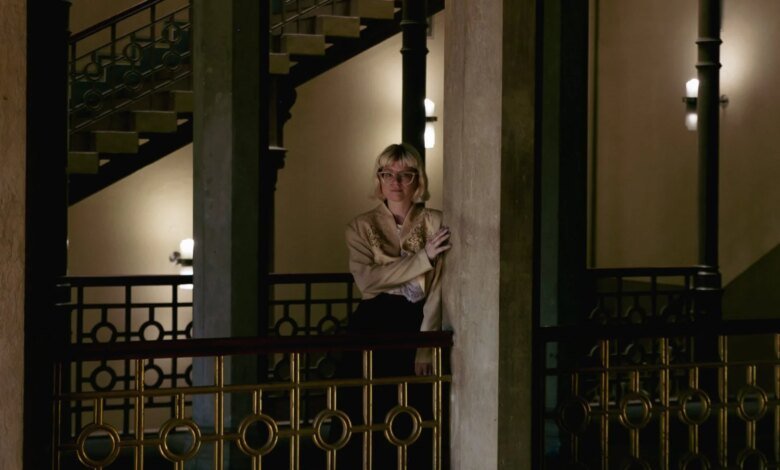
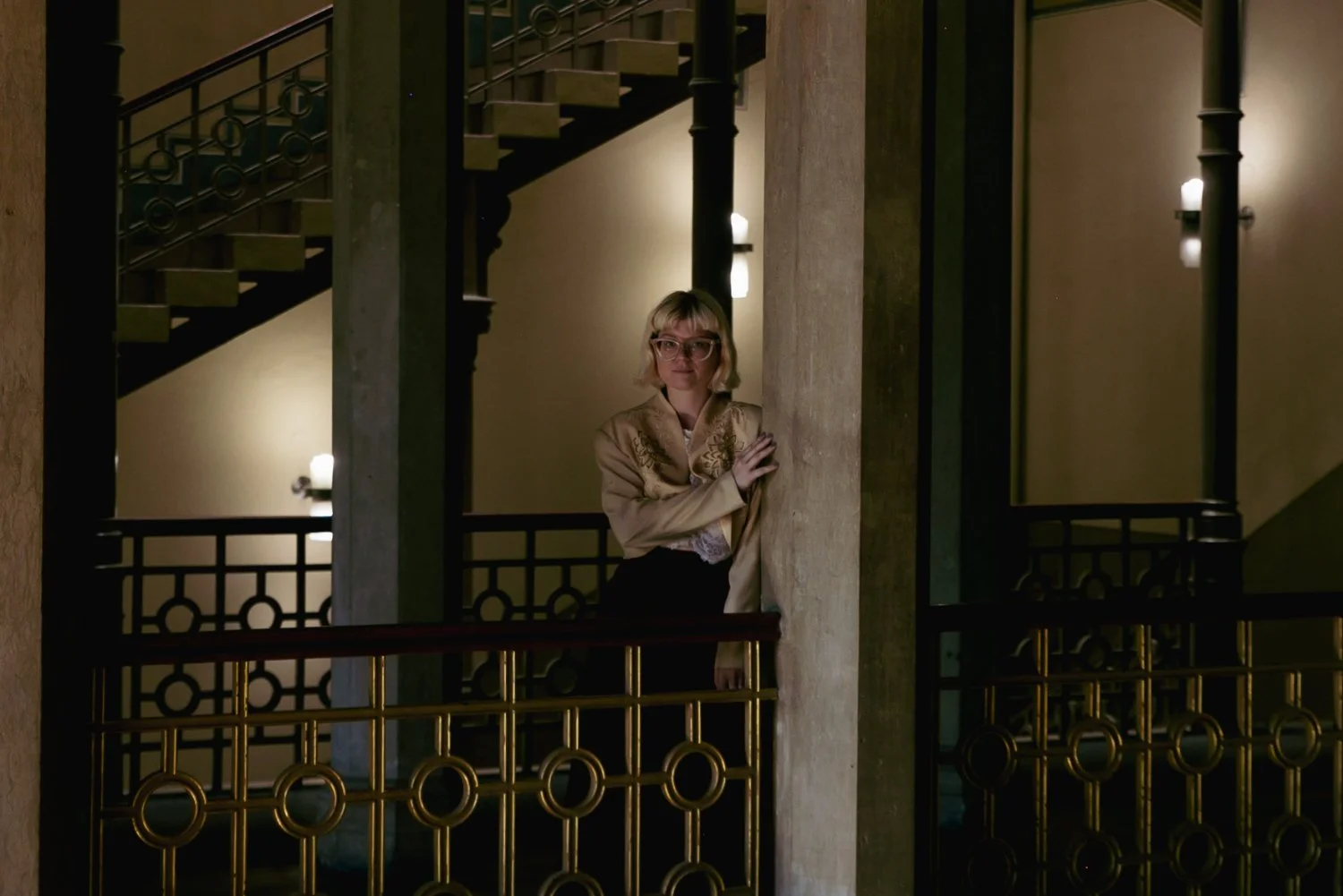
Reports from various official watchdogs in Germany have also recorded a rise in antisemitism since 7 October, including a knife attack at Berlin’s Jewish Memorial in February 2025 that left a Spanish tourist severely injured. However, Ocher says that such reports do not mirror her own experience. “Antisemitism surely exists, but I experienced none of it in 20 years of living here.”
Her latest album, Weimar, which was released earlier this year, brings together cabaret stylings, hypnotic piano reminiscent of the classicists and Baroque elements that give a nod to US art-rockers Sparks. She mostly favours a baritone drawl, paired with much sparser instrumentation. Sometimes nothing but instrumentation, in fact, as with The Narrative’, a three-part piano movement that creates daunting, melancholy soundscapes.
Apart from ‘On the Streets of Hard Labour’, which carries an almost jaunty nature, the tone and theme are sombre. She sings of Soviet lies and ‘the bitter end’. “Is this the end of a second Weimar?” she asks in the adjoining five-page essay (long-form writing accompanies four of her previous albums, with citations and all). “There’s just so much more that I’d like to communicate than the length of a song permits,” she explains.
With Weimar, her message is clear. She describes a Berlin fallen victim to “consumerism, political atrophy and cynicism” and laments the loss of the culturally enriched era of Bauhaus, Expressionism and cabaret.
“When I moved to Berlin,” she says, “it seemed like a revival of the Weimar Republic in many ways. But we all know what came after [that period of history]. [The album] is a warning: to remember history, to not let fascism take over again.”
By Danielle Goldstein
Photos by Kasia Sekula
Weimar by Mary Ocher is out now. maryocher.com
This article appears in the Summer 2026 issue of JR.