Amidst armed police and angry protestors, Aviva Dautch meets artist Belu-Simion Fainaru to hear about representing Israel at the Biennale
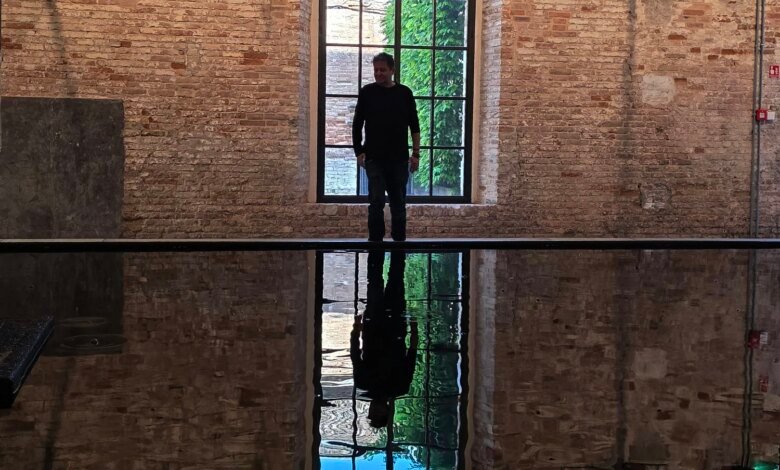
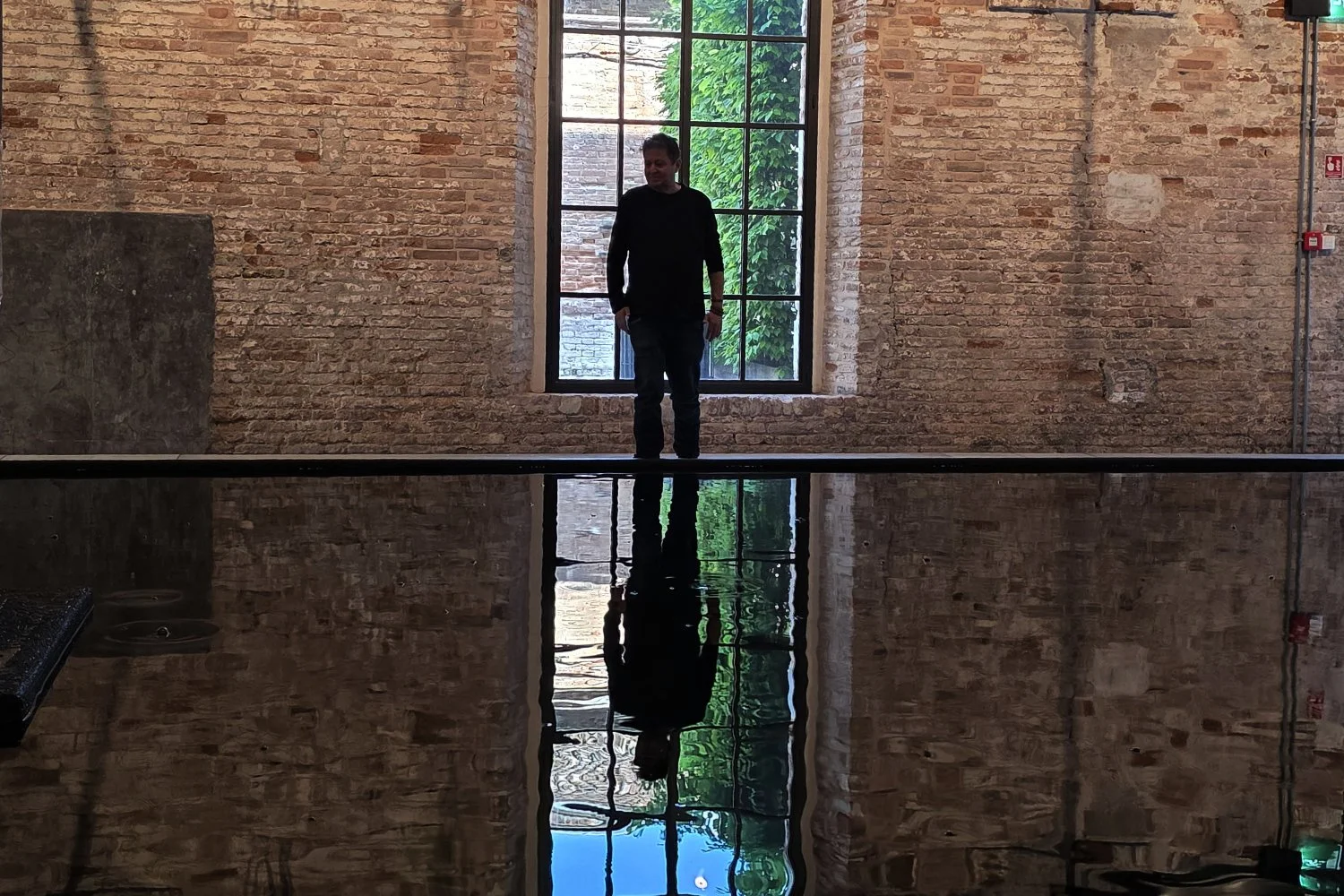
There is a peaceful stillness at Belu-Simion Fainaru’s installation, Rose of Nothingness, at the Israel Pavilion in Arsenale, the old navy shipyard that is one of the venues for this year’s Venice Art Biennale.
It’s a calm that belies the chaos outside, where armed Italian policemen and Israeli security hold back screaming protesters. Surrounded by crenelated brick walls that absorb all sound, I find myself alone, staring at the ripples on a reflective pool of black water. The artwork is inspired by poet Paul Celan’s “black milk”- – the words from his poem Todesfuge (Death Fugue in John Felstiner’s translation), in which concentration camp inmates drink the “black milk of daybreak”.
The poem ends with the name ‘Shulamit’, the heroine of the Song of Songs. As Felstiner suggests, she becomes a figure for the Jewish people boxed in, agonised, persecuted, but still calling for peace and hope. It is evident, when speaking to the artist, that Shulamit is Fainaru’s muse and, in Celan, a Holocaust survivor and German-speaking Romanian poet, whose work brings together the secular world and the pain of Jewish experience, Fainaru has found a guiding spirit.