Why O BROTHER, WHERE ART THOU? Is Still the Greatest Adaptation of Homer’s The Odyssey — GeekTyrant

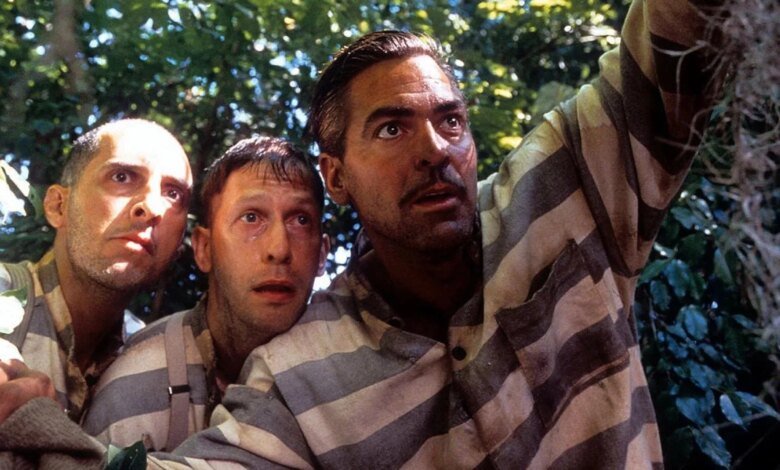

With Christopher Nolan preparing to bring The Odyssey to the big screen, I’ve been diving back into Homer’s legendary epic and revisiting the many films that have drawn inspiration from it over the years.
There have been direct adaptations, loose reinterpretations, television miniseries, animated versions, and stories that borrow pieces of Odysseus’ journey while placing them in entirely different worlds. Yet every time I think about the greatest cinematic adaptation of The Odyssey, I always come back to the same film.
O Brother, Where Art Thou?
The film trades ancient Greece for Depression-era Mississippi. Odysseus becomes a fast-talking escaped convict obsessed with hair pomade. Mythological monsters are replaced by con men, corrupt politicians, Bible salesmen, and lawmen who seem to emerge from the dust like supernatural forces of nature.
Somehow, despite changing almost everything about the setting, the Coen Brothers created a film that captures the heart of Homer’s story better than many adaptations that attempt to follow the original text more closely.
What makes O Brother, Where Art Thou? so remarkable isn’t that it recreates the events of The Odyssey. It’s that it understands why people have been captivated by that story for nearly three thousand years.
Homer wasn’t simply telling a tale about a warrior trying to get home. He was telling an adventure packed with larger-than-life characters, strange encounters, temptation, danger, humor, music, and the universal desire to return to the people who matter most.
Those ingredients are woven into every frame of O Brother, Where Art Thou?, and that’s why the film continues to resonate more than two decades after its release.
The movie feels like a tall tale passed down through generations. It feels like folklore. It feels like a story that has always existed, even though it was released in 2000. That’s a difficult quality to achieve, and it’s one of the reasons the film has aged so incredibly well.
Every time I revisit it, I’m reminded that the Coens weren’t interested in simply adapting The Odyssey. They wanted to create an American myth that stood proudly alongside it.
One of the smartest decisions the filmmakers made was recognizing that The Odyssey was essentially one of the world’s first great road trip stories.
The poem follows Odysseus as he struggles to return home after the Trojan War, but the journey itself is what makes the story unforgettable. Every stop introduces a new challenge, a new temptation, or a new personality that threatens to pull him away from his goal. The structure is episodic by design, and that’s exactly how O Brother, Where Art Thou? unfolds.
Everett Ulysses McGill, Pete Hogwallop, and Delmar O’Donnell spend most of the film wandering from one bizarre situation to the next.
They encounter escaped criminals, political rallies, radio stations, baptism ceremonies, seductive sirens, and larger-than-life strangers who seem ripped straight from folklore. Each stop feels like its own self-contained adventure, yet every encounter pushes the trio further along their journey.
That structure is one of the film’s greatest strengths because it creates a sense of discovery. You never know who these characters are going to meet next or what kind of trouble they’ll stumble into.
Every scene introduces another colorful piece of this strange and fascinating version of America. Just like Homer’s epic, the destination matters, but the real magic comes from everything that happens along the way.
The film’s success also rests heavily on the shoulders of George Clooney, who delivers one of the funniest and most charming performances of his career as Everett Ulysses McGill.
Everett isn’t a traditional hero. He isn’t physically imposing, and he certainly isn’t fearless. What he does have is an endless supply of confidence and the ability to talk his way through almost any situation, whether he actually knows what he’s doing or not.
That’s what makes him such a perfect stand-in for Odysseus.In Homer’s poem, Odysseus survives through intelligence and cunning far more often than brute strength. He’s a strategist, a storyteller, and a master manipulator.
Everett operates in much the same way. He always has a plan, even when that plan is terrible. He believes he can outsmart anyone he encounters, and while that confidence occasionally helps him escape danger, it also lands him in trouble more times than he would probably care to admit.
Part of what makes Everett so entertaining is that he’s completely convinced of his own brilliance. His obsession with Dapper Dan pomade has become one of the most beloved running jokes in the movie, but it also tells us everything we need to know about the character.
Everett cares about appearances. He wants to project sophistication and control even when he’s standing in the middle of chaos. Clooney leans into those qualities perfectly, creating a character who is equal parts lovable rogue, smooth-talking con artist, and hopeless dreamer.
What makes Everett such a fascinating adaptation of Odysseus is that he embodies many of the same strengths and weaknesses that have made Homer’s hero endure for thousands of years.
He’s clever, resourceful, and charismatic, but he’s also vain, stubborn, and frequently blinded by his own confidence. The film never presents him as a flawless hero riding in to save the day. Instead, he’s a deeply flawed man trying to hold his life together while convincing everyone around him that he has everything under control.
That combination of confidence and vulnerability makes him incredibly entertaining to watch and gives the story an emotional grounding that keeps it from drifting into pure parody.
The brilliance of O Brother, Where Art Thou? becomes even more apparent once you start looking at the ways the Coens translated Greek mythology into American folklore. What makes the film so satisfying isn’t that it points at references and asks audiences to recognize them. The parallels are woven naturally into the story, allowing them to enrich the experience without ever distracting from it.
One of the clearest examples comes early in the film when the trio encounters the blind railroad prophet. Standing beside the tracks, he foretells the strange journey that lies ahead, delivering a warning that feels mysterious and otherworldly.
The scene functions much like the encounters Odysseus has with prophets and seers throughout The Odyssey. It’s a moment that establishes fate as a powerful force within the story while also adding a layer of mythic intrigue to the adventure.
The river sirens provide another example. When Everett, Pete, and Delmar stumble upon three beautiful women singing beside the water, the sequence feels dreamlike and almost supernatural.
The women lure the men into a trance-like state, disrupting their journey and creating one of the film’s most memorable detours. The scene captures the spirit of Homer’s sirens perfectly, replacing the dangers of the sea with the temptations of the American South while preserving the same sense of enchantment and peril.
Then there’s Big Dan Teague, played with tremendous energy by John Goodman. As a smooth-talking Bible salesman with a single eye and a talent for deception, Big Dan serves as the film’s Cyclops.
The connection is obvious, but it’s also incredibly clever. Instead of presenting a giant monster living in a cave, the Coens give audiences a larger-than-life con man whose charm masks a dangerous and violent nature. The result feels both faithful to the source material and completely original.
Even Sheriff Cooley takes on a mythological quality throughout the film. Dressed in dark sunglasses and emerging from clouds of dust and firelight, he often feels less like a lawman and more like an unstoppable force of nature.
Every time he appears, it’s as if fate itself has arrived to challenge the heroes once again. Like Poseidon in The Odyssey, he becomes a relentless presence looming over the entire journey.
What makes these adaptations so effective is that they never feel forced. The Coens allow the mythology to exist beneath the surface, rewarding viewers who recognize it while remaining completely accessible to those who don’t.
Perhaps the film’s most impressive achievement is the way it transforms Depression-era Mississippi into a mythological landscape every bit as compelling as ancient Greece.
The version of the South presented in O Brother, Where Art Thou? isn’t meant to be a perfectly realistic recreation of history. It feels heightened, almost dreamlike, as though the audience is listening to a folk tale that has been passed down through generations and embellished along the way.
The dusty roads stretching across the countryside become oceans waiting to be crossed. The trains cutting through the landscape take the place of ships sailing toward distant horizons. Political campaigns feel like battles for kingdoms. Local legends and eccentric personalities occupy the same narrative space once filled by gods and monsters.
Everywhere Everett and his companions travel, they encounter people who seem larger than life. Some are inspiring. Some are ridiculous. Some are dangerous. All of them contribute to a world that feels simultaneously familiar and fantastical.
The film suggests that America possesses its own mythology, one built from folk music, traveling preachers, outlaws, political showmen, and dreamers searching for a better future.
That idea becomes even more powerful when combined with the film’s music, which is arguably the secret ingredient that elevates O Brother, Where Art Thou? from a great movie to an unforgettable one.
There are plenty of films with fantastic soundtracks, but few movies are as completely defined by their music as O Brother. The songs aren’t simply background noise designed to create atmosphere. They are woven directly into the story’s DNA. Every performance, every melody, and every lyric helps shape the world and deepen the audience’s connection to it.
The soundtrack introduced millions of viewers to traditional American folk, bluegrass, gospel, and country music. More importantly, it reminded audiences just how powerful those musical traditions can be. These songs carry history within them.
They tell stories of hardship, faith, perseverance, loss, and hope. They speak to the experiences of ordinary people while simultaneously feeling timeless.
That’s one of the reasons the Soggy Bottom Boys storyline works so well. What begins as a simple scheme to earn some quick money evolves into something much bigger. Their accidental rise to fame becomes a celebration of storytelling itself. Through music, these wandering fugitives become legends.
The iconic performance of “Man of Constant Sorrow” is one of the most memorable moments in the film because it taps into something universal. The song reflects the struggles of the characters while also connecting them to generations of musicians and storytellers who came before them. It feels authentic, emotional, and rooted in the culture that inspired the film.
In many ways, the soundtrack creates a fascinating connection back to Homer. Long before stories were written down, they were performed. Epic tales were shared through oral traditions, passed from one generation to the next by storytellers who used rhythm, music, and performance to captivate audiences.
O Brother, Where Art Thou? may not literally recreate that experience, but it captures the spirit of it. The music becomes another storyteller guiding us through the adventure.
The film’s visual style contributes just as much to its unique identity. The warm, sepia-toned imagery gives the movie a look unlike almost anything else released at the time.
Every frame feels sunbaked and weathered, as though it has been pulled from an old photograph tucked away in someone’s attic. The landscape feels rich with history, helping reinforce the idea that we’re witnessing an American legend unfold before our eyes.
Yet for all its artistry and mythological depth, one of the reasons O Brother, Where Art Thou? remains so beloved is because it’s incredibly funny. The Coens have always possessed a gift for finding humor in unexpected places, and this film might contain some of their most entertaining comedic work.
The humor emerges naturally from the characters rather than relying on jokes that exist outside the story. Everett’s obsession with maintaining his image, Delmar’s childlike innocence, and Pete’s constant frustration create a comedic dynamic that never gets old.
Their conversations are packed with memorable dialogue, misunderstandings, and absurd observations that continue to make audiences laugh decades later.
The comedy never undermines the emotional stakes. The film understands that humor and sincerity can coexist. In fact, they often strengthen one another. The laughs make the characters feel more human, which in turn makes their struggles feel more meaningful. By the time the story reaches its emotional peaks, audiences care deeply about these characters because they’ve spent so much time enjoying their company.
Beneath all the adventure, mythology, and comedy lies a surprisingly heartfelt story about home. Like Odysseus before him, Everett spends the entire film trying to return to the people he loves.
At first glance, that goal seems straightforward. He wants to reunite with his wife Penny and reconnect with his daughters. As the story unfolds, however, he discovers that returning home isn’t as simple as showing up and expecting everything to be the way he left it.
Life has continued moving forward in his absence. Relationships have changed. Opportunities have been lost. The future he imagined waiting for him no longer exists. In order to truly come home, Everett must confront the consequences of his choices and earn a second chance.
That’s where the emotional core of the film reveals itself. Home isn’t simply a destination. It’s something that must be valued, protected, and appreciated. The journey changes Everett in ways both large and small, forcing him to recognize what actually matters in his life.
That theme is one of the primary reasons The Odyssey has remained relevant for thousands of years, and it’s one of the reasons O Brother, Where Art Thou? continues to resonate today. While the settings, costumes, and cultural details may differ dramatically, the emotional foundation remains the same.
People understand the desire to belong. They understand the struggle to reconnect with loved ones. They understand the longing to find their place in the world.
As excitement builds for Christopher Nolan’s upcoming adaptation of The Odyssey, it’s worth remembering that great adaptations aren’t always defined by how closely they follow the original text. Sometimes the most successful adaptations are the ones willing to take risks, reinterpret familiar material, and discover something new within an ancient story.
That’s exactly what the Coen Brothers accomplished with O Brother, Where Art Thou?. They didn’t simply retell Homer’s epic. They transformed it into an American folk tale filled with unforgettable characters, incredible music, hilarious comedy, and genuine heart.
The result is a film that feels completely unique while remaining deeply connected to one of the oldest stories ever told.
More than twenty-five years after its release, O Brother, Where Art Thou? remains one of the most entertaining, inventive, and rewarding literary adaptations ever put on screen. Every revisit uncovers another clever reference, another layer of meaning, or another reason to fall in love with its characters all over again.
While Nolan may deliver a spectacular vision of ancient Greece and bring audiences closer to Homer’s original world than ever before, O Brother, Where Art Thou? will always hold a special place in my heart because it captures something that goes beyond historical accuracy. It captures the spirit of adventure, the joy of storytelling, and the timeless appeal of a hero trying to find his way home.
Nearly three thousand years after Homer introduced the world to Odysseus, Everett Ulysses McGill proved that the journey still has plenty of life left in it.
Whether that adventure unfolds across the wine-dark sea or along the dusty backroads of Mississippi, the destination remains the same. We’re all searching for our way home, and few films have made that journey as entertaining as O Brother, Where Art Thou?