120 Ancient Inscriptions Honoring The Mysterious Goddess ‘The Lady’ Found In A Valencia Cave

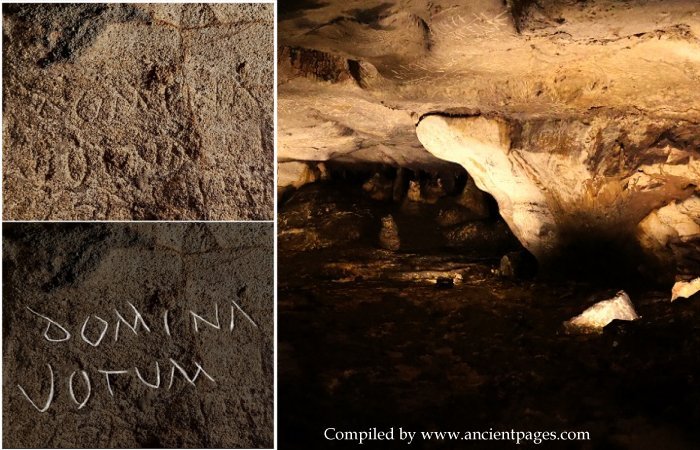
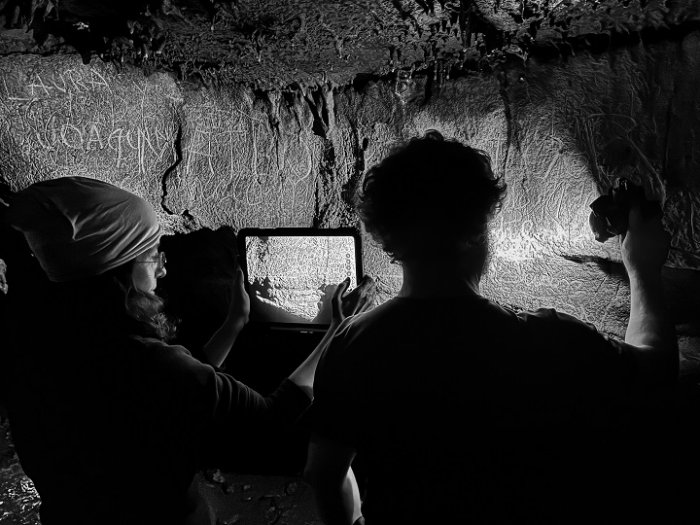
Conny Waters – AncientPages.com – The recent archaeological campaign at Cova Dones in Millares (Valencia) may establish the site as the cave-sanctuary with the most known Latin inscriptions in both Hispania and the Roman Empire. Conducted in May and June 2026, the campaign documented at least 120 Latin inscriptions, primarily from the 1st and 2nd centuries AD, a significant increase from the previously known fifteen.
Credit: Universidad de Alicante
The inscriptions highlight the role of women in the sanctuary’s rituals. “Preliminary results indicate that Cova Dones was a cave-sanctuary frequented by women, since several female names appear among the inscriptions documented so far,” explains the research team led by Virginia Barciela of the University of Alicante and Aitor Ruiz-Redondo of the University of Zaragoza.
Epigraphic readings conducted by Silvia Alfayé, professor of Ancient History at Unizar, and Sergio García-Dils, professor at UNED-Sevilla and director of the Spanish School of Speleology, reveal evidence of women’s presence in the underground sanctuary of Dones.
Who Was The ‘Lady’?
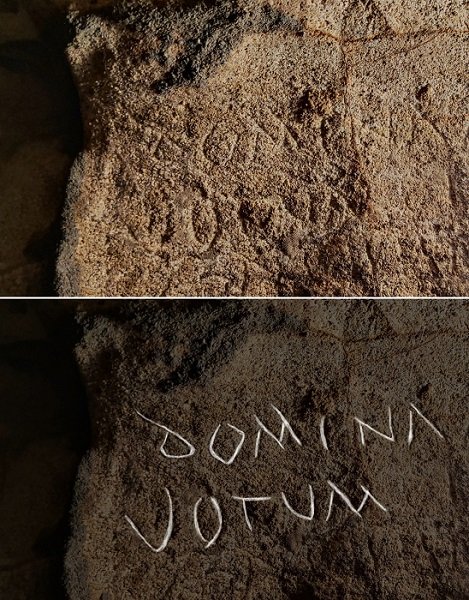
“Thanks to a set of five votive inscriptions, we know for certain that in Roman times a goddess, reverentially called Domina, “the Lady,” was venerated in the cave, and that women played an active role in her cult.
Credit: Universidad de Alicante
Three of these inscriptions bear the name “MALACI,” a previously unknown epithet for a goddess. This goddess had a specific aspect, perhaps related to water, the definitive interpretation of which we are currently working on,” Alfayé explains.
The team is currently evaluating several possible interpretations of the inscriptions dedicated to the “Domina” of Dones. As Sergio García-Dils explains, “the existence of at least five inscriptions dedicated to this same deity demonstrates that we are not dealing with sporadic visits for a generic religious purpose, but rather with a specific cult dedicated to a particular deity.
Likewise, the fact that the texts are concentrated in a specific and delimited area of the cave, away from the entrance, confirms that it is an organized cult.”
“We also found numerous spindle whorls at the sanctuary, suggesting that spindles—textile-working tools historically linked to women—were offered here. This supports epigraphic evidence of women’s active participation at the site,” says Virginia Barciela from the University of Alicante.
“It is also important to consider the earliest recorded name for the site: Cova de les Dones (Cave of the Women). This may reflect a toponym referencing the presence of women or female entities,” she adds.
Roman Sanctuary And Underground Galleries
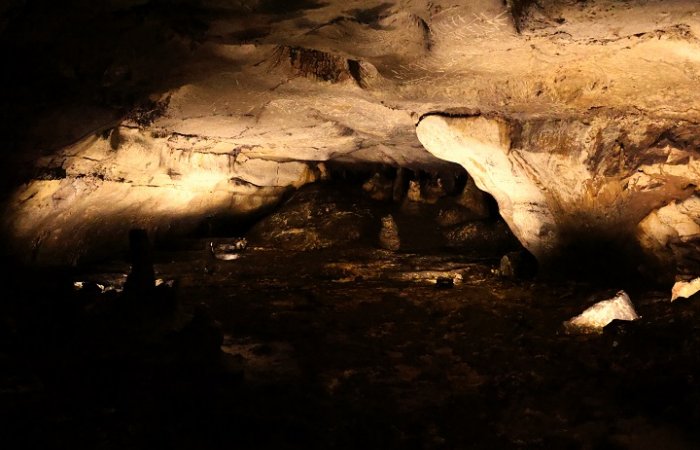
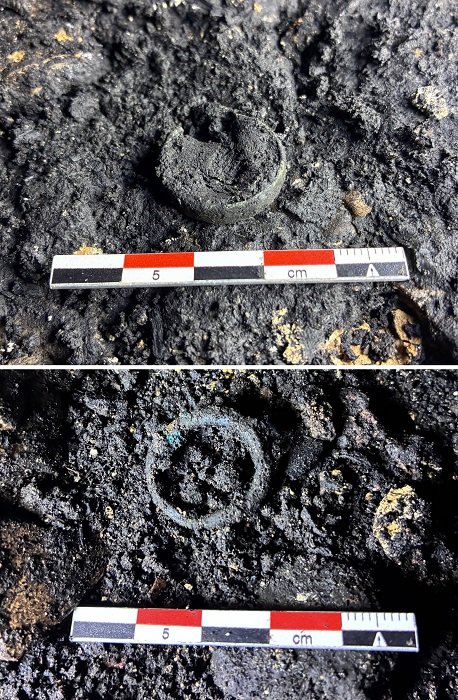
These inscriptions are located in a specific chamber of the cave, named the “Roman Sanctuary,” which lies over 200 meters deep and was first discovered in 2024. The inscriptions appear on the chamber’s walls and ceilings. The floor contains small natural pools (gours) that collect water from underground galleries, where visitors deposited material offerings.
Credit: Universidad de Alicante
During the 2026 campaign, the team documented several surface objects, including two rings, a bracelet, chalice-shaped vessels, spindle whorls, ceramic fragments, faunal remains, and other archaeological materials, as well as the Roman coin found in 2024.
“This in situ association of archaeological materials and rock inscriptions in a Roman underground sanctuary is exceptional and makes Dones a unique site for comprehensive, interdisciplinary study of the cave’s ritual dynamics over time,” emphasizes Ruiz-Redondo from the University of Zaragoza.
Credit: Universidad de Alicante
“Previously identified as a Roman sanctuary with about fifteen inscriptions, the site now contains 120, making it the largest known collection of Latin inscriptions in a cave sanctuary in the Roman Empire. Studying these inscriptions alongside preserved archaeological materials will enable a more precise reconstruction of the ritual practices conducted here over centuries,” explain the project coordinators.
See also: More Archaeology News
“Each new discovery indicates that Cova Dones has served as a landmark for human groups in this region for millennia, possibly due to its permanent water source, unique underground landscape, or easy access,” the researchers explain.
As much of the cave remains to be studied and many inscriptions are yet to be deciphered, research at Cova Dones will continue in the coming seasons.
Source: Universidad de Alicante
Written by Conny Waters – AncientPages.com Staff Writer