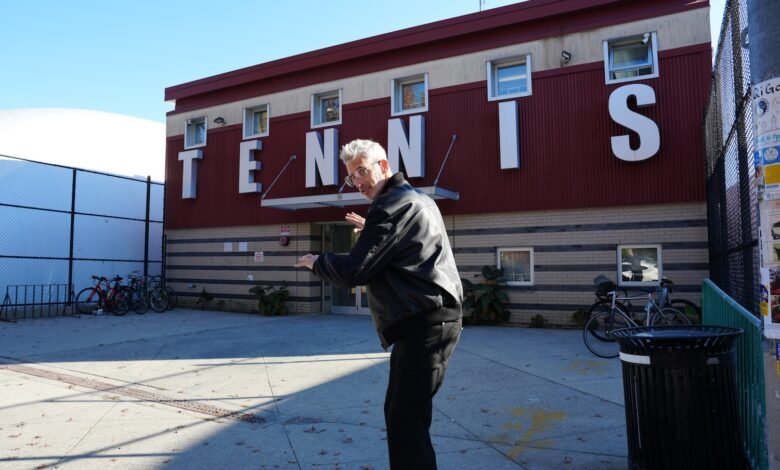
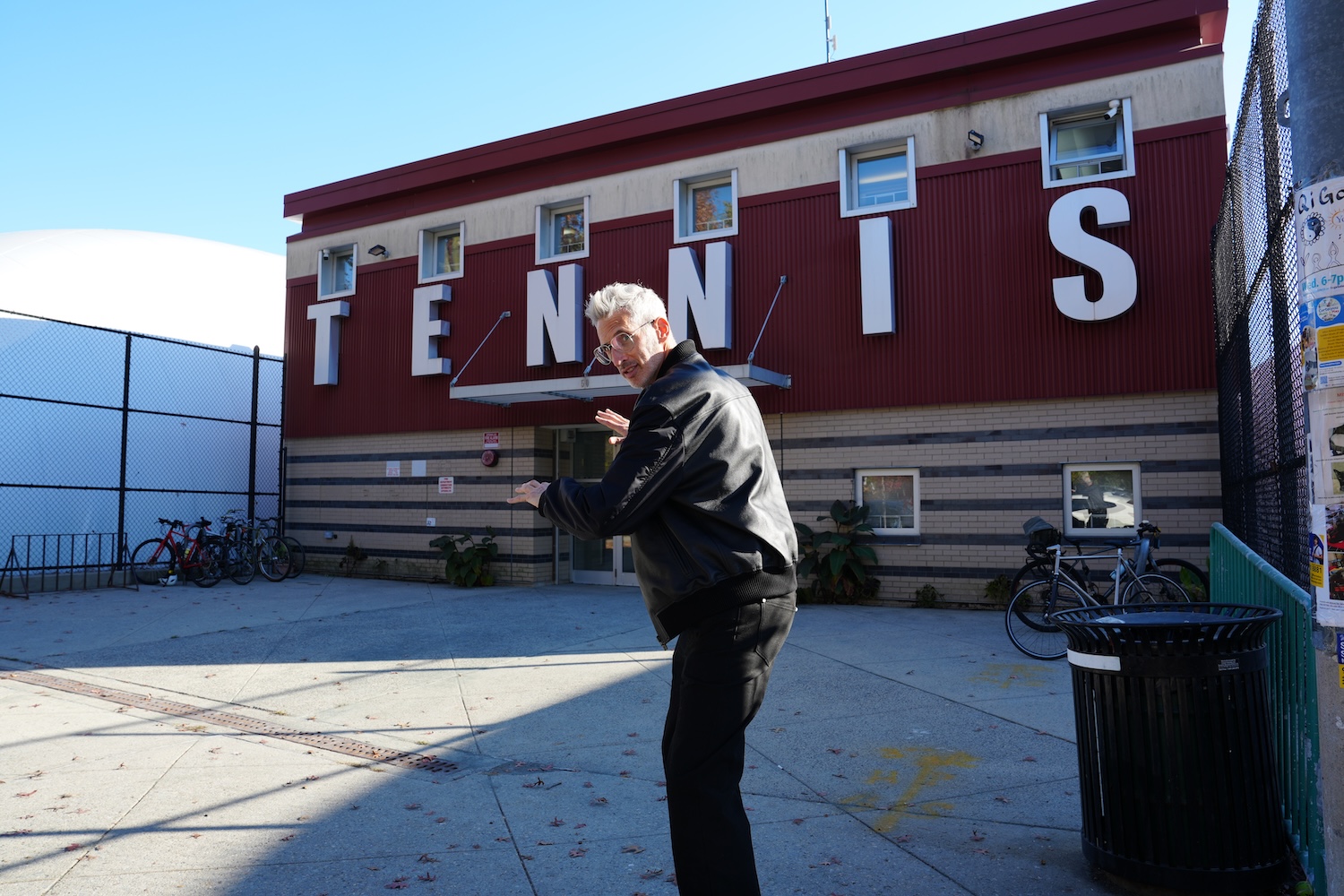
It’s a perfect weekday afternoon for tennis on Parkside Avenue, in front of the Prospect Park Bubble, when Stretch Armstrong pulls up in a Tesla and unfolds to his nickname-inspiring, rail-thin 6’6″ frame and approaches the bench I’m sitting on with a gregarious smile and an extended pound. Stretch, born Adrian Bartos, is a prototypical New York City kid, born into an absurdly accomplished household of athletes, artists, and intellectuals in 69’, where he was given a progressive Manhattan primary schooling, which he parlayed into an Ivy League education across the park at Columbia. It was there, in 1990, that Stretch was able to talk his way on air on WKCR to co-found the best and most important college radio show in the history of hip-hop, recorded music, radio, and college, The Stretch Armstrong and Bobbito Show, with a Def Jam promoter, fellow DJ and rap scholar named Robert “Bobbito” Garcia. The show ran between 1990 and 1999, from 1 a.m. to 5 a.m on Friday mornings, crucially allowing for four hours of glorious, commercialless, uncensored rap, and gave the world its first exposure to some of the best and brightest artists to come out of New York at a time when it was still the center of the rap universe.
En route to the show’s legendary status, Stretch was consecrated as rap’s quintessential “Laid-back Jewish guy who has great taste and appreciates the music and the culture for all the right reasons,” a role he has maintained ever since. He has enjoyed a glowing, controversy-free career, establishing himself as a great creative collaborator that has included an accomplished discography of street mixtapes made in tandem with DJ Whoo Kid, a Bobbito reunion podcast on NPR, a documentary currently running on The Criterion Channel, and the book he co-authored with UpNorthTrips’ Evan Auerbach, a compendium of NYC nightlife fliers called No Sleep.
The point is, whether you’re a rapper, a media outlet, a club promoter, or a brand, everyone loves Stretch Armstrong. He lives in Bed-Stuy now, but he DJs around the world, he models, and generally does a remarkable job of making a living for himself being in the periphery of a spotlight beloved by the people at the center of it. When I meet with Stretch, he’s fried from a long night of doing some real Stretch shit: DJing a rich guy event at a discount rate for a potential investor in a pizza spot concept he’s working on.
His latest gig is a prime example of his protean career, once again turning a passion into bread as the first music director for World TeamTennis (WTT). WTT is a competitive league founded in 1973 that has long served as the scruffy, experimental, upstart ABA to World Tennis’ buttoned-up and decorum-obsessed old-guard Eurocentric big league. Over the years, the likes of Arthur Ashe, Billie Jean King, John McEnroe, Rod Laver, Andre Agassi, Pete Sampras, the Williams sisters, Andy Roddick, and Naomi Osaka have participated. The league went dark for several years following the COVID-19 pandemic but is returning this year with dates at Barclays Center on December 1 and December 2, the Coca-Cola Coliseum in Toronto on December 5 and December 6, and the Amerant Bank Arena in Sunrise, Florida on December 14 and December 15.
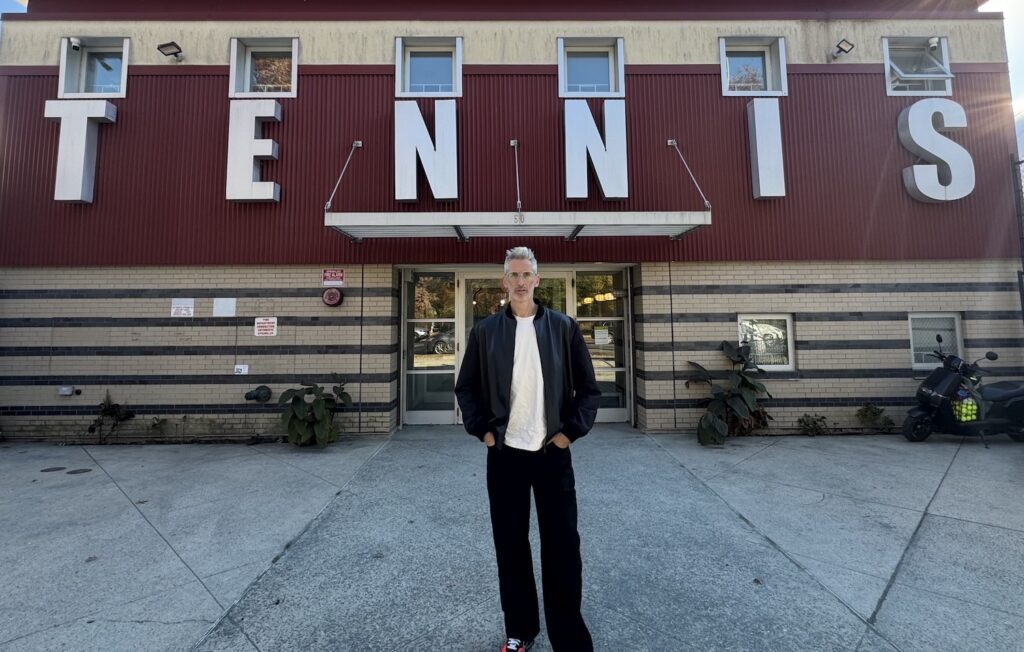
Photo by Abe Beame
This time around, the league is refashioning itself as more And 1 mixtape than ABA, with a kind of speed-round format multiple players on each team compete in, rule tweaks—like allowing serves that hit the net to be playable so long as they land in the right service box—a host on the mic, and Stretch on the boards. Stars like Coco Gauff and Frances Tiafoe are in for this year, and like player-owned leagues such as Unrivaled, the WTT incentivizes its players with cash bonuses, as well as an equity model that makes each participating athlete a true partner.
Tennis, like golf, has long been a country club sport, or “an elegant sport played by the upper class,” as Armstrong calls it, that affords its players more formal ceremony than the batter trying to hit a 100 mph fastball or the basketball player pulling up from 30 feet with a man in his face. The suggestion is the concentration and fine motor skills required to return a serve are greater than either of those coarse American feats of athleticism and should be treated with commensurate silent respect by its audience.
As a lifelong player who didn’t grow up on public courts, and an avid fan of the sport, it’s a tradition Stretch reveres. But he’s looking forward to the playful, dressed-down platform WTT is giving him space to fuck with. “These are some of the most competitive people in the world, so they want to win. I also hope they’re gonna be game to do something that is more casual, more fun, and a break from tennis tradition,” he says. “Tennis players can be sensitive, but when it’s in a format like this, which is also quicker, it’s a different point structure—hopefully the crowd will feel free to be more vocal and engaged. They might like it.” The party atmosphere is even starting to infiltrate once tony ATP events like the US Open, which “smells like 42nd Street” these days and has lax rules when it comes to getting back to your seat mid-set and talking through points. So, WTT and Armstrong may just be onto something.
During the sets, Armstrong is going to serve as a cross between a traditional DJ and a jumbotron, playing a bank of sound effects and cueing speeches. He’s hosting for both the Brooklyn and Florida legs of the tour (the great Canadian artist and DJ Kardinal Offishal is handling the Toronto matches), and, while he’s still refining the playlist, is aiming for a New York hip-hop-centric sequence conducive to gameplay. “It’s what I want to hear during a match,” he says. “Like, soundbites from The Warriors after a point would be fucking epic.”
The sport modern audiences associate rap with first and foremost is basketball, but tennis has roots that run just as deep in the genre. Brands like Sergio Tecchini (who Armstrong has modeled for), FILA, Le Coq Sportif, and K-Swiss were prevalent in rap culture when Nike was still a niche underdog. Armstrong’s mission with WTT this December is to remind us all of that history and reinforce that bond. “Tennis is such a rhythmic game. Players are always bouncing on their feet. I always thought that it would be amazing to do something in tennis that kind of parallels what happens with street ball,” he says. “Something fun, just to spice it up.”
The post Talking Tennis and Taste with Stretch Armstrong appeared first on BKMAG.