
ECONOMY
-

The New York Fed DSGE Model Forecast—December 2024
Sophia Cho, Marco Del Negro, Ibrahima Diagne, Pranay Gundam, Donggyu Lee, and Brian Pacula This post presents an update of the economic forecasts generated by the Federal Reserve Bank of New York’s dynamic stochastic general equilibrium (DSGE) model. We describe very briefly our forecast and its change since September 2024. As usual, we wish to remind our readers that the DSGE…
Read More » -

Documenting Lender Specialization – Liberty Street Economics
Kristian Blickle and Eric Gao Robust banks are a cornerstone of a healthy financial system. To ensure their stability, it is desirable for banks to hold a diverse portfolio of loans originating from various borrowers and sectors so that idiosyncratic shocks to any one borrower or fluctuations in a particular sector would be unlikely to cause the entire bank to…
Read More » -
Using Stock Returns to Assess the Aggregate Effect of the U.S.-China Trade War
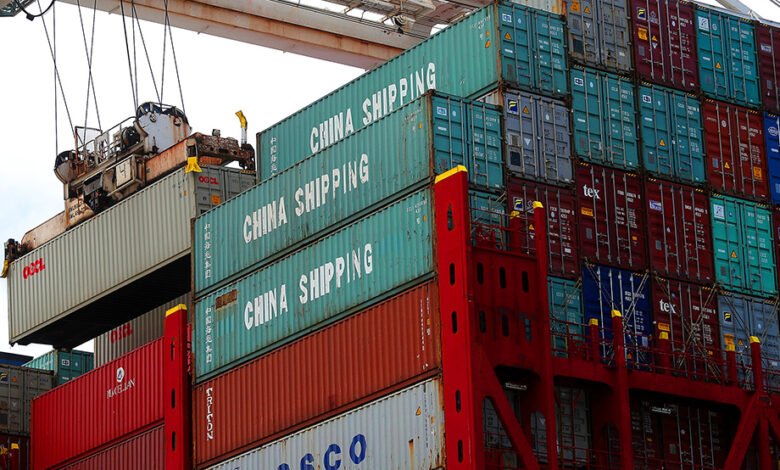
Mary Amiti, Matthieu Gomez, Sang Hoon Kong, and David E. Weinstein During 2018-19, the U.S. levied import tariffs of 10 to 50 percent on more than $300 billion of imports from China, and in response China retaliated with high tariffs of its own on U.S. exports. Estimating the aggregate impact of the trade war on the U.S. economy is challenging…
Read More » -

Do Import Tariffs Protect U.S. Firms?
Mary Amiti, Matthieu Gomez, Sang Hoon Kong, and David E. Weinstein One key motivation for imposing tariffs on imported goods is to protect U.S. firms from foreign competition. By taxing imports, domestic prices become relatively cheaper, and Americans switch expenditure from foreign goods to domestic goods, thereby expanding the domestic industry. In a recent Liberty Street Economics post, we highlighted…
Read More » -

Banking System Vulnerability: 2024 Update
Matteo Crosignani, Thomas Eisenbach, and Fulvia Fringuellotti After a period of relative stability, a series of bank failures in 2023 renewed questions about the fragility of the banking system. As in previous years, we provide in this post an update of four analytical models aimed at capturing different aspects of the vulnerability of the U.S. banking system using data through…
Read More » -
Why Do Banks Fail? Three Facts About Failing Banks
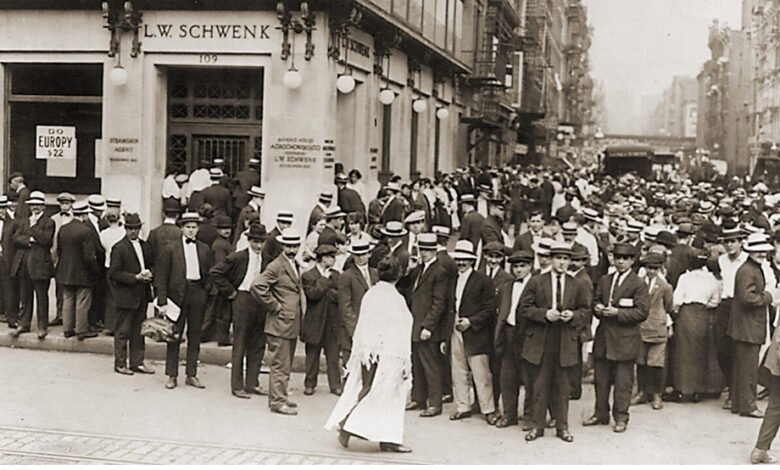
Sergio Correia, Stephan Luck, and Emil Verner Why do banks fail? In a new working paper, we study more than 5,000 bank failures in the U.S. from 1865 to the present to understand whether failures are primarily caused by bank runs or by deteriorating solvency. In this first of three posts, we document that failing banks are characterized by rising…
Read More » -

Why Do Banks Fail? Bank Runs Versus Solvency
Sergio Correia, Stephan Luck, and Emil Verner Evidence from a 160-year-long panel of U.S. banks suggests that the ultimate cause of bank failures and banking crises is almost always a deterioration of bank fundamentals that leads to insolvency. As described in our previous post, bank failures—including those that involve bank runs—are typically preceded by a slow deterioration of bank fundamentals…
Read More » -

Why Do Banks Fail? The Predictability of Bank Failures
Sergio Correia, Stephan Luck, and Emil Verner Can bank failures be predicted before they happen? In a previous post, we established three facts about failing banks that indicated that failing banks experience deteriorating fundamentals many years ahead of their failure and across a broad range of institutional settings. In this post, we document that bank failures are remarkably predictable based…
Read More » -

Income Growth Outpaces Household Borrowing
Andrew Haughwout, Donghoon Lee, Daniel Mangrum, Joelle Scally, and Wilbert van der Klaauw U.S. household debt balances grew by $147 billion (0.8 percent) over the third quarter, according to the latest Quarterly Report on Household Debt and Credit from the New York Fed’s Center for Microeconomic Data. Balances on all loan products recorded moderate increases, led by mortgages (up $75 billion),…
Read More » -

To Whom It May Concern: Demographic Differences in Letters of Recommendation
Beverly Hirtle and Anna Kovner Letters of recommendation from faculty advisors play a critical role in the job market for Ph.D. economists. At their best, they can convey important qualitative information about a candidate, including the candidate’s potential to generate impactful research. But at their worst, these letters offer a subjective view of the candidate that can be susceptible to…
Read More »