
SCIENCE
-

Loneliness Is Inflaming Our Bodies—And Our Politics
Loneliness Is Inflaming Our Bodies—And Our Politics Medical research shows that social isolation is a serious chronic stressor. You can say something similar about its impact on our political system By Kim Samuel Eugene Mymrin/Getty Images Hannah Arendt has been on my mind a lot lately. The 20th-century German-Jewish political philosopher escaped the Nazi Holocaust, and won regard as one…
Read More » -

How Trump’s National Weather Service Cuts Could Cost Lives
Just more than 100 years ago, on March 18, 1925, a tornado slashed across the U.S. Midwest with no warning at all and killed 695 people—a massive number for a single outbreak. Today those in a twister’s path get a take-cover notice eight to 18 minutes before a strike on average. And as recently as 1992, what looked like a…
Read More » -
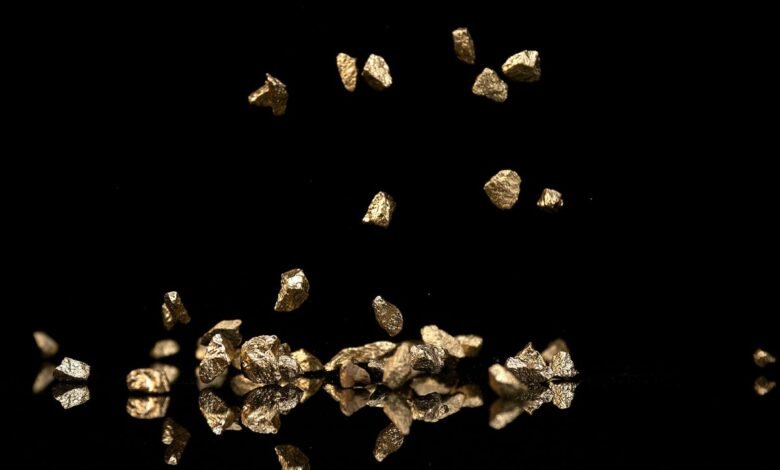
Large Hadron Collider Physicists Turn Lead into Gold—For a Fraction of a Second
Physicists Turn Lead into Gold—For a Fraction of a Second Scientists at Europe’s famous particle collider briefly created gold ions from lead in a modern twist on the alchemical goal By Elizabeth Gibney & Nature magazine LHC experiments don’t create large gold nuggets — but some particles within a beam of lead ions can turn into gold for about a…
Read More » -

Blood of Man Who’s Had 200 Snakebites Helps Make a Potent Antivenom
Blood of Man Who’s Had 200 Snakebites Helps Make a Potent Antivenom A new snakebite treatment combines an existing drug with antibodies from a hyperimmune reptile collector, raising both hopes and ethical concerns By Katherine Bourzac & Nature magazine A cocktail containing antibodies and an enzyme inhibitor protects mice against the venom of the king cobra (Ophiophagus hannah). Scientists have…
Read More » -

Self-Driving Cars Have New Rules in the U.S. Here’s Why That Matters
Self-Driving Cars Have New Rules in the U.S. Here’s Why That Matters New rules that trim crash reporting requirements and widen testing access for U.S. robotaxis are hailed as an innovation edge and criticized for eroding safety oversight By Deni Ellis Béchard edited by Dean Visser On April 24, with a brief video and a few dozen pages, the U.S.’s…
Read More » -

Trump Quietly Halts Money to States for Preventing Disaster Damage
CLIMATEWIRE | The Trump administration is scaling back a multibillion-dollar program that has been the backbone of state efforts to protect homes, hospitals and other structures from floods, hurricanes and earthquakes. President Donald Trump stopped approving new allocations in early April from a federal program that has been a top funding source for protecting people and property from disasters since…
Read More » -

Scientific American’s 1925 Coverage of Eclipses, Mediums and Inventions
Rachel Feltman: Happy Monday, listeners! For Scientific American’s Science Quickly, I’m Rachel Feltman. I was out of the office taking a little break last week, so I didn’t have the chance to write and record our usual news roundup. Instead, I thought it would be fun to dive back into the Scientific American archives for the first time in a…
Read More » -

Ancient DNA Reveals Phoenicians’ Surprising Ancestry
Ancient DNA Reveals Phoenicians’ Surprising Ancestry Phoenician civilization spread its culture and alphabet across the Mediterranean but not, evidently, its DNA By Ewen Callaway & Nature magazine A death mask from the third or second century bc found in the Phoenician trading city of Carthage in what is now Tunisia. Peter Horree/Alamy Stock Photo An ancient Middle Eastern civilization that…
Read More » -

Why Narcissists Emerge as Leaders Even in Childhood
Narcissistic leaders both fascinate and repel us. They can be charming, act assertively and articulate visions that may inspire confidence, especially in times of uncertainty. This can attract many followers. In 1931 Sigmund Freud, the father of psychoanalysis, echoed this belief: “[Narcissists] impress others as being ‘personalities’; they are especially suited to act as a support for others, to take…
Read More » -

How THC, the Psychoactive Compound in Weed, Gets You High
Marijuana contains more than 500 active compounds. But most people focus on two: There’s cannabidiol, or CBD, which reduces inflammation. And then there’s THC, which is the main psychoactive component—it’s the reason weed gives you the relaxed and “euphoric” sensation of being high. THC stands for tetrahydrocannabinol. It’s a compound that comes from the flowers of female cannabis plants, though…
Read More »