
SCIENCE
-
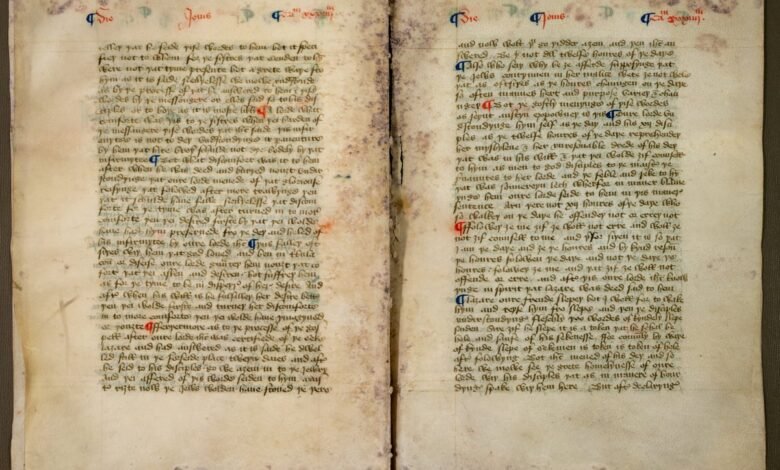
Missing pages of priceless Henry VIII–era manuscript finally found
A 600-year-old book that once belonged to a personal attendant of King Henry VIII is helping to reveal the shifting allegiances and religious ferment that captured the Tudor court, shaping world history along the way. The book in question is a copy of Mirror of the Blessed Life of Jesus Christ, a religious tract that was translated and adapted from…
Read More » -

25 winners of math’s ‘Nobel Prize’ decry the AI invasion of their discipline
Top mathematicians are increasingly pushing back against the tech industry’s artificial-intelligence-powered incursion into their field. A statement released last Friday and signed by 25 winners of the Fields Medal, math’s highest prize, decries a “severe misalignment” between AI companies’ goals and those of the discipline. The declaration closed out what was perhaps the most consequential week in math’s history: last…
Read More » -

AI researcher Jacob Coxon quit, fearing extinction. Security experts see a familiar fight
Anthropic researcher Jacob Coxon resigned this week and left behind a blunt accusation on X: his former employers—Anthropic and, before that, OpenAI—were “gambling with our lives.” Then, in a move no public relations team would have signed off on, Evan Hubinger, an alignment science lead at Anthropic, wrote that he agreed with Coxon and that he put the chance of…
Read More » -
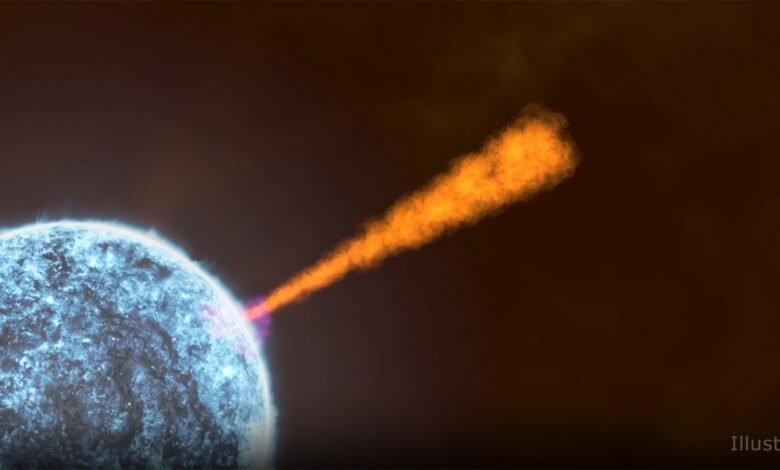
This cosmic particle was never meant to reach Earth. Now scientists think they finally know why it did
Pineapple on pizza and rain on weekends shouldn’t exist on Earth, yet somehow they do. And a mysterious cosmic particle, detected in 2022, shouldn’t have made it to our planet either, but it did. Unlike the former two things, there may finally be an adequate explanation for how the particle got here. The tiny particle originated in an enormous gamma-ray…
Read More » -
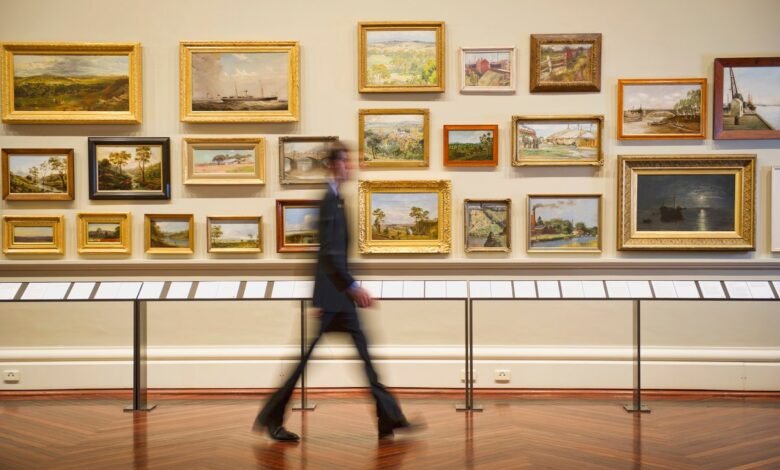
Mathematicians discover the worst way to hang a painting
You have two nails in the wall and a painting with a string on its back, which can easily be rested on the nails to hang the painting. If you remove one nail, the painting will still hang on the other. But mathematicians said, “We can make it worse.” In 1997 A. Spivak posed the following riddle: Is there a…
Read More » -

How the super El Niño could turbocharge warming in the Himalayas
Rescue operations and clean-up crews are still working in the wake of last week’s devastating debris avalanche and floods in Nepal and Tibet. Researchers believe the catastrophe, which has so far killed more than 1,000 people, was triggered by a massive landslide high in the Himalayan mountains. Many questions remain about the role of climate change in this disaster. But…
Read More » -
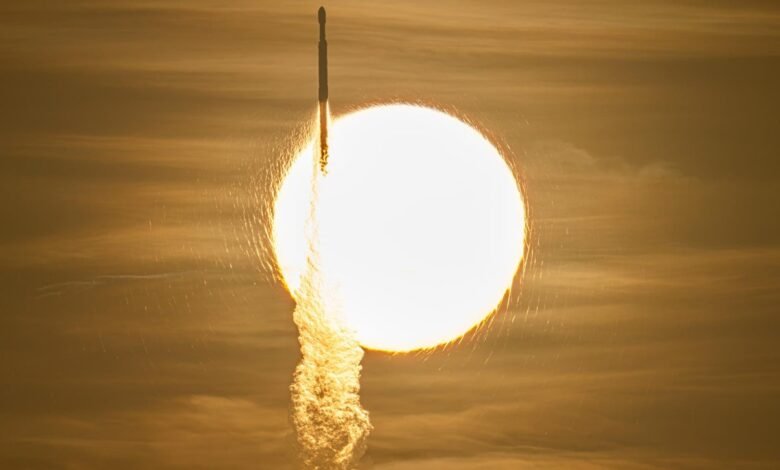
NASA’s Nancy Grace Roman Telescope launches to space
NASA’s newest telescope is officially on its way to deep space after more than a decade of development and high anticipation. The Nancy Grace Roman Space Telescope lifted off from Launch Complex 39A at the Kennedy Space Center in Florida at 7:26 A.M. EDT on Sunday, August 30 aboard a SpaceX Falcon Heavy rocket. The telescope is set to transform…
Read More » -
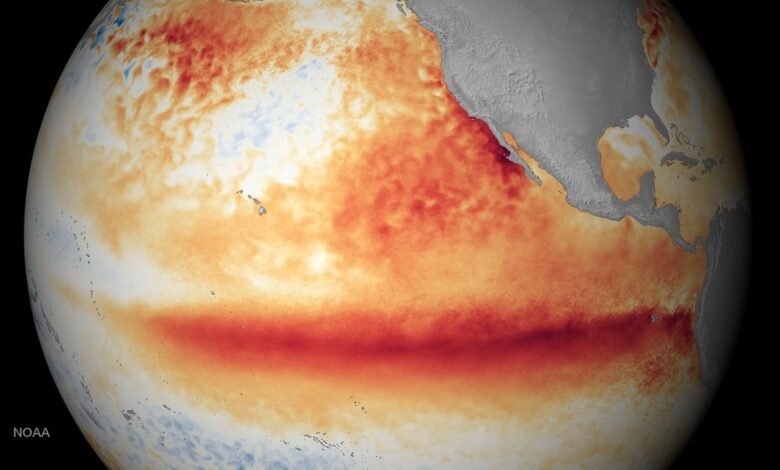
Climate change is supercharging El Niños, coral records show
We’re in the midst of a blockbuster El Niño that could be become the strongest in living memory. It and other very strong, recent El Niños are much stronger than those in the past as the result of human-caused climate change, a new study in Science shows. The new evidence is “a critical piece of the puzzle” in understanding how…
Read More » -
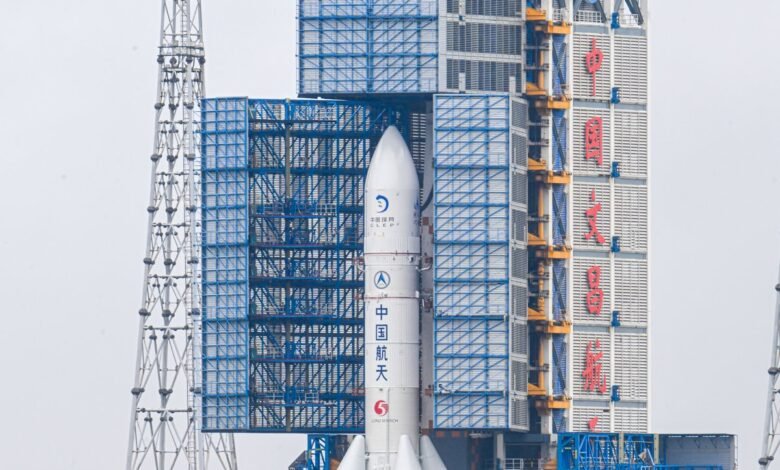
China delays ambitious Chang’e 7 moon mission until 2027
China’s lunar ambitions took a hit after the country called off the launch of a spacecraft that it has aimed to make the first to ever land on the moon’s south pole. Chang’e 7 was supposed to launch onboard a Long March 5 rocket on August 24, but the launch was scrubbed on Sunday evening, China’s Manned Space Agency (CMSA)…
Read More » -
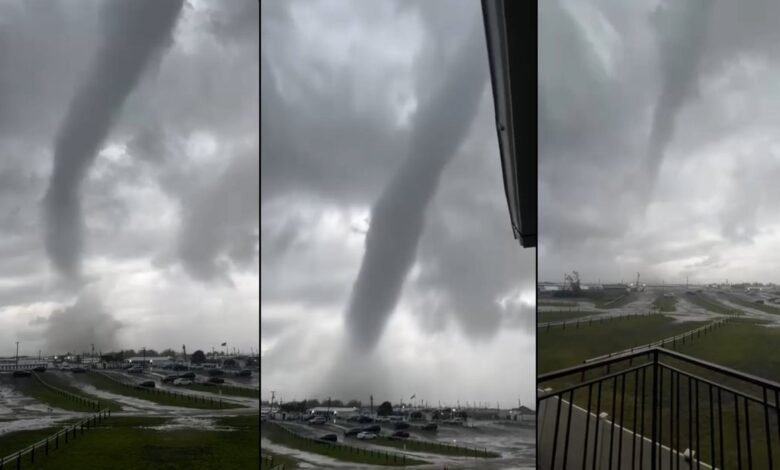
Why tornadoes touched down near New York City
New York City is no stranger to storms. Summers in the Big Apple can bring torrential, sudden rains, with water flooding into intersections and cascading down subway stairs, while Nor’easters are de rigueur in the winter. Tornadoes, however, are fairly rare. So why did a twister touch down on Thursday in Nassau County on Long Island and a possible second…
Read More »