
SCIENCE
-

Why AI ‘Therapy’ Can Be So Dangerous
Artificial intelligence chatbots don’t judge. Tell them the most private, vulnerable details of your life, and most of them will validate you and may even provide advice. This has resulted in many people turning to applications such as OpenAI’s ChatGPT for life guidance. But AI “therapy” comes with significant risks—in late July OpenAI CEO Sam Altman warned ChatGPT users against…
Read More » -

Deep-Sea Desalination Pulls Drinking Water from the Depths
From Cape Town to Tehran to Lima to Phoenix, dozens of cities across the globe have experienced water shortages recently. And in the next five years the world’s demand for fresh water could significantly outpace supply, according to a United Nations forecast. Now several companies are turning to an unexpected source for a solution: the bottom of the ocean. Called…
Read More » -

Congressman Eric Sorensen on Defending Climate Science, Depoliticizing Weather and Bringing Scientific Rigor to Capitol Hill
Rachel Feltman: For Scientific American’s Science Quickly, I’m Rachel Feltman. Representative Eric Sorensen of Illinois spent 22 years forecasting the weather on television before winning his congressional seat in 2022. He now finds himself defending scientific agencies from unprecedented attacks at a time when climate change is pushing weather patterns into uncharted territory. Today we’re talking to Eric about how…
Read More » -
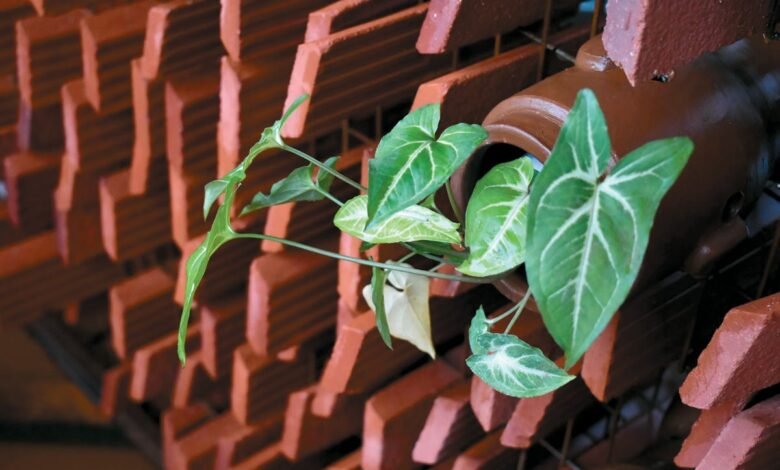
Terracotta Is a 3,000-Year-Old Solution to Fighting Extreme Heat
Terracotta Is a 3,000-Year-Old Solution to Fighting Extreme Heat Companies are adapting this humble clay-based ceramic to keep people cool—without electricity By Jyoti Thakur edited by Sarah Lewin Frasier Cooling facade built from terracotta A little over 20 percent of India’s households own an air conditioner or cooler, and fewer than a third have refrigerators—leaving hundreds of millions of people…
Read More » -

Wildfire Smoke from Canada Reduces Air Quality in U.S. Midwest
Wildfire Smoke from Canada Blankets the U.S. Midwest in Haze of Bad Air Quality Winds from the northwest are blowing cool, dry air—but also wildfire smoke—into the U.S. Midwest from Canada By Meghan Bartels edited by Andrea Thompson Smoke from wildfires in Canada is drifting across the U.S. Midwest, leading to hazy skies and air quality alerts. Andrew Wevers/Stringer/Getty Images…
Read More » -
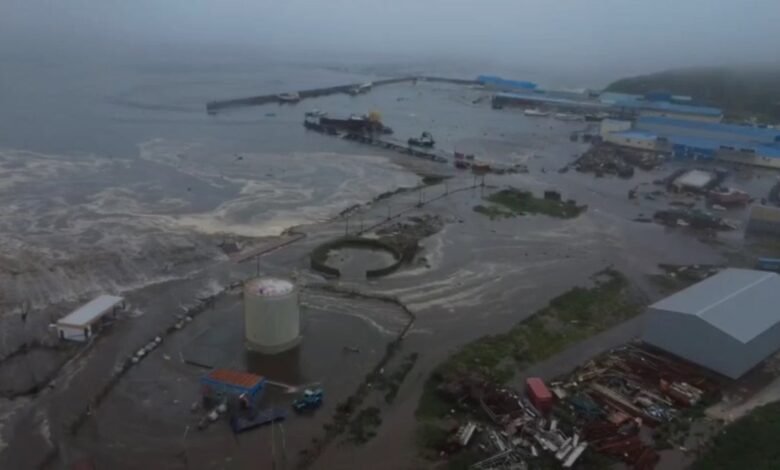
Why the Tsunami from Russia’s Earthquake Wasn’t as Large as Feared
Why the Russian Earthquake Didn’t Cause a Huge Tsunami Russia’s magnitude 8.8 earthquake spawned serious tsunami warnings, but waves have been moderate so far. Here’s the geological reason why By Robin George Andrews edited by Dean Visser An aerial view of the city of Severo-Kurilsk flooded due to a tsunami triggered by the 8.8 magnitude earthquake that struck off Russia’s…
Read More » -

Organ Proteins Reveal How Aging Accelerates at 50 Years Old
Organs Age in Waves Accelerating at 50 Years Old Aging is a complex process that plays out differently across different organs, according to growing evidence By Heidi Ledford & Nature magazine Color enhanced computed tomography (CT) scan of the human heart, highlighting the cardiac conduction system (yellow). It is a warning that middle-aged people have long offered the young: ageing…
Read More » -
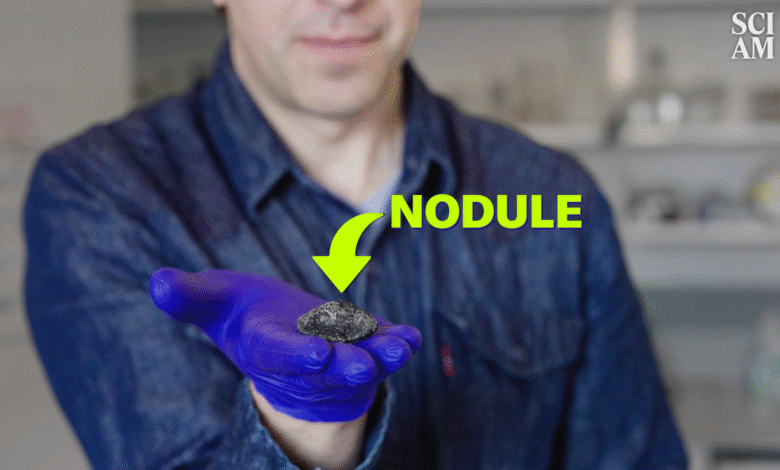
Polymetallic Nodules, a Source of Rare Metals, May Hold the Secrets of ‘Dark Oxygen’
This story was supported by a grant from the Pulitzer Center and co-published with the Post and Courier. On July 22, 2024, a team of researchers released a shocking discovery: deep-sea rock concentrations appeared to be producing oxygen in the blackness of the ocean’s abyss. The two of us were in the middle of filming a documentary about these potato-sized…
Read More » -

How Humility Can Restore Trust in Expertise
Whom would you trust more: an expert who seems to have all of the answers or one who admits what they don’t know? We have spent the past five years studying that question and the many ways people may respond. Our research was sparked by a recurring tension we both noticed early in our academic careers. Our graduate studies made…
Read More » -

Can U.S. Math Research Survive NSF Funding Cuts?
Mathematics research typically requires few materials. To explore the secrets of prime numbers, investigate unimaginable shapes or elucidate other fundamental mysteries of our universe, mathematicians don’t usually need special labs and equipment or to pay participants in clinical trials. Instead funding for mathematicians goes toward meetings of the mind—conferences, workshops and institutes where they gather for intensive sessions to work…
Read More »