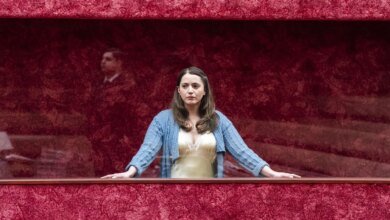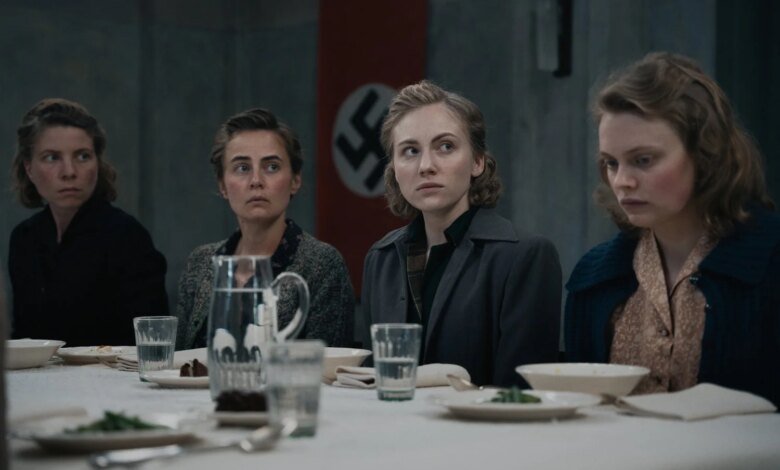
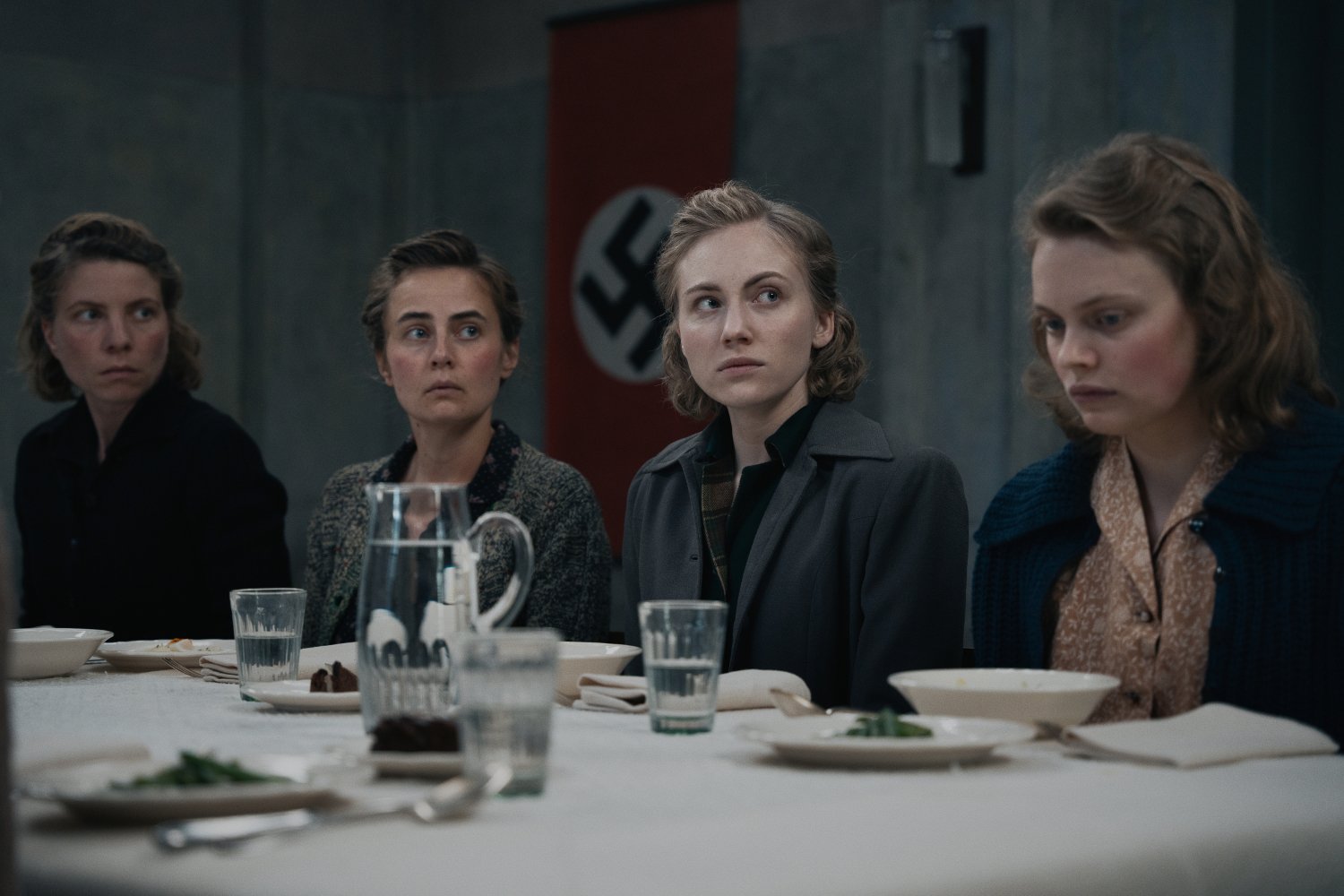
It’s a well-made film, with strong performances and decent cinematography. Hitler’s physical absence from scenes is particularly effective. It creates a constant, looming sense of unseen oppression and dread signalled primarily through sound. The noisy cacophony of his train passing through the countryside, indicating his imminent arrival at the Wolf’s Lair. His personal chef telling an anecdote about how Hitler decided to become a vegetarian after visiting an abattoir and wading through blood. His voice crackling over the radio. The score sounds like something from a horror film, moments of silence interspersed by screeching strings. The sound design focuses in on the munching and chewing of the women as they force down meal after meal.
The film’s biggest weakness is the wafer thinness of the source material. Whether or not Wölk’s account is true, we know from history that Hitler was never poisoned. As a result, the film is forced to look elsewhere for its drama and jeopardy. It tries to find it in the human relationships between the women, and the secrets they are hiding from each other. Unfortunately, this search leads to a late reveal that feels so shoe-horned and implausible that it’s likely to provoke eye-rolls from audiences. Any sympathy for Sauer as a central protagonist is also fatally undermined by her decision to start sleeping with the most hideously evil Nazi officer imaginable, Lieutenant Albert Ziegler (Max Riemelt). She continues this romantic entanglement despite Ziegler’s open admission that he’s a war criminal and a mass murderer.
It all ends up leaving a rather nasty taste in the mouth.
By Barney Pell Scholes
The Tasters is in cinemas now.