Assembly passes revised bill to give encrypted police radio access to press – but not for NYPD

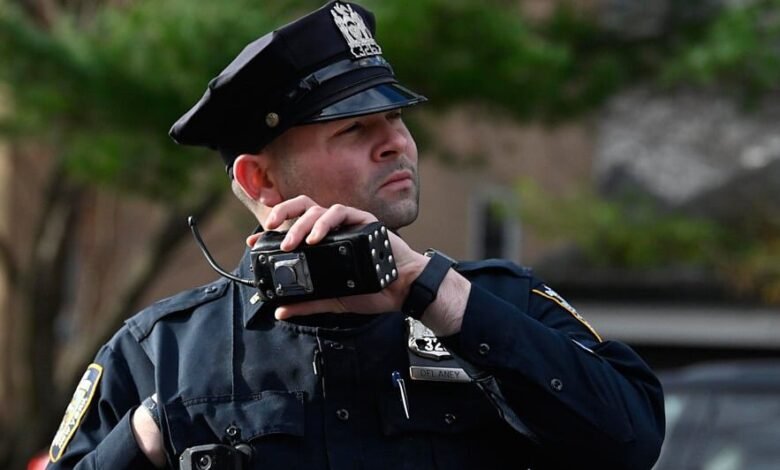
The New York State Assembly passed revised legislation that would grant encrypted police radio access to credentialed media outlets throughout the state.
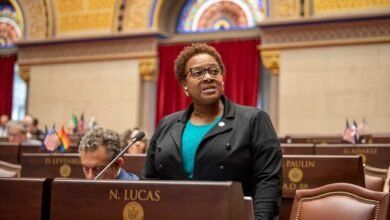
The bill, “The Police Radio Transparency Act,” (A11199A), sponsored by Bronx Assembly Member Karines Reyes, passed the Assembly on June 3 by a vote of 82 to 58. An identical Senate bill sponsored by state Sen. Michael Gianaris of Queens, (S10079), is pending in the State Senate, but was also expected to pass Thursday after having been discharged from committee.
The state bills are modified and tightened versions of legislation that was vetoed by Gov. Kathy Hochul last December that would give members of the media access to encrypted police radio transmissions and give the public access to time-delayed transmissions. Media members would be defined by a tightened State Shield Law, which currently defines journalists.
NYPD not included in state bill
The bill, however, does not apply to the NYPD, which is under a broader city law (Intro 1460-2025 sponsored by City Council Member Gale Brewer of Manhattan and passed last year) to produce a plan by July 16 that would provide access to media in New York City. The NYPD has had full encryption, save for one city-wide channel and transit divisions for the past two years.
That plan may have been complicated, media organization leaders say, by the recent issuance of press cards by the Mayor’s Office of Media and Entertainment to influencers who attended a recent court hearing for alleged United Health CEO killer Luigi Mangione while wearing t-shirts and holding signs in support of Mangione.
NYPD officials had privately said in the past that they didn’t trust some of those receiving press cards from MOME because they didn’t believe individuals were adequately vetted.
Bruce Cotler, president of the New York Press Photographers Association, applauded the state bill, but said he’s “cautiously awaiting the NYPD plan for implementation of the city law.”
“It is important that news organizations get real-time breaking news for the good of public safety and the public’s right to know – the state legislature has recognized that two years in a row,” Cotler said. “We trust that the NYPD will follow the law and put forth a plan that will satisfy the law’s intent and provide real-time radio access to credentialed, qualified media who require this information to keep the public informed.”
This past May, representatives of the New York Media Consortium, made up of 14 local, state and national press organizations representing thousands of journalists, met with officials from the NYPD to discuss the upcoming deadlines for the law.
NYPD officials assured those representatives that they would “obey the law,” but couldn’t offer specifics pending discussions with commanders of various city commands.
The Consortium has requested a follow-up meeting to find solutions that will make the law more palatable to the department but has yet to hear back.
The NYPD had no comment as of publication time.
Mayor Mamdani’s office has not commented yet on this story.
State bill modified to assuage Hochul concerns
In her rejection memo last December, Hochul remarked that the state bill to provide credentialed media with encrypted radio access, “while a worthy goal for transparency, may not be technologically feasible.”
“For example, the bill would require local emergency services agencies to screen ’sensitive information,’ a task that may not be technologically feasible,” the memo said. “Further, the overly-narrow definition of ‘sensitive information’ excludes information that, if indiscriminately broadcast in an unsecure manner, could lead to loss of life or operational failure.”
The governor also cited “growing threats of extremist violence” by disclosing real-time movements to “bloggers and paparazzi” in addition to traditional journalists. She also claims the bill would reveal real-time undercover operations that might undermine investigations and the right of the accused to a fair trial, and would reveal confidential sources, despite most private communications being transmitted on department-issued cell phones.
Press and state legislative leaders say the new bill addresses those concerns. It would require law enforcement agencies in New York state that are encrypting their radio communications to permit monitoring “in real time by professional journalists, newscasters and individuals employed by emergency services organizations,” according to the legislation. Sensitive information, however, is exempt from this requirement.
The new bill says that news organizations that are eligible to receive radio access must have liability insurance and that freelancers must use those organizations to sell their content. Bloggers and influencers would not be included in this bill.
Regulations would be formulated that would restrict radio users from providing unencrypted radio information to unauthorized users, with penalties that include confiscation or remote shut-off of radios by law enforcement.
In addition, the bill says that “sensitive information, undercover operations and movements of government officials” would remain encrypted for the safety of police, government officials, and would continue to encrypt confidential and sensitive information so as not to compromise ongoing investigations.
Regulations and penalties related to abuse of police information will be formulated by the New York Department of State, leaders say.
First Amendment advocates in the state applauded the Assembly for passing the bill, and called on the state Senate to do the same — and for Hochul to sign it into law.
“We now urge the New York State Senate to approve the measure and send it to the Governor for her consideration,” said Mickey Osterriecher, general counsel for the National Press Photographers Association. “The NPPA looks forward to continuing to work with lawmakers, news organizations, public safety officials, and other stakeholders to ensure that New Yorkers retain meaningful access to information about the activities of their government and the safety of their communities.”
Diane Kennedy, president of the New York News Publishers Association, applauded Reyes for fighting for the new bill to make law enforcement more transparent.
“The New York News Publishers Association applauds Assemblywoman Reyes and the Assembly Majority for passing this legislation to ensure the press is able to continue to monitor the actions of law enforcement, as it has done since police radios were first used in the 1930’s,” she said. “The legislation provides law enforcement agencies broad authority to shield information that could create a safety risk or a risk to personal privacy, while providing communities with the news reporting they need.”
Should the bill be signed into law by the governor by December, police departments would have 180 days to comply with the law.