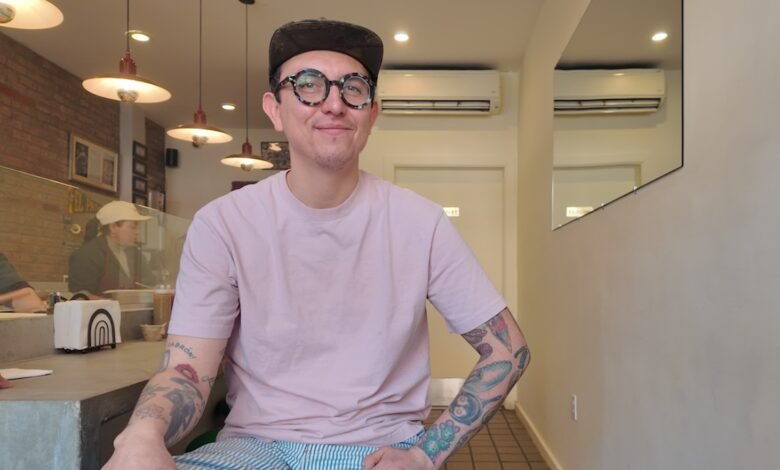
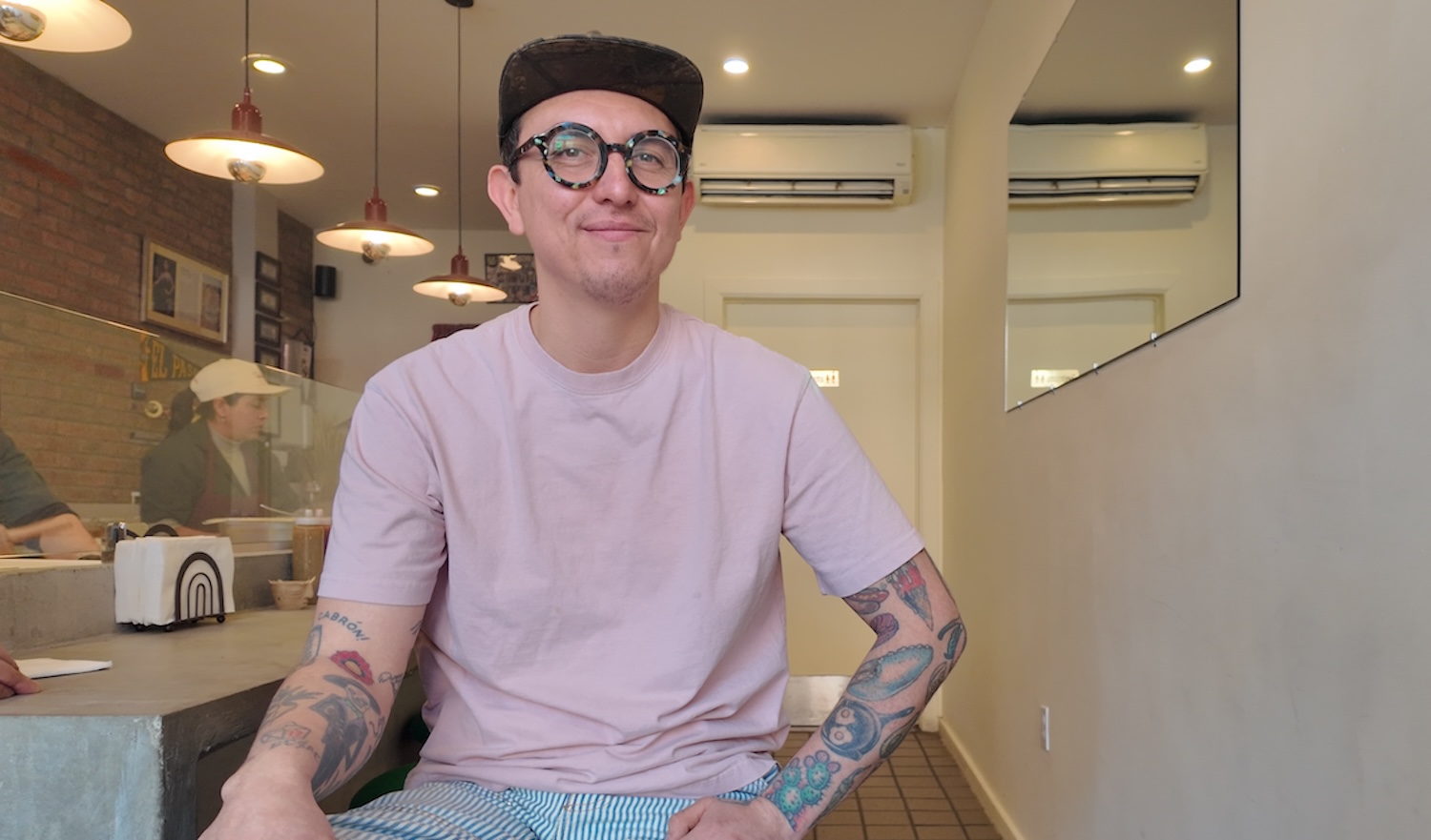
Open Kitchen is a monthly interview column covering the joys and frustrations of Brooklyn restaurant operation in all its many forms. For March, we spoke to Alan Delgado, the chef and owner of Los Burritos Juárez.
I had a religious experience a few months ago. I waited for the initial block-long lines to die down, then finally, on a weekend afternoon, I found myself in the vicinity of chef Alan Delgado’s Los Burritos Juárez, on the border of Clinton Hill and Fort Greene, a few blocks from Pratt in one direction, and the north side of the park in the other. I popped in for what I thought would be yet another pleasant, if slightly overhyped, New York City burrito experience. 
I am guilty of believing we had come to the end of what is possible in the realm of the burrito in this city. Approximately a decade ago, nixtamalization and heirloom corn entered the popular lexicon and redefined the New Yorker’s idea of what constitutes quality in a tortilla. Then, a wave of California burrito spots came in, maximalist, riceless gut bombs overstuffed with avocado and (often soggy) fries, and the excellent Son del North imported their tortillas from Sonora. These are all OK-to-pretty good. It’s hard to get mad at even a “just decent” burrito, but they’re variations on a familiar form.
At Los Burritos Juárez, the medium is the message. Chef Alan has brought something like the Juárez-style burritos he grew up with: Guisados, or stewed proteins rolled in fresh griddled tortillas that are little more than flour, lard, and love. But he has blown out the concept by creating a tortilla that is like those tortillas in conception, but is not “authentic” to anywhere but his one restaurant (for now). He has created an entirely original tortilla that has more in common with global flatbreads, like naan or lavash, than most of the tortillas you’ve ever eaten in your American life.
His hand-rolled and griddled, nearly to order, tortilla is an impossibly fluffy wrapper that you could use if you’re flying cross-country with a set of porcelain figurines you need to protect. If you needed to sleep on a rock and had a three-day-old stack of his tortillas, they would still serve as a decent pillow. If you were jumping off a bridge over land and had a few hundred, they would handily cushion your fall. Filled with its expertly cooked braises, wrapped in a cloud, it’s like a savory Twinkie.
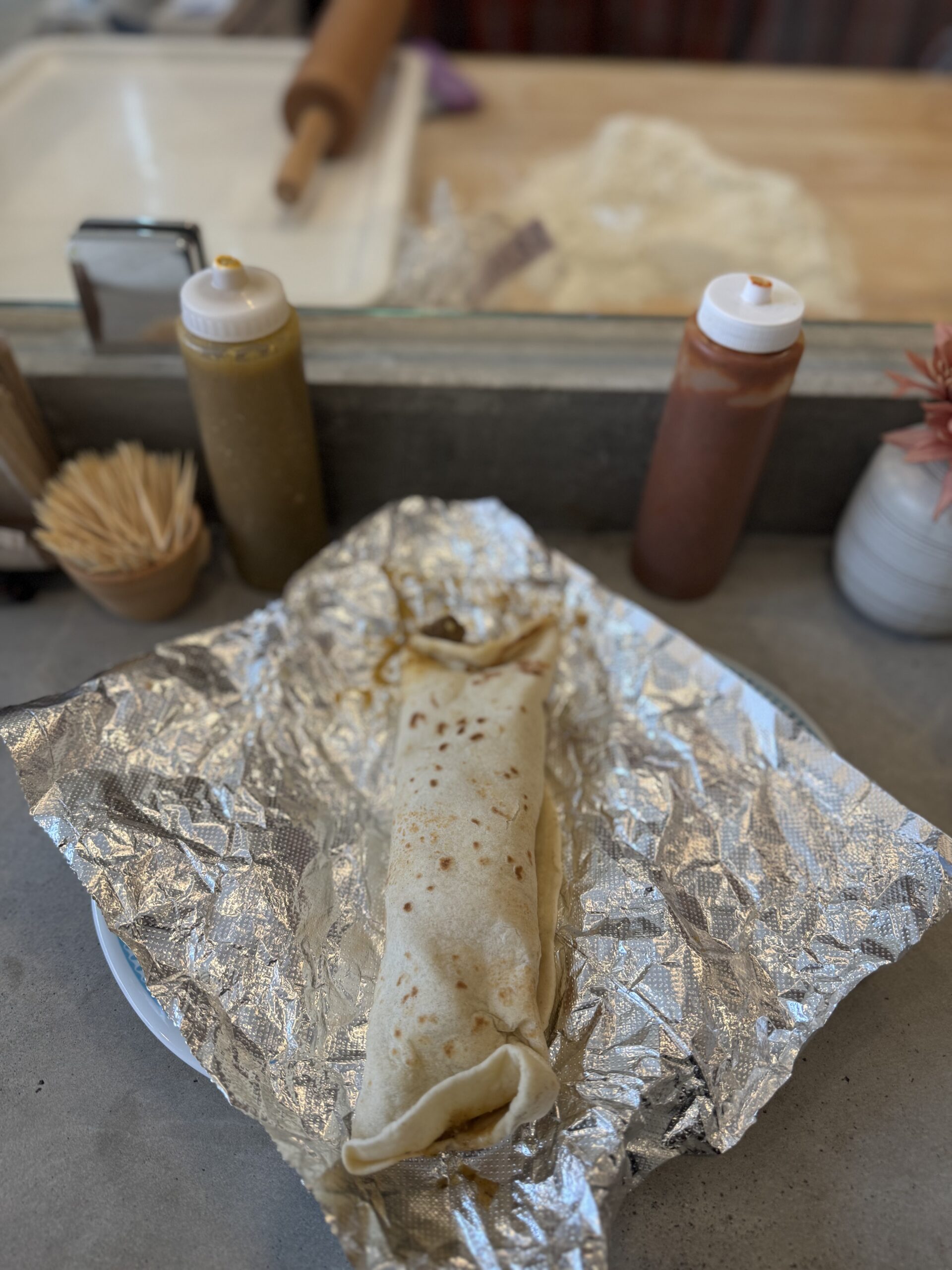
Photo by Abe Beame
Chef Alan came to this tortilla through four years of dedicated experimentation, but his journey in kitchens began nearly 20 years ago. It was a long process of exploring global food cultures before building his career on the comfort food he grew up eating. He first moved from El Paso/Juárez to Austin, where he went to culinary school and began cooking every type of cuisine except Mexican, from Indian to Italian to French to “every new world category.” Then, the young, curious cook who loved to learn was presented an opportunity to work with his friend, the chef Philip Speer, at his acclaimed restaurant Comedor, and “everything kind of clicked.” The smells of Comedor’s Mexican kitchen brought Delgado back to his childhood, and he realized there was no other culture he wanted to chase.
Delgado is plainspoken and laughs a lot. He has an affable nature, whether you’re discussing the fine points of the “weenie”—a stewed hot dog burrito filling beloved by El Paso children he has failed to talk his Brooklyn clientele into (so far)—the hardships of adjusting to, and keeping up with, the demand of having a day-one hit restaurant, or the American gestapo threatening many vulnerable populations and small businesses across the country. But this easygoing disposition belies his resilience, his determination, and his dedication to his craft. Sight unseen, Alan took a chance, in the middle of a global pandemic, to come to New York and work at Oxomoco in Greenpoint, then turned a side-hustle selling burritos out of his apartment into an independent 20ish-stool restaurant, with room to become much more. If you doubt that determination, you can taste it whenever you try one of his burritos.
I believe what makes Alan’s restaurant so successful is its Proustian power. All Americans grew up eating shitty flour tortillas from Mexican fast food chains or purchased in thick, bagged plastic packs crammed into the fridge for our mothers to press in a pan with cheese when out of ideas or time for a quick weekend lunch. Los Burritos Juárez touches that synaptic nerve and shows you what that lunch would taste like if kissed by God.
After I ate there again the other day, I brought my work home for my kids, and made them an afterschool snack that is currently the most indulgent, sick-fuck luxury to be found in a city chock-full of caviar and white truffles: Chef Alan’s tortillas, spread with good room temperature butter and flaky salt. Somehow, five hours removed from the griddle, they retained their magic.
(This interview has been edited and condensed to make me sound like less of an asshole.)
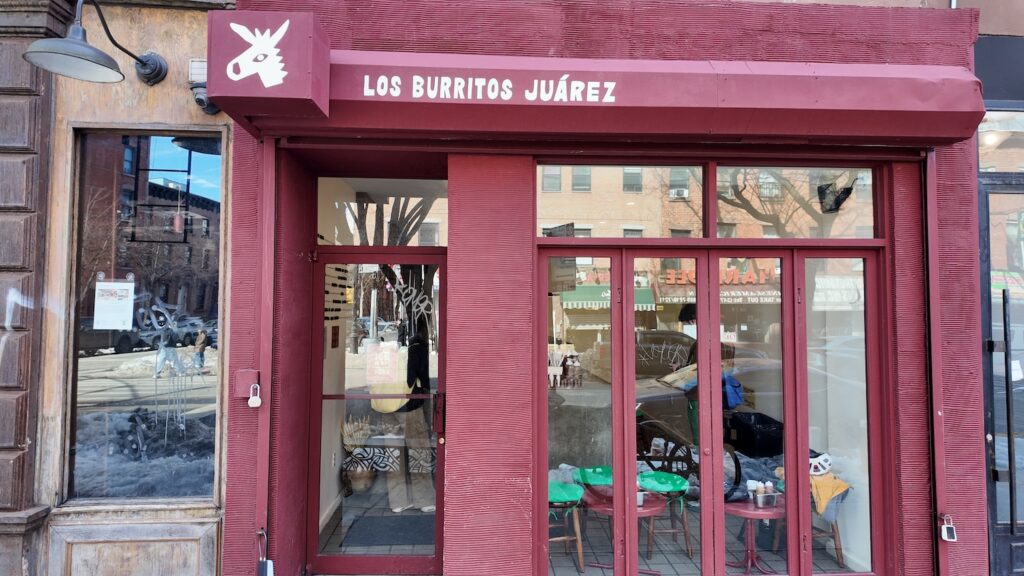
Photo by Francisco Hernandez
What was your perspective of the Mexican food scene in New York when you got here in 2020?
It wasn’t as diverse, I would say, because, for forever, it’s been Puebla or Oaxaca and nothing else, you know? So I feel like everything was kind of similar. It felt very uniform. Everybody was serving the same thing. And I felt like there’s more to Mexico than just those two cities.
For burritos, it was mainly the California-style, which is really good when it’s done right. But the last time I was in California, I had one, and I was like, “Yeah, it’s not like this in New York” (Laughs). Because they do make their tortillas, and they pay more attention to their ingredients, and that does make a massive difference.
I used to live there, so I get it.
When I got here, the best places were using corn tortillas, because corn is king in Mexico. There are certain areas that use flour, but not all of them. So it makes sense that flour wasn’t the main thing here. In Mexico, you find it with tacos árabes, where the trompo came to be. You find it in Baja with fish tacos. But primarily it’s up north. And even there, corn tortillas, at least for me, were still the main tortilla at the house. But when we went out to eat, the good tortillas were flour.
So, I thought there could be space for something else. For me, it’s like, if it happens in New York and it’s received well in New York, then you have a nice foundation to build on. It’s not the same if it happens in Kansas—not to shit on Kansas—but it’s not New York.
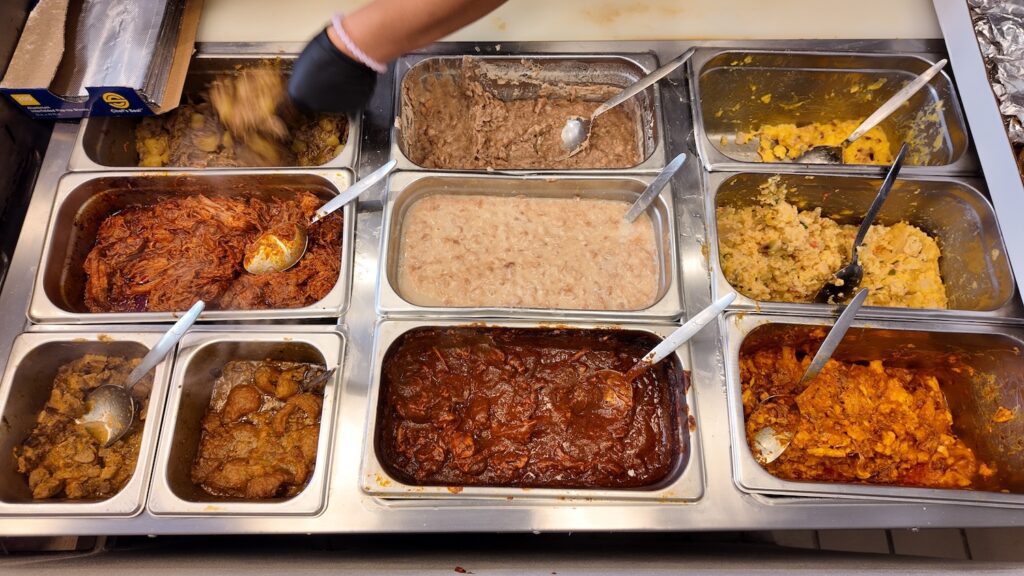
Photo by Francisco Hernandez
What is the culinary history of the Juárez-style burrito?
Well, it’s not Tex-Mex. I would say they’re more like Mexican American. The more you move up north, you find what to me is a bastardized version of Mexican food because, you know, there’s no soul in the beans or the rice or anything like that. Being from there, I’ll crave it every once in a while, and then I’ll eat it, and I’ll go, “Yeah, not for me.” (Laughs)
We do a lot of stews, a lot of meat stews. We don’t do a lot of veggies. I think it’s just because it’s the desert, and it’s really challenging to grow a lot of stuff out there. But we’re meat-heavy up in the north. And those burritos, they’ll have chicharron in salsa verde or salsa roja. And then you have beef with potatoes and salsa verde. Chicken and mole is a big one as well. Chile relleno is a massive one, but it’s so labor-intensive. That’s why we don’t do it at the restaurant. But it’s very much homecooking. They’re for labor workers, construction people, just something that they can take to go, and they can hold in their coolers until lunchtime. It’s a big part of our culture in El Paso and Juárez. Where I’m from, we’re so proud of it.
You’ve had the word “burritos” tattooed on your knuckles for, I want to say, eight years, based on your grid. So, how long ago did you make the decision to open this place, and what was the process of getting it off the ground?
I’d never really planned to open one. I just knew I always missed this style burrito since I left home. I couldn’t find them anywhere. But I never actually tried to make them in Austin. And then when I moved here, I was at Oxomoco for about a year and a half, and then when I left, I had some free time and was still craving it. So one day I said, you know what, I’m going to give this a go, and I’ll sell them on Instagram, and people can just come pick them up.
I lived on the first floor of my Williamsburg apartment, so it was perfect because I could just open the window, and I knew exactly how many people had bought, so I would just prepare for that. People would come, and I would make their burritos, but I was rolling the tortillas the night before and then warming them up, and it just wasn’t hitting for me. So it took a minute to get to where we are now. We had–I would call it a success, as much as we could make for my little apartment in my little, little tiny oven. And that kept going for a couple months, and then eventually just got overwhelming—the amounts that we were selling versus the space that I had to cook big things and treat them properly to not get people sick. And then I got scared of my landlords, in case they were walking by and there’s a line around the building. And my neighbors, because it’s an eight-unit building and the hallways smelled like pork every weekend.
Sounds great.
Yeah, but I felt bad (Laughs). So I put a pause to it, because I needed to make some real money to pay my bills.
Then I did consulting for a minute, and it just wasn’t what I wanted. So I decided, I’m gonna try these burritos again, a little more serious, a little more organized. So I put my head down and started working on the tortilla and the guisados until I got to a point where I was like, yeah, these are not exactly the same as they are in Juárez, but they’re my version of it. And I went out and did pop-ups, and people really enjoyed them. Especially when I started hand rolling the tortillas to order. But the main thing is I saw that people were really interested in these burritos, and I think that’s just what New Yorkers are. They want to try new things. They’re not afraid to go and explore, and this type of burrito didn’t exist in New York, which is crazy to me in a city where everything’s available.
I did the numbers, and I was like, okay, I can do this without an investment and just be in debt. So, I talked to my wife, and we decided we were going to take the jump. And that’s when we found the spot on Myrtle. It fit what we wanted, and we did it. And people were…honestly, it was way too much. Way overwhelming (Laughs).
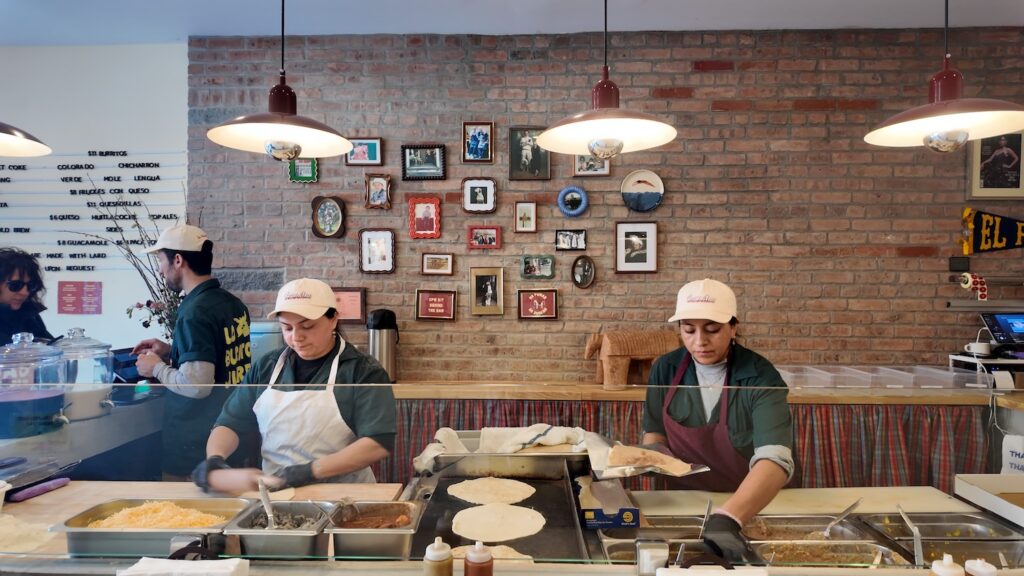
Photo by Francisco Hernandez
Wait, you guys are self-funded?
Loans, savings, maxxed out every single credit card I had. When we opened, I think I had like 200 bucks in my business account, and like negative $90 or something in my personal. So I was like, “Uh, hey, Julia, uh, we’re going to open next week” (Laughs).
Wild. You do not hear about that anymore. That is incredible.
It was crazy, man. It’s been quite a journey, honestly. But the people of New York really showed up at the beginning. It wasn’t really what I wanted to showcase because we had no ovens, no nothing, no gas, but we had no choice. We had a couple induction burners and a couple camping stoves. And that’s what we were doing everything out of, which was not enough for what people were wanting, and so we would sell out when there were lines still forming. It wasn’t until two months ago that we were able to purchase an oven and readjust the kitchen.
Honestly, I’m just thankful for the people of New York that came and ate here and continue to come out, with no PR, nothing. It was just word of mouth from New Yorkers, which was the best part, honestly.
As you mentioned, I’ve never seen a place dedicated to flour tortillas like yours in New York. And within six months, we have three in Brooklyn alone-
I wonder how many more this year will open (Laughs).
So, I guess, if it’s not direct imitation, what do you think explains that, and how do you feel about it?
I feel great because for so long we’ve been fighting for this. And now that we have a say in what we want to put out there, it’s truly beautiful. The more of us that are out there, the quicker people will be accustomed to what a good burrito is. And hopefully, we start to chip away into the mentality of how people think about our food.
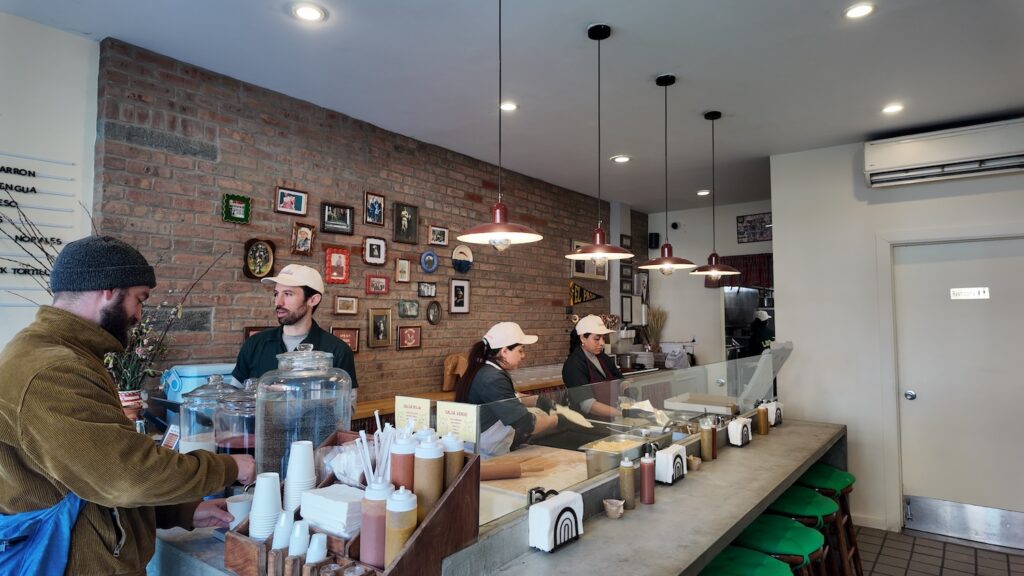
Photo by Francisco Hernandez
What do you think explains why it all happened so fast, though? I know how hard it is to open a restaurant in New York. So I don’t think it’s possible that people were seeing what you were doing and, in two months, able to turn around a whole concept. But how could this have all happened at once?
Yeah, that part is crazy to me. I mean, I had at least, what, like five months to myself? But I don’t know. Jorge [Aguilar, chef/owner of Bordertown] has been doing it forever. Selling tortillas, I think from Home Depot, and stuff like that. They’ve been doing pop-ups for a long time. They really deserve everything that’s come their way.
I went there the other night, and it’s not your place, but it is its own thing, and it’s really great.
It’s so good. And like, same stew, but seasoned a little different. The tortillas are different, but equally excellent. I didn’t grow up eating those sorts of tortillas, so those were new to me.
We’re all different, and I think this cloudlike texture that we’re able to achieve with our tortillas is really special, and you don’t really see it anywhere else. I don’t know why it happened this way (Laughs), but I’m glad it’s happening this way because that means that now press can go and talk to all these places and keep putting our work out there. So, for me, it’s better that there’s more of us.
So without giving away any family secrets, I know this isn’t a family recipe-
At all (Laughs)
But the tortillas are something you put a lot of time and effort into. You experimented with ratios, resting periods, and temps over the years. Without giving away anything proprietary, did you have a breakthrough? Is it sourced with anything more elaborate than flour and lard?
No, no. No secrets. No secrets at all. It’s really just learning to look for the right things in the dough. It’s all about hydration, resting, and not overworking it—at least, for my tortillas. There are some that you do work a little more. I think that’s like the Sonoran style. But for mine, you’re looking for uh—sometimes words in English are tricky—elasticity? You’re not looking to have that perfect dough.
Since I have no dough experience, every time I was making this, I was just working it until it was smooth, and it just wasn’t getting there. They were drying out. They were not pliable. And so I just kept trying and trying and changing it up. It took me like four years of research and talking to people and pastry chefs and people that work with bread—and, obviously, everyone has their own opinion as to what was the issue. But we landed—where I landed—was on not overworking it and letting it rest. And that was the key.
Also, honestly, rolling them by hand fresh the day of—there’s truly nothing better than that. But, no secrets whatsoever.
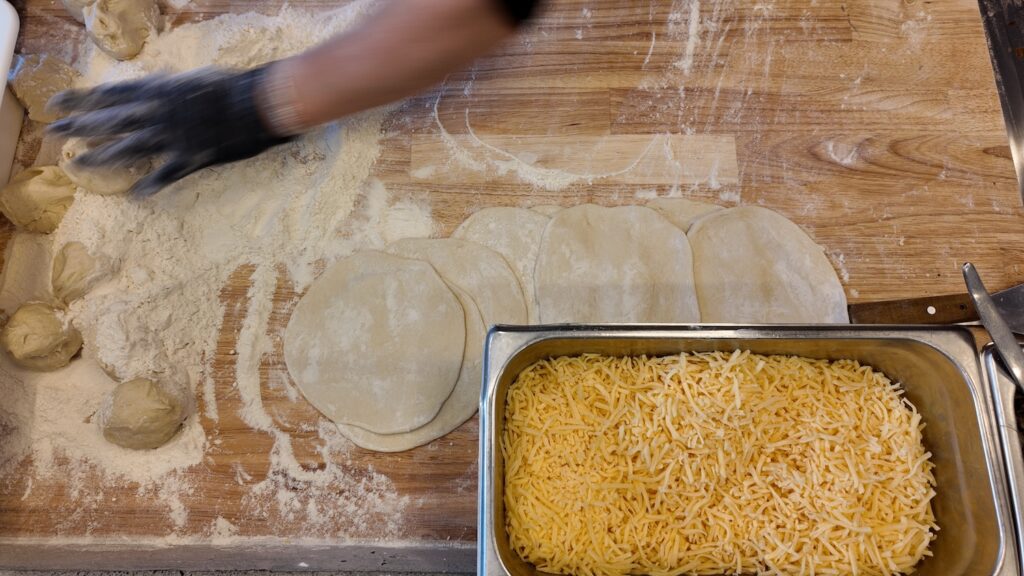
Photo by Francisco Hernandez
And I love that. I love the idea that you’re not sourcing specially milled flour or this artisan fat or anything, that it’s really just application. It’s just like bagels or pizzas. Everybody has theories about why New York is the best—soft water or whatever the fuck–when really, it’s just about the people making the bagels and the pizzas.
Well, at first, my main goal was to expand this into like 16 of these, so everything had to be a little more conventional, so you could find these ingredients everywhere and not have to find a new mill in every city. Everything clicked when I just started using normal shit, to be quite honest.
Is your goal still to open 16?
I have no idea anymore. It’s so much work (Laughs). I thought it was only going to be, like, five of us. And now, I employ 12 people. And it is truly an insane amount of work for a burrito. I’ll still open more. I think we’re going to let this sit probably until the end of the year and then start exploring the second location, probably outside of New York. But, uh, yeah, we got to pump the brakes a little bit (Laughs).
I think another thing that might hurt expansion is that, to me, aside from the delicacy of the tortilla, the aspect that really sets it apart is how fresh the tortilla is off the griddle. Do you have a philosophy on how fresh the tortilla has to be prior to serving?
Uh, well, when we first opened, and we had those crazy wild lines, we would start rolling tortillas at 11:30 to hopefully have about 200 that would then be gone within like the first 40 minutes. And then it’s just, like, gut-wrenching. You look back, and you’re like, “Oh, there’s nothing left.”
But through that process, what I learned is, after we re-roll the tortillas, just kind of let them sit for a little bit. For a minute or two, just to let them steam a little bit. And then that’s when we’d have the perfect tortilla. And then after that, I tell people you probably don’t want to keep them after, like, three days, because then they start to get dry. That’s why we only sell three-packs instead of a six-pack. We really want you to enjoy them that day or the following day. Because, again, we don’t have any preservatives. We don’t have anything in there.
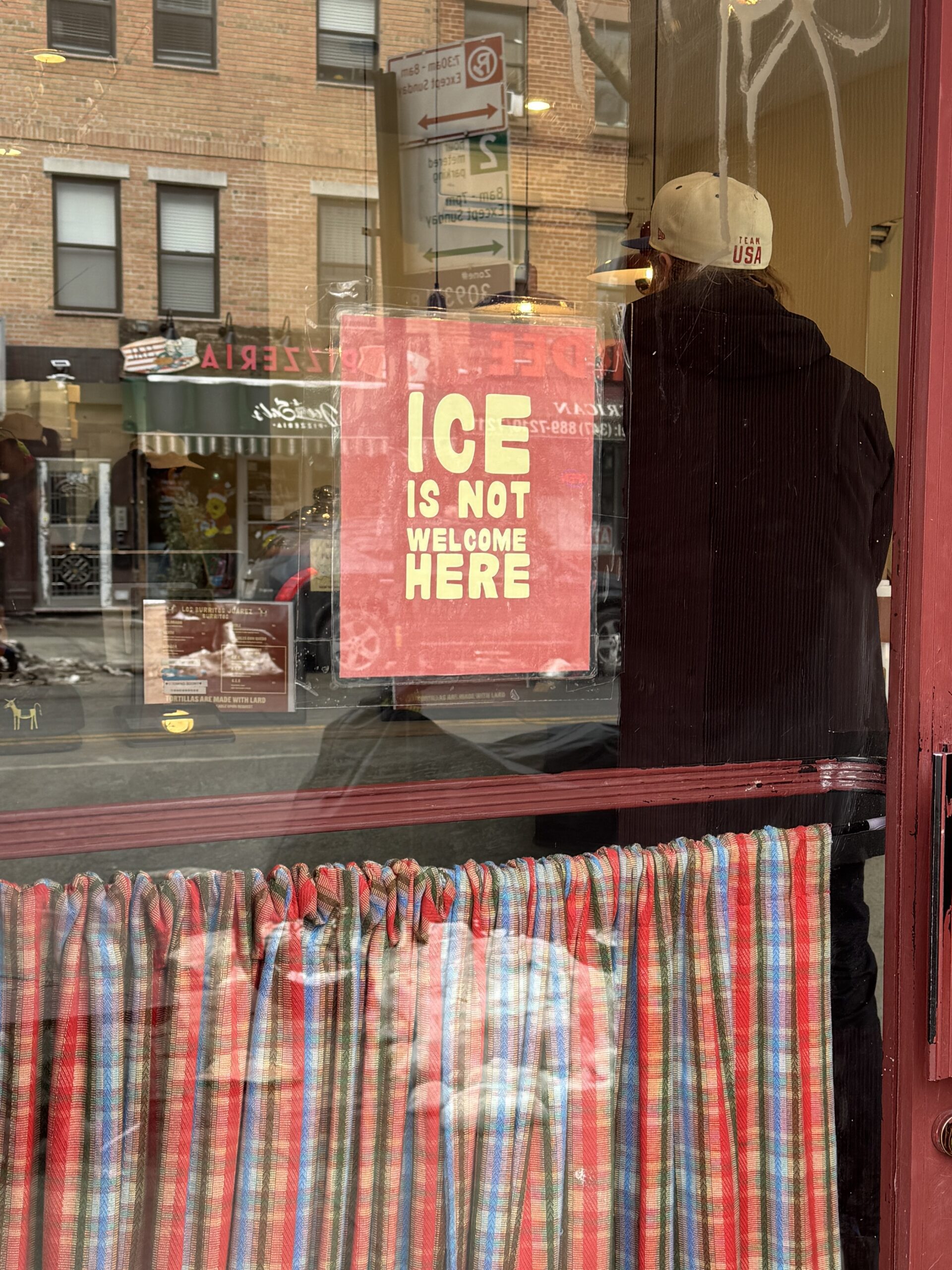
Photo by Abe Beame
So you can choose to take advantage of this or not, but there is a sign on your front door I appreciate. So, I wanted to give you the opportunity to use this platform to say anything you’d like to say on the subject.
Oh, man. You know, growing up along the border, we’ve always experienced and seen these things. Not to the degree that it is now. But, you know, I’m a son of immigrants. I see how hard it is to move into a country where you don’t speak the language, you don’t know the culture, but every day you wake up, and you go work. You go do things that other people don’t want to do.
Then to be attacked like that, it’s crazy to me. That hate has no place at our place. Being a solo business owner, I don’t have anyone telling me what I can and cannot do. So we chose to put that there because I’m going to protect my people in my own way as much as I can. And it’s funny because we even get a lot of police officers that come, and they’re like, “Love your sign.” And I’ll be like, wait, really? And they’re like, “Yeah, fuck yes.” And I’m like, “Hell yeah, dude.” New York is different. Even the cops are like, “Get out of my city.”
But yeah, that’s it. I don’t condone hate against anybody. It’s just, you’re not going to come in. I’ll protect my people. I’ll get arrested. I don’t care. We’re not going to back down.
That is beautiful, and far more restrained than I would be.
Well, I wanted to put Fuck ICE, but that’s kind of…(Laughs)
We end every interview by asking the chef to recommend a favorite sit-down or takeout experience you’ve had recently in Brooklyn.
Man, I am a creature of habit, so I go to Romans way too much. I also eat a lot of Kimchi Chigae from Kimchi Market up in Greenpoint. Then recently, Pops Patties. I don’t know if you’ve had them, but oh my God. I had them for the first time at Barclays Center when I went for a Liberty game. I love the dough. I love the fillings.
Other than that, my wife cooks a lot at home.
Well, shoutout to your wife, doing the good work.
She’s a great cook, too. It’s truly special to come home to a well-thought-out meal (Laughs).
The post Open Kitchen: A Conversation with Alan Delgado of Los Burritos Juárez appeared first on BKMAG.