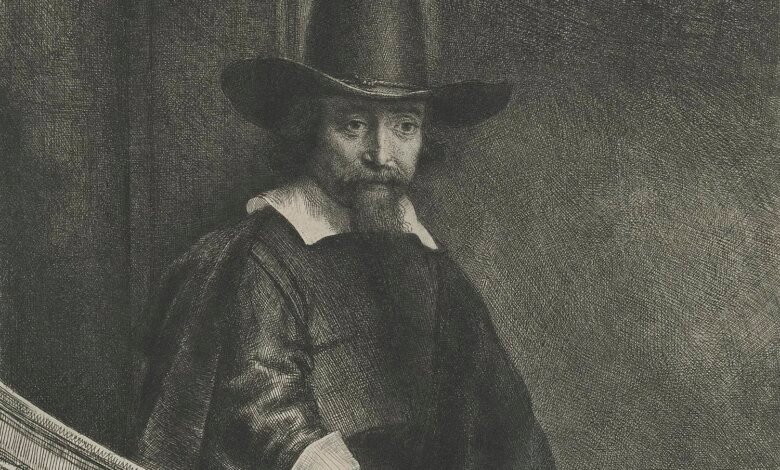
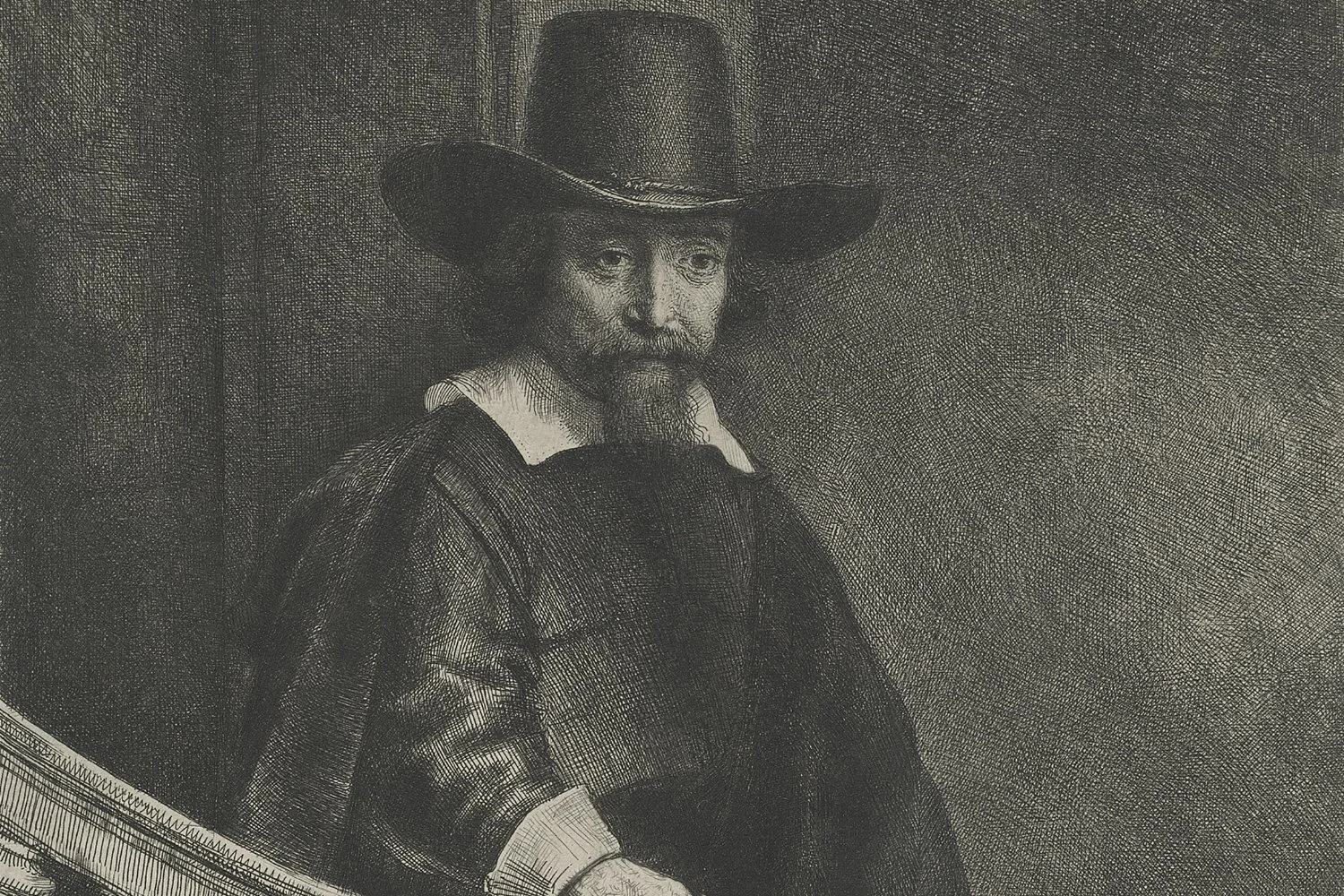
Though Rembrandt wasn’t a Jew, this Boston exhibition shows how his artwork can, nonetheless, provide a unique look at Jewish life in 17th-century Amsterdam
It is not a random happenstance that Rembrandt bought a house on Breestraat, an Amsterdam street in a neighbourhood of wealthy Sephardim, far less wealthy Ashkenazim and formerly enslaved citizens of African descent. His house had been expensive, well beyond his means, but there were advantages to living in Vlooienburg, the Jewish quarter, to be near people who would commission portraits, and thus provide a shaky ladder out of the abyss of debt Rembrandt could never quite manage to climb out of. The quarter was in its relatively early days; Jews had, for centuries, been forbidden from living in the Low Countries (Northwestern Europe’s coastal region, comprising Belgium, the Netherlands and Luxembourg), though some had arrived from Iberia, they were ‘anusim’, Jews forced to observe in secrecy. By 1639, when Rembrandt arrived in the quarter, Amsterdam had lifted restrictions, so Jews could and did practice openly until the German occupation.
It has been documented that every one of Rembrandt’s neighbours were Jewish, that he would have heard the sounds of Jewish life and been aware of yearly and weekly cycles and rituals. He used the people around him as models, both the wealthy Portuguese Jews and the Germanic Ashkenazim, who wore ragged clothes and begged on the streets.