In July 2014, I attended a festival hosted by the magazine I was interning for at the time, held at the second iteration of the all-ages event space Secret Project Robot. They called it “The Normcore of Summer Festivals” (were we ever so young?). Trace Mountains opened at noon; Mannequin Pussy took the stage at 3. I fanned myself with my hand in the setting sun as I waited for Alex G, billed just after Ricky Eat Acid, to come on at 7:30. A stranger passed me his Magic Flight Launch Box as the musician took the stage in an oversized white polo, and I inhaled vapors of ditch weed as he stepped up to the microphone to sing.
If you had asked me then, I probably wouldn’t have admitted that I was witnessing the end of an era. But by the time I returned to the city after graduating just a few years later, Brooklyn had lost spaces like Death By Audio, Shea Stadium, and Palisades, corporate sponsorships had all but dried up, and Condé Nast had purchased Pitchfork for an undisclosed sum.
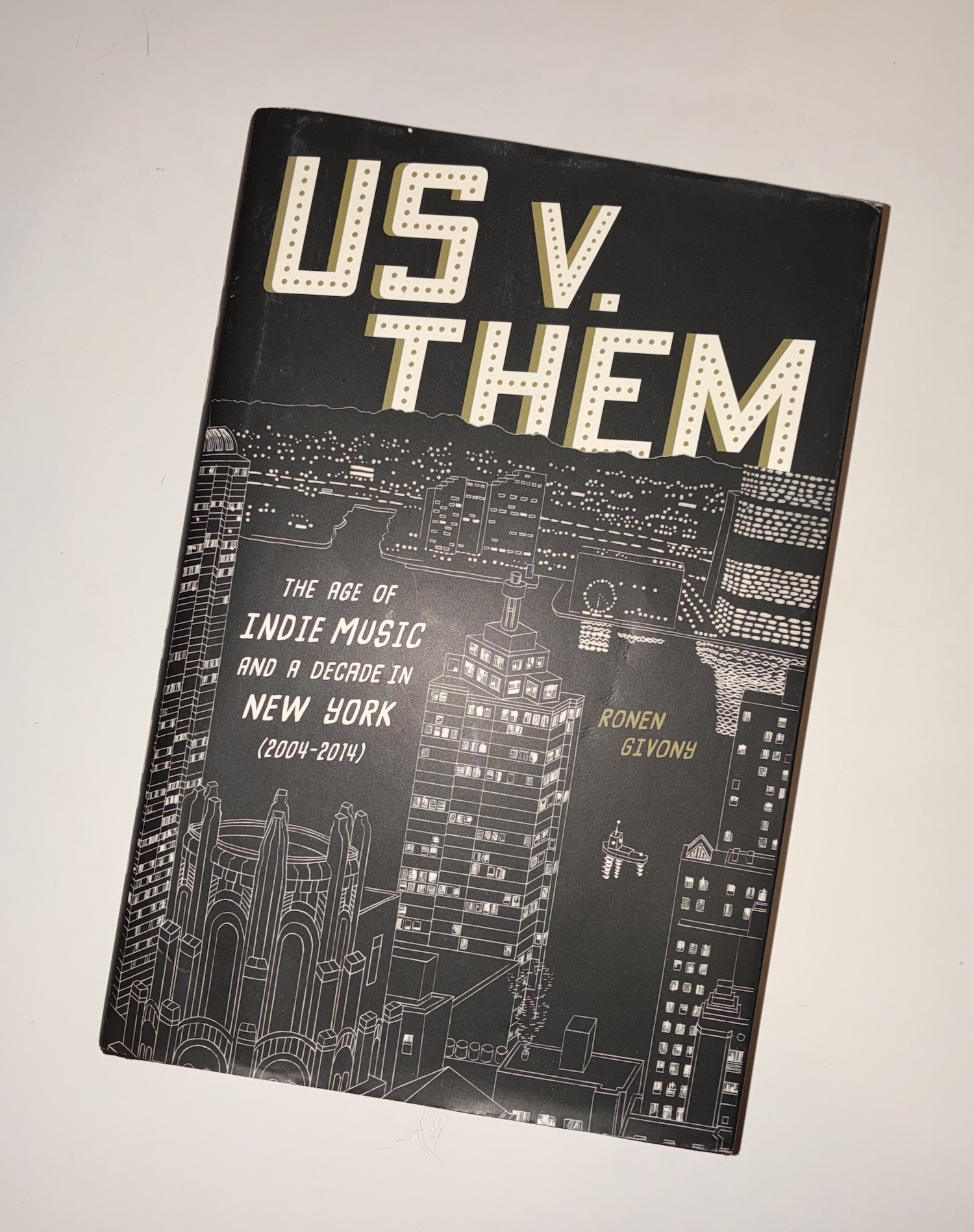
Photo by Arielle Gordon
On a recent Thursday evening, I joined dozens of others at Greenlight Books on Fulton Street to memorialize this fleeting moment in Brooklyn history. We were there to celebrate the launch of Ronen Givony’s new book, Us V. Them: The Age of Indie Music and a Decade in New York (2004-2014), which arrived via Abrams Books on March 3.
A rigorously reported love letter to Givony’s first decade living in the city, Us V. Them chronicles the tenacious bands, venue owners, label executives, and general hustlers that made Brooklyn synonymous with the DIY avant-garde. Through extensive interviews, archival research, and Givony’s firsthand accounts, the book illuminates the structural forces that made the borough an ideal place to be an artist during that period: The hollowed-out landscape of post-industrial Williamsburg, the proliferation of critics and blogs reviewing live music, and the vanishing promise of cheap rent in Bloomberg’s New York.
Standing at a podium by the store’s entrance, Givony recited a list of now-defunct venues from the book’s introduction—Galapagos, Southpaw, Northsix, Cake Shop—each met with waves of applause from the audience. In conversation with writer and Beggars Group president Nabil Ayers afterwards, he likened these spaces to a modern-day equivalent of The February House, a Brooklyn Heights brownstone that was a refuge for writers like Paul Bowles and Carson McCullers. “We’re all people trying to find cheap places to live.”
Speaking over the phone after the event, Givony, a seasoned booker for Le Poisson Rouge as well as his own long-running Wordless Music series, described the book as idiosyncratic by nature: “It would have been easy to write a book with just the usual suspects. I just tried to cast a bit wider of a net.”
Us V. Them began as “really just a journal,” Givony said, writing down his own recollections—of Parts & Labor’s last show, for example, where they crowded the stage with everyone who’d played with them over their decade-long career. “These years in Brooklyn made a pretty deep impression on people at the time,” he added. “But not long after 2014, it felt like a lot of this stuff was rapidly fading into memory.”
Rather than focus on nationally successful contemporaries like Animal Collective and Grizzly Bear, Us V. Them endeavors to describe what the streets, bars, and venues in Brooklyn sounded like, at least to Givony. The book opens with perhaps the scene’s biggest breakout star, the long-running noise rock outfit Oneida, and digs deeper from there. There’s an entire chapter dedicated to Sea Ray’s cello-driven epic Stars At Noon, and another on the singular instrumental synthesizer record from DFA Records affiliates Delia Gonzalez and Gavilán Rayna Russom. Most of the bands discussed broke up before the de Blasio administration; few became household names.
“There were 40 or 50 bands who were all inspiring each other. Some of them made it big, some of them fizzled out,” Givony said. “I always thought a band like Sea Ray was a bit more representative of what the moment was. If you were to see something at Death By Audio during those years, it would probably be closer in spirit to Sea Ray than, say, The National, who opened for Sea Ray many times.”
Us V. Them isn’t an entirely rosy picture of the decade. In his chapter on Dragons of Zynth’s sole record, 2007’s Coronation Thieves, frontman Akwetey recalled the discrimination the band, made up of majority Black musicians, faced from bookers. “On paper, everything looks great. But then for some reason they’re saying… ‘I don’t think you guys are the right fit.’” Later, in a chapter on Weyes Blood, Natalie Mering remembered “noise bands that toyed with some white-supremacist energy,” and recalled the “chauvinism and rape culture” she felt in the music world at the time.
This was intentional. “I tried not to write a book with ten white indie bands,” Givony says. Instead, he wanted to interrogate “a lot of unexamined assumptions and liberal provincialism” in the scene at the time. “I wanted the subjects I chose to represent something about this era,” he continued, “whether gender, race, economics. Each chapter has a theme.” Throughout all of these competing narratives, the specific setting of the book—post-9/11; Bloomberg’s New York—never feels out of reach. There is discussion of “stop-and-frisk” policing, of the 2004 Republican National Convention at Madison Square Garden, of Occupy Wall Street. “I feel like everything, for me, comes back in some way to politics,” Givony added.
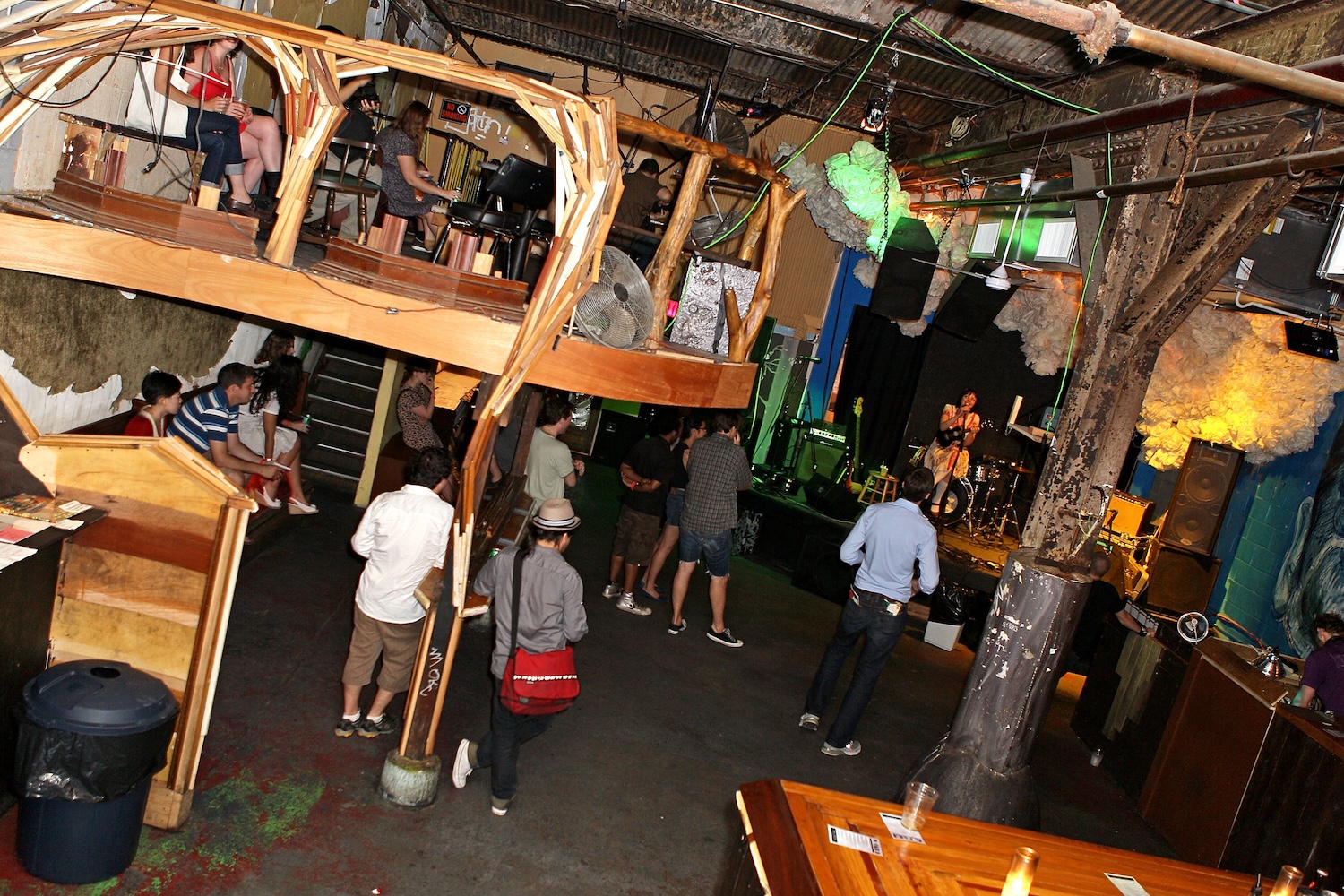
Atmosphere at the 2011 Northside Music Festival at The Glasslands Gallery on June 19, 2011 (Photo by Steve Mack via Getty Images)
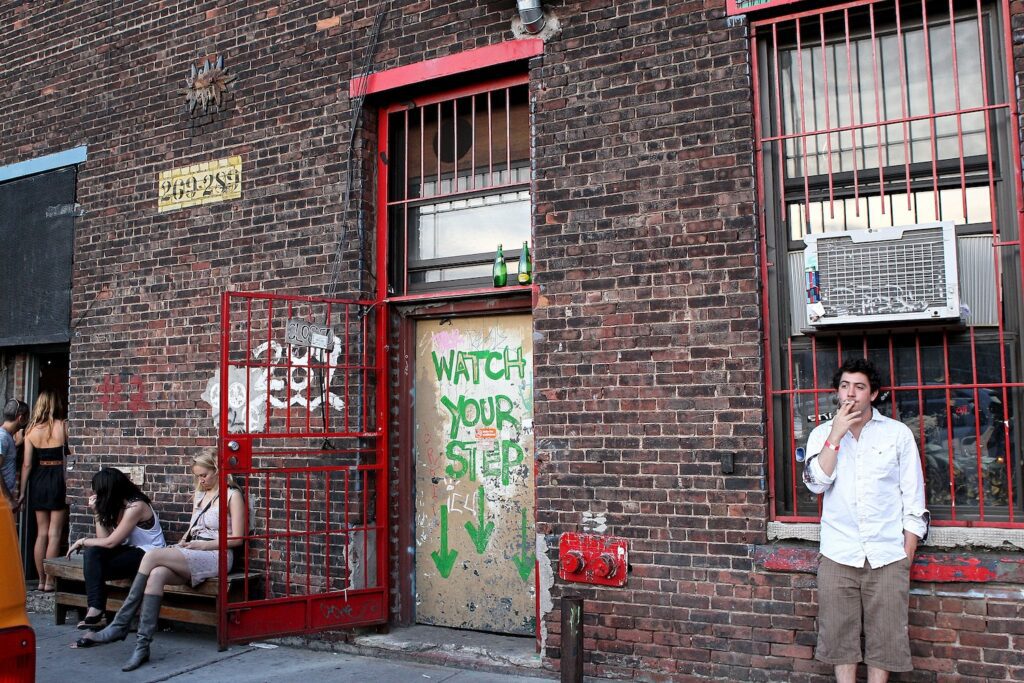
Some of its most illuminating chapters aren’t about musicians at all—”Havemeyer” covers the family that opened the once-thriving Domino Sugar plant on the Williamsburg waterfront, tracking their wealth and the property’s history from one of the world’s largest sugar suppliers to an unlikely DIY haven, housing three venues under one roof, to offices for Vice Media. “With Vice, it was manifestly ironic and so painful,” he explained. “This was a media brand that had really built itself on independent and underground culture. You would think if anyone would know what they were doing, it would be them.” But even without Vice, he said, the writing was on the (spray-paint-covered) wall. “It could have been Google within a year. I don’t want to say that the neighborhood was doomed, but it’s hard to see what would have changed [the outcome]. All three of those places [Glasslands, Secret Project, 285 Kent] really went out on their own terms. They went out at the height of what they were trying to pull off artistically.”
Us V. Them is also refreshingly honest about the money it takes to bootstrap a scene that might seem, looking back, like a halcyon free-for-all. On the smaller scale, Givony mentions the phone bills Ryan Schreiber’s parents balked at when he first started Pitchfork out of his childhood bedroom. On the other end of the spectrum, Givony writes about the $50,000 in upfront capital that dancer Noemie LaFrance had to invest to put on the first show in the empty McCarren Park swimming pool. There is a three-part arc just following music industry veteran Adam Shore, whose career trajectory—from record store employee to VICE Records A&R to head of programming for Red Bull Music Academy—is illustrative of larger shifts in the industry throughout the decade.
These economic conditions also spelled the beginning of the end for many of these bands, who never set out to write a hit or headline a festival. Speaking to Dan Friel of Parts & Labor, who performed a collection of his solo songs at Greenlight the night of the book event, Friel recalled the harsh realities that led to his band’s ultimate decision to break up. “There was a myth in the 1990s of a working-class band that was not super rich, but that was touring regularly and had a cult following,” he said in our phone interview. “That was what we saw as our path. We weren’t going to change the way we sounded in order to reach more people. I just don’t think we were capable of it as people. That’s not who we are.” Many of the bands in Us V. Them share this attitude: If we can’t do it on our own terms, we won’t do it at all.
I wanted to know if Givony was still bullish on New York. “Wet Leg kicked off their tour at Market Hotel,” he said. “Maybe that’s a sign that Brooklyn DIY still has some cachet.” He spoke fondly of Horsegirl, a band out of Chicago’s tight-knit Hallogallo scene, and recalled a concert at Warsaw filled with a mix of “20-somethings and dads in Pavement tee shirts.” Still, though, he acknowledged that it was harder for artists to get by on a few part-time gigs, and only getting more strained. Even his tenure in New York was likely due to factors outside of his control. “The only reason I’m still here is because my landlord hasn’t raised my rent since the second George W. Bush administration.”
Did Givony have any advice, as a seasoned event producer, for those who came to this city to make art? “For the Silent Barn folks, the Glassland folks, it was important to host, to cook for people, to let them in,” he said. “It’s easy to get discouraged by the odds at the moment in New York in terms of rent and space, but it can literally be something in your apartment. If you just think of it just in terms of being hospitable and welcoming, that always seems like a good strategy.”
The post ‘Us V. Them’ and The Battle for Brooklyn’s Indie Scene appeared first on BKMAG.